Fifty-eight years ago today, Steve McQueen’s Bullitt opened at New York’s Radio City Music Hall and delivered a car chase that would help redefine Hollywood action. The October 17, 1968, release featured an 11-minute pursuit through San Francisco that the Library of Congress later described as “arguably the finest in cinema history.”
That extraordinary distinction belongs to a sequence featuring McQueen’s Ford Mustang GT chasing a Dodge Charger through the city’s steep streets. Directed by Peter Yates, the crime thriller transformed an ordinary police pursuit into a landmark of practical filmmaking, according to the American Film Institute.
Next: 1967 John Wayne Classic, Turned Down by Steve McQueen, Ranked Among Best Westerns
The Chase That Set a New Hollywood Standard
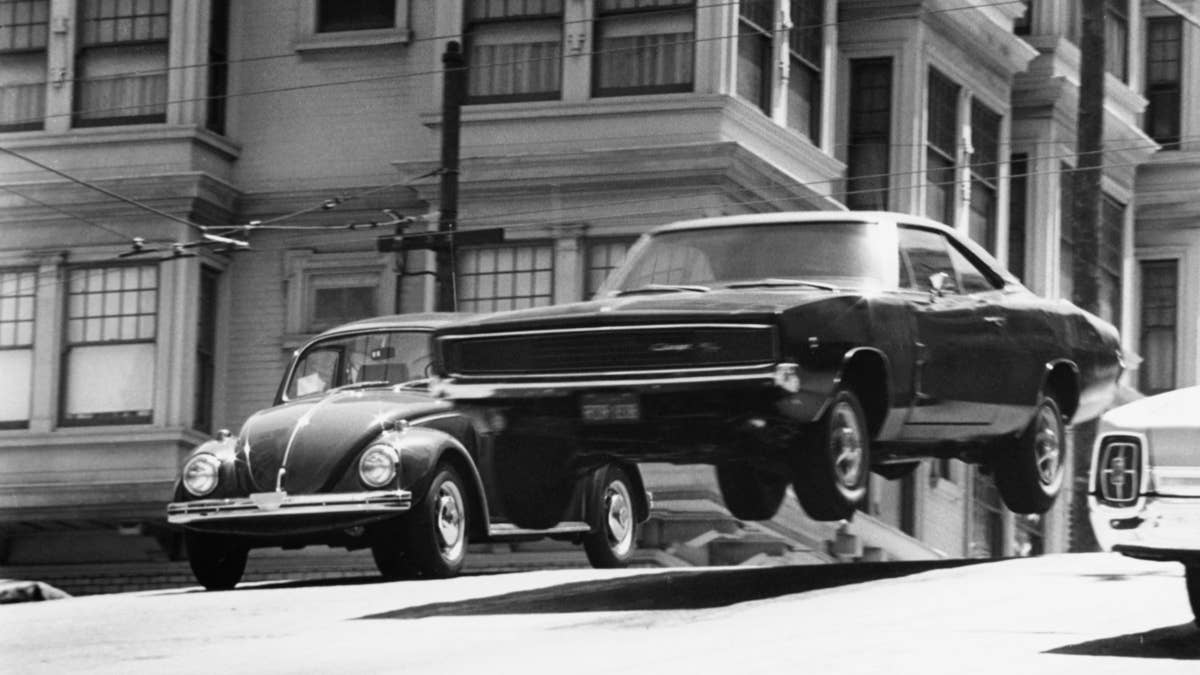
The sequence relied on real cars, location photography, stunt drivers and precise editing rather than computer-generated effects. San Francisco’s hills provided dramatic changes in elevation, while the engine noise and screeching tires made the pursuit feel unusually immediate.
MotorTrend’s examination of the production quotes assistant director Walter Hill, who later became a prominent action filmmaker.
“Looking back 30 years, Bullitt is a very important piece of film,” Hill recalled. “It showed what could be done and how the possibilities of action cinema were greater than ever perceived. We were all part of a film that set the standards much higher.”
The achievement was recognized by the Academy, which awarded Bullitt the Oscar for film editing.
Next: 66 Years Later: 1960 Steve McQueen Classic, Once Dismissed by Critics, Named Among Greatest Westerns
Why the Film Still Earns Near-Perfect Reviews
The chase remains its signature attraction, but Bullitt also helped establish McQueen’s screen persona as a cool, independent detective willing to challenge powerful officials.
Its reputation has survived generations of action movies. Rotten Tomatoes currently lists a 98% critics score and 85% audience score. Rotten Tomatoes describes Bullitt as containing “arguably the greatest movie car chase ever.”
The Library of Congress selected the movie for the National Film Registry in 2007, recognizing its enduring significance.
The institution’s description credits San Francisco’s “pitched streets and stunning vistas” with giving the movie its distinctive visual identity.
For viewers revisiting Bullitt on its 58th anniversary, the takeaway is simple: modern action films may have bigger budgets and more elaborate effects, but McQueen’s Mustang chase remains an essential lesson in cinematic tension.