Men’s Journal aims to feature only the best products and services. If you buy something via one of our links, we may earn a commission. Prices are accurate and items in stock at time of publishing.
A great snowboard boot can make a mediocre snow day memorable. A bad one can ruin a powder day before lunch. Your boots are the connection between your feet and your board, and when that connection works, everything feels easier: initiating turns, holding an edge, absorbing bumps, and staying comfortable through one more lap.
Our testers spent time in this season’s snowboard boots, paying close attention to heel hold, flex, adjustability, and all-day comfort. The latest designs offer more ways to dial in the fit, but the biggest takeaway wasn’t about technology. It’s that the right boot should feel secure without making your feet miserable.
Here are the five snowboard boots that stood out for 2027, from performance-minded models to an approachable option for riders just finding their feet.
Want the lowdown on more great snow sports gear? Check out the rest of Men’s Journal 2026-2027 Ski Awards, where we’ve tested everything from outerwear to après-ski gear to bring you the best of every category—jackets, pants, bindings, and more.
Best Snowboard Boots of 2027 at a Glance
- Best Overall Snowboard Boot: Salomon Echo Dual BOA
- Best Performance Snowboard Boot: Rossignol RS Primo
- Best All-Mountain Snowboard Boot: K2 Theory
- Best Snowboard Boot for Customizable Fit: HEAD PSI Triple BOA
- Best Snowboard Boot for Beginners: Burton Moto BOA
The Best Snowboard Boots of 2027
Best Overall Snowboard Boot: Salomon Echo Dual BOA
Courtesy Image
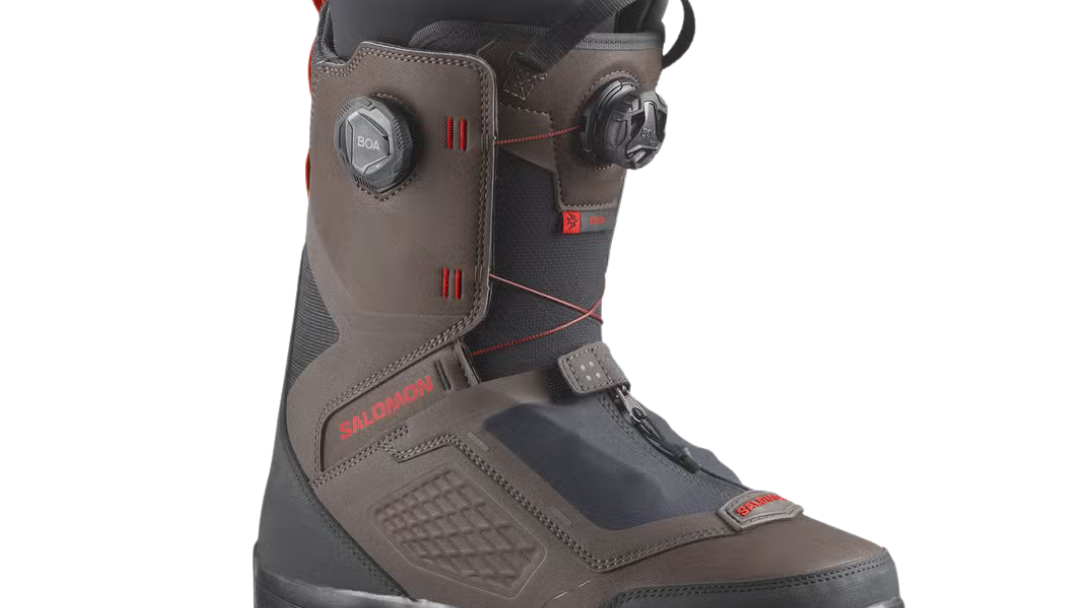
A snowboard boot has one job that matters more than any clever feature: Keep your foot secure and transfer your movements to the board. Too much internal movement compromises both control and comfort. Our testers gave Salomon’s new Echo Dual BOA two thumbs up for locking down the foot without making it feel suffocated. Credit a supportive upper, a Precision Liner and Harness, and independently adjustable BOA zones that let riders fine-tune the fit.
The Precision Harness is designed to keep the heel planted, while the supportive upper adds response for riders who want to do a little of everything: carve groomers, explore the sides of the resort, and negotiate variable snow. A built-in snow gaiter helps keep the elements out, and the upper incorporates at least 20 percent recycled materials.
The Echo’s appeal is its versatility. It delivers the support and adjustability for a broad range of resort riding without being overly specialized. In a category where fit can make or break a day, our testers found plenty to like.
Best Performance Snowboard Boot: Rossignol RS Primo
Courtesy Image
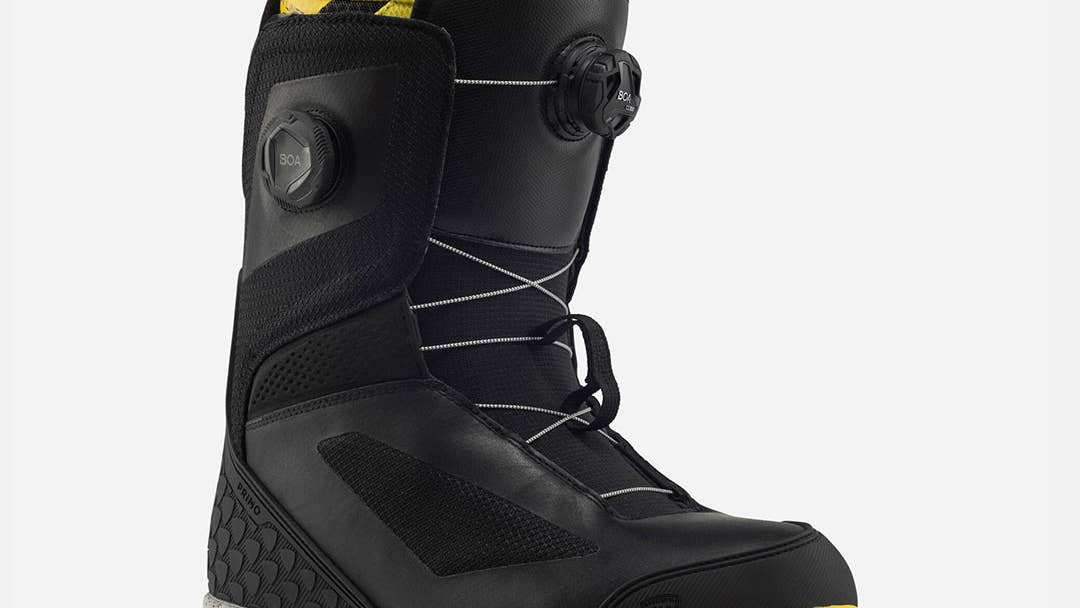
Rossignol’s RS Primo is built for riders who want a precise, connected feel rather than a boot that folds when you ask it to drive a turn. Its listed 7/10 flex puts it on the stiffer side of the spectrum, while the molded tongue is designed to support the shin and maintain forward pressure. The dual-zone BOA Focus H4 system lets you fine-tune the fit in separate areas, and an internal ankle harness helps secure the heel—a key to keeping your foot from moving around when you’re riding hard.
The True Form liner uses heat-moldable foam to help customize the fit, while Rossignol’s Sensor3 footbed and outsole are designed to balance cushioning with board feel. That’s a promising combination for advanced riders who want support without losing connection to their board.
“The Primo delivers that locked-in response without creating pressure points over a full day on the mountain,” says one tester.
Best All-Mountain Snowboard Boot: K2 Theory
Courtesy Image
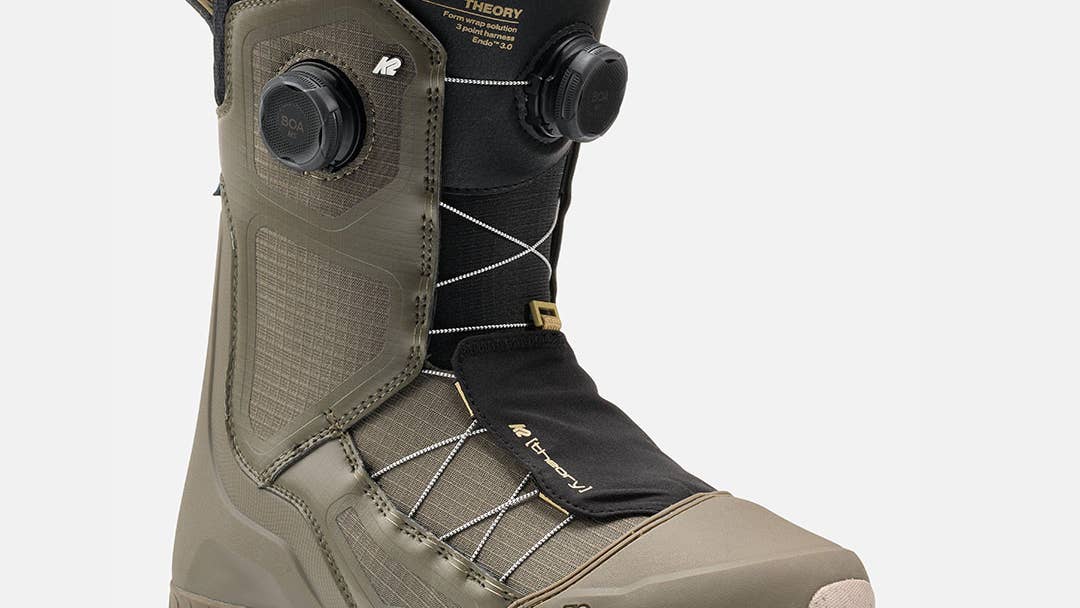
The K2 Theory is designed for riders who want to drive their board confidently across the mountain, from firm morning groomers to chopped-up afternoon crud to delicious stashes of untouched powder. Its dual BOA system allows independent adjustment of the upper and lower boot, so you can fine-tune the hold instead of cranking down the entire boot to fix one loose spot.
K2’s F.O.R.M. Wrap is designed to contour around the forefoot and reduce pressure points, an important detail when you’re spending a full day in the boots. The goal is a secure, responsive fit that doesn’t punish your feet by lunchtime. Testers paid particular attention to whether the Theory held the heel and forefoot comfortably through hard turns and changing terrain.
Best Snowboard Boot for Customizable Fit: HEAD PSI Triple BOA
Courtesy Image
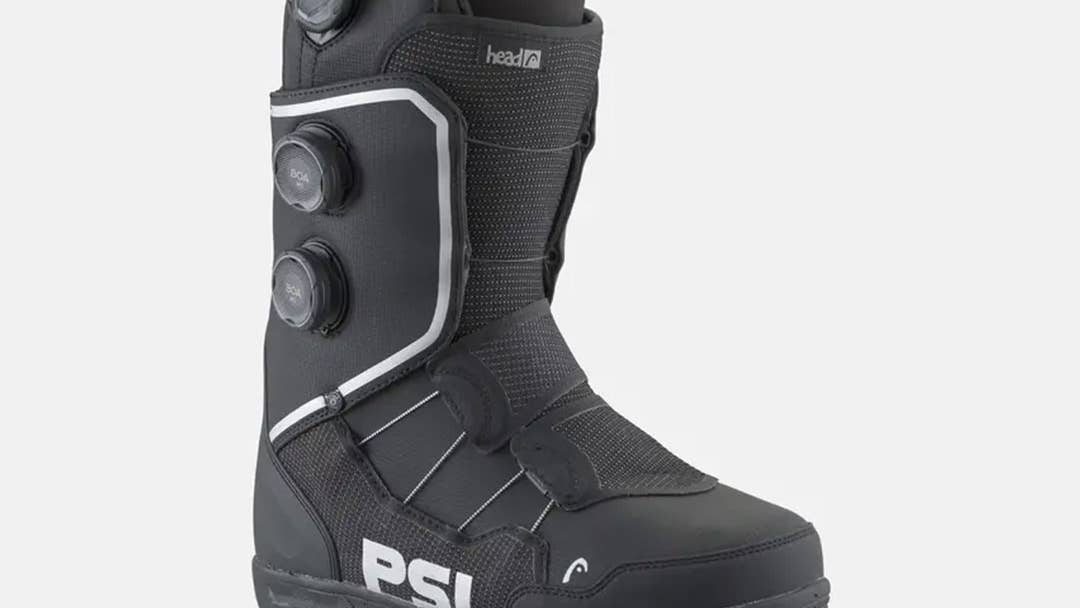
Some feet are easy to fit. Others require the patience of a bootfitter. HEAD’s new PSI Triple BOA is built so you can customize the fit yourself, every day—even every run. Three independently adjustable BOA zones let riders fine-tune the fit around the foot, ankle, and lower leg, rather than relying on one or two closure points to do all the work. Maybe your favorite snowboard socks are in the wash, or you’re developing a hot spot after too many jumps and rails. Micro-adjustments are easy.
We wondered whether a third BOA would earn its keep. “I’d argue they improved heel hold and pressure distribution,” said one tester. The design also incorporates an adaptive toe box, an aramid-reinforced upper, and a heat-reflective lining. HEAD’s Heel Transmission System is designed to improve the connection between boot and binding, helping transfer rider input to the board.
Best Snowboard Boot for Beginners: Burton Moto BOA
Courtesy Image
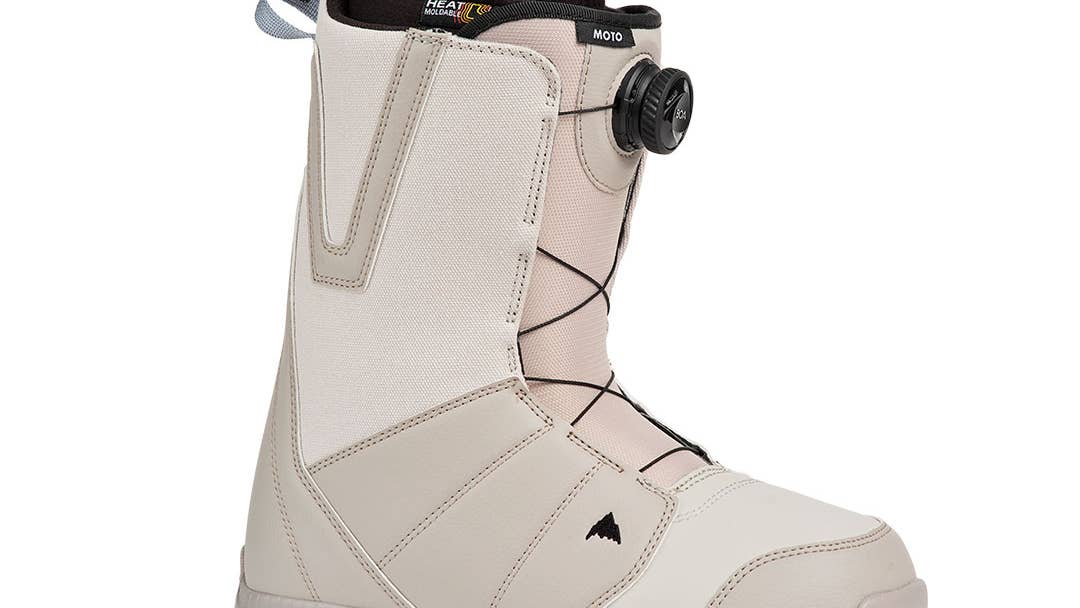
Not every snowboarder needs a stiff boot built for charging steep lines. The Burton Moto BOA takes the opposite approach, with a soft, forgiving flex designed to make learning and everyday resort riding less demanding. The boot is also really comfortable. BOA is everywhere, and there’s no better spot for it than snowboard boots. A single BOA closure keeps adjustments simple. Just turn the dial to tighten the boot, then release it with an easy tug when your dogs need more breathing room.
Burton’s liner and integrated inner-cuff lacing system provide a uniform fit. The lightweight outsole reduces weight, and testers found it grippy enough for icy parking lots. The Moto’s softer flex makes it easier to bend and move around in than a more supportive performance boot. That can be an advantage for newer riders learning to link turns, as well as experienced snowboarders who prefer a relaxed feel for park laps and casual days on the hill.
It doesn’t offer the multi-zone fit control or supportive construction of the pricier boots in this lineup, but it delivers the essentials without asking riders to pay for performance they may not need. The comfort and ease of use make the learning curve a little less steep.
What to Look for When Buying Snowboard Boots
Snowboard boots are among the most personal pieces of equipment you’ll buy. Flex, heel hold, liner construction, and closure systems all matter, but the right boot starts with the shape of your foot. More adjustment isn’t automatically better, and a stiffer boot isn’t automatically faster or more precise for every rider. A boot that fits your foot properly will do more for your day on the mountain than any feature list.
Fit Comes First
Snowboard boots should fit snugly without painful pressure points. Your toes should lightly touch the front of the liner when standing upright, with a little relief as you flex forward into a riding stance.
The biggest warning sign is excessive heel movement. If your heel lifts every time you bend your knees or initiate a turn, you’re losing some of the connection between your feet and your board. Cranking down the closure system may help a little, but it won’t fix a boot that’s fundamentally the wrong shape or size.
Don’t automatically buy snowboard boots in your usual sneaker size. Sizing and internal volume vary between brands, and a knowledgeable bootfitter can help identify a shell that suits your foot.
Choose the Right Flex for Your Riding
A soft-flexing boot can be more forgiving and easier to maneuver, especially for beginners, park riders, and snowboarders who prefer a relaxed feel. The Burton Moto BOA is a good example.
Stiffer boots generally offer more support for aggressive carving, higher speeds, and demanding terrain. The Rossignol RS Primo is aimed at riders who want that more precise, responsive feel. Medium-flex boots occupy the sweet spot for many all-mountain riders, balancing support with freedom of movement.
Remember that flex ratings aren’t standardized across brands. A 7/10 from one manufacturer won’t necessarily feel the same as a 7/10 from another. Your weight, strength, riding style, and preferences matter as much as the number.
Pay Attention to Heel Hold
Heel hold deserves special attention because it affects how efficiently your movements reach the board. When you lean into a turn, you want the boot to respond—not your foot to slide around inside it. Look for supportive liners, internal ankle harnesses, and a shell shape that keeps your heel seated without squeezing the forefoot.
The Salomon Echo Dual BOA and Rossignol RS Primo both emphasize heel retention, while the HEAD PSI Triple BOA offers additional closure adjustment for riders who need more control over the fit.
Understand BOA and Other Closure Systems
BOA closures use adjustable dials to tighten cables or laces around the boot. They’re popular because they’re quick to operate, easy to adjust with gloves, and convenient when you need to loosen your boots between runs.
Single-zone systems, like the one on the Burton Moto BOA, keep things simple. Dual-zone systems allow more independent adjustment of the upper and lower boot. Triple-zone designs, like HEAD’s PSI Triple BOA, provide another level of control.
More dials aren’t necessarily better. A well-fitting single-zone boot can be more comfortable than a poorly fitting triple-zone model. Traditional laces and speed-lacing systems are also worth considering if you prefer their feel or adjustment style.
Consider Liners, Cushioning, and Warmth
The liner plays a major role in comfort, heel retention, and insulation. Many performance boots use heat-moldable liners that can be shaped to your feet, helping reduce pressure points and improve the fit. A supportive footbed can also make a difference, particularly if you have high arches or need more stability.
Don’t assume the thickest boot will be the warmest in practice. Boots that are too tight can restrict circulation and leave your feet cold, while overly loose boots may create friction and hot spots.
Make Sure Your Boots Work With Your Bindings
Snowboard boots and bindings need to fit together properly. Check that your boot sits securely in the binding, that straps contact the intended areas, and that the heel and toe fit without excessive overhang or awkward gaps.
Compatibility is especially important if you’re considering a specialized step-in or step-on system, which may require specific boots and bindings. Try your boots with your actual bindings whenever possible. A comfortable boot in the shop can feel very different once it’s strapped onto a board.
Try Them On Before You Commit
The best way to judge snowboard boots is to spend time in them. Wear the socks you’d actually ride in, tighten the boots as you would on the mountain, and flex forward repeatedly.
Pay attention to heel lift, toe pressure, ankle support, and any hot spots. If a boot already hurts after a few minutes, don’t count on it magically becoming comfortable after several days of riding. Boot liners will generally pack out with use, so an initially loose fit is unlikely to improve.
The bottom line? Choose the boot that fits your foot and matches your riding—not the one with the most dials, the stiffest flex rating, or the longest feature list.
Why You Should Trust Us and How We Tested
Our team of nine testers knows how to do our homework out in the field. Collectively, we’ll rack up more than 1,000 on-snow days in a given season just testing out ski gear to see if it lives up to its promise. Most of us have been running ski apparel through the ringer in every type of alpine terrain and weather condition imaginable for over 20 ski seasons.
We’ve run glades, bowls, couloirs, steeps, and remote backcountry in this gear—and we’ve taken copious notes. We’ve skied the slopes of New England and Eastern Canadian hardpack, Whistler powder, Pacific Northwest cement, and everything in between, including months in the French, Italian, and Swiss Alps. We offer a combined ski history of more than 100 years of high-level race and big-mountain experience racked up from Japan to North America to the Alps—and we know exactly what we want and need from the gear we’re relying upon. We also love being dazzled and inspired by the latest, greatest ski gear innovations, which never stop.
We’ve rigorously tested and compared thousands of items, harnessing not only ambition, but wisdom and experience, with testers from their early 20s to seasoned vets. We also tested a lot of this stuff with less experienced skiers to assess their own valuable takes. It’s never easy putting so much great ski gear and apparel through its paces before whittling it all down to our favorite performers—but it’s always a ton of fun.