China can hurt individual UK exporters, but exclusion from Made in Europe would hit every British plant. By Stewart Burnett
Business Secretary Jonathan Reynolds has said the UK is open to tariffs on Chinese-made vehicles in return for access to the EU’s ‘Made in Europe’ programme, while maintaining that any decision would reflect national interests rather than demands from Brussels. China has, in turn, warned that it will retaliate, leaving the UK to weigh its most important export market against one of its fastest-growing sources of new cars ahead of the UK-EU summit on 20 November.
Asked by Parliament’s business committee on 20 October whether joint trade defence against Chinese subsidies would feature at the summit, Reynolds said: “I’m certainly willing to talk and have been talking to European colleagues about a shared set of problems and how we resolve those.” Pressed on whether tariffs were a condition of earning EU trusted partner status, he said the UK’s position was under close review, adding: “If we do make a decision on any element of trade defense, it is because I deem that to be in the interests of the UK.”
France and Germany agreed on 16 October to a deal offering protection to European automakers facing Chinese competition at the cost of softening the zero-emission 2035 target to just 90% emissions reductions. This also opened a route for the UK into Made in Europe if it protects its own industry with tariffs.
Reynolds said the agreement lacked the detail needed to establish what was being asked of the UK, noting that “perhaps the interests of the EU as a whole for their automotive sector might at times be slightly different to how we see it in the UK.” He nonetheless called Made in Europe access a “very significant priority” across government, and Prime Minister Andy Burnham has made it his main objective for the summit.
The government’s tone has hardened significantly in less than a fortnight. In early October, tariff murmurs surfaced only through leaks to The Times, with officials saying only that the matter was “under review.” Last week, Trade Minister Anas Sarwar told Politico that “the more that the U.K. and the EU work together and act in lockstep, the better it is for both,” in what the outlet called the clearest signal yet that London was prepared to align.
China’s Ministry of Commerce responded in typical fashion with a direct and fairly aggressive warning. “If the UK insists on imposing restrictions on Chinese electric vehicles, China will resolutely retaliate and safeguard the legitimate rights and interests of Chinese industries” a spokesperson said. The spokesperson also urged the UK to “abide by WTO rules, think carefully, and not follow the European Union.”
The UK is also negotiating with Brussels on a second front. It is working to avoid a 10% tariff on electric vehicles (EVs) traded with the EU from January, when stricter rules of origin under the post-Brexit trade agreement take effect. Seeking two concessions from Brussels at once leaves London little room to refuse the one Brussels wants in return.
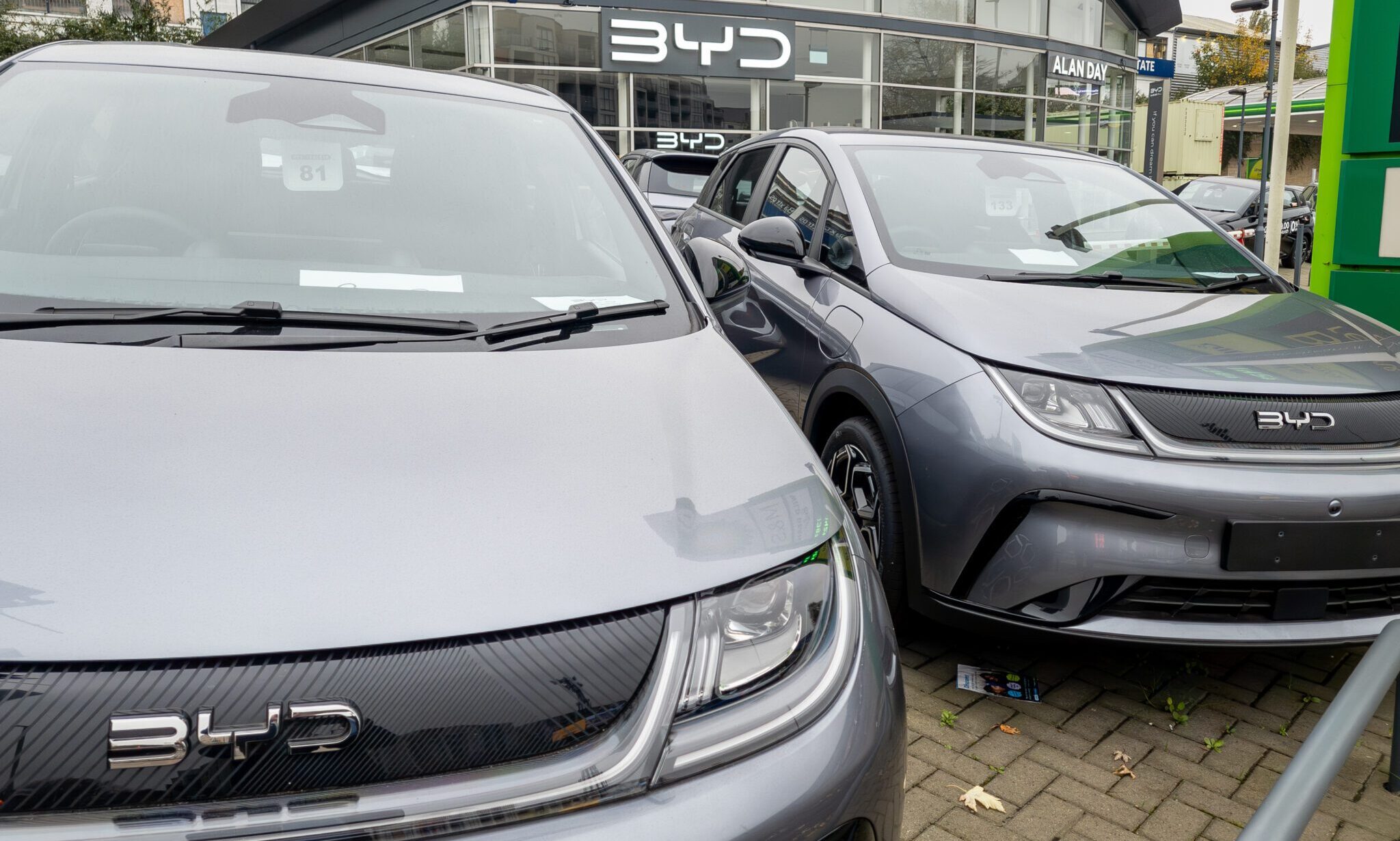
Unfortunately for British lawmakers, the balance of leverage points the same way. Exclusion from the Made in Europe scheme would affect every UK automotive plant, including Nissan’s Sunderland site, where talks to build Chery vehicles partly hinge on eligibility. Chinese retaliation on the other hand would more likely target individual exporters such as Jaguar Land Rover.
A tariff mirroring the EU’s duties, which add 7.8% to 35.3% to the standard 10% on China-built EVs, would also leave untouched the hybrids behind much of the growth of Chinese brands, which now hold more than a fifth of the UK market; Chery’s Super Hybrid powertrain alone accounts for three-quarters of its UK sales. The Jaecoo 7, Chery’s most popular model and for several months of 2026 the UK’s best-selling car outright, has enjoyed success overwhelmingly due to its plug-in option.
Reynolds has effectively conceded the principle, and his insistence on UK interests reads as political cover for a trade the government has already signalled it wants. Beijing can raise the cost, but it cannot match the damage Brussels could inflict by shutting British plants out of European procurement.
The likeliest outcome, which the 20 November summit should make clear, is a UK tariff limited to EVs, satisfying Brussels while leaving the Chinese hybrids that dominate British growth largely unaffected. At least, it will for now, pending further developments in the EU’s trade pressure on Chinese hybrids.