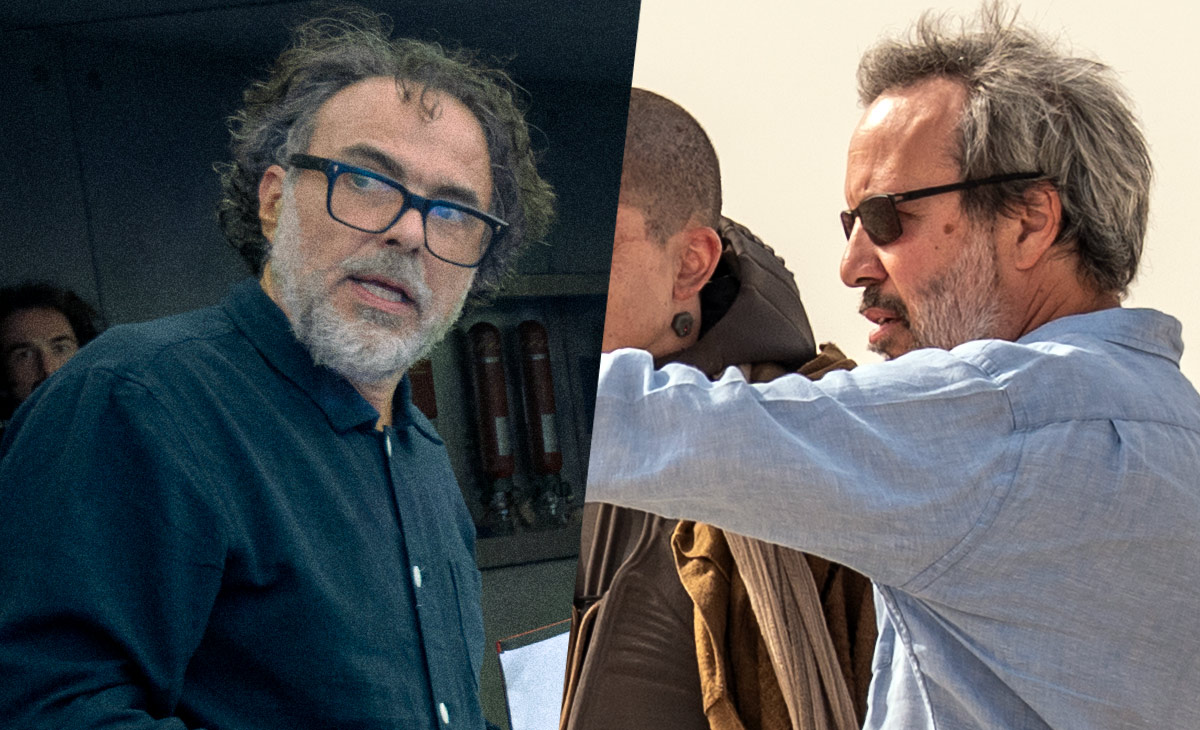
Whatever you make of Alejandro G. Iñárritu’s films, it’s hard to accuse the Mexican filmmaker of ever playing it safe. From the elaborate, seemingly continuous takes of “Birdman” to the grueling physical ordeal of “The Revenant” and the sprawling, surreal introspection of “Bardo,” Iñárritu has consistently made ambitious, sometimes divisive films that push against conventional storytelling. His latest, the Tom Cruise-starring “Digger,” is certainly no exception.
The apocalyptic black comedy follows an obscenely wealthy oil tycoon whose drilling operations trigger a potentially catastrophic environmental disaster, and it has sharply divided critics. But perhaps tellingly, offering a glimpse into how fellow filmmakers—and potentially Academy voters—regard Iñárritu’s work, director Denis Villeneuve, whose own films include “Arrival” and “Dune: Part Two,” has nothing but admiration for his willingness to take enormous creative risks, regardless of whether they always pay off.
During a recent Directors Guild of America screening and Q&A, subsequently released on the DGA’s “The Director’s Cut” podcast, Villeneuve enthusiastically praised Iñárritu’s film and the creative instincts that have defined his career.
“That’s a hell of a ride, my friend,” Villeneuve said after the screening. “It’s a comedy, but it’s a furious comedy, and it’s a very important mirror. It’s a very important movie.”
Villeneuve even compared the film’s treatment of climate change to the way Stanley Kubrick’s “Dr. Strangelove” confronted the threat of nuclear war. But he was equally interested in Iñárritu’s broader approach to filmmaking.
“Movie after movie, you are pushing the boundaries, and I feel that you’re always putting yourself in a dangerous position artistically,” Villeneuve said, asking whether the filmmaker consciously feels compelled to take those risks.
Iñárritu explained that he doesn’t deliberately seek out difficult productions. Rather, the material often takes him somewhere he never anticipated.
“I never planned the challenge,” Iñárritu said.
“Digger” was particularly challenging in that regard. He initially conceived it while finishing “The Revenant,” and it evolved over nine years, with contemporary events repeatedly threatening to overtake its increasingly absurd satire.
“We were pushing the imagination, but we were chased by reality,” Iñárritu explained.
The project actually collapsed twice during pre-production, forcing him to abandon it temporarily and make “Bardo” instead. Eventually, he realized that the film’s enormous disaster sequences, originally envisioned through realistic locations and elaborate water-tank photography, needed an entirely different approach. The solution was to embrace theater, handmade miniatures, and deliberately artificial techniques that could create distance between the satire and the real world it reflected.
That unconventional structure particularly impressed Villeneuve, who praised the film’s shifting narratives and its exploration of storytelling itself.
“The movie is also about this, the power of storytelling,” Villeneuve said, describing how Iñárritu repeatedly draws audiences into one narrative before destabilizing their understanding of what they’re watching.
Villeneuve was also impressed by the film’s visual ingenuity, particularly its miniature work and old-fashioned practical effects.
“It totally works,” he said, admitting that several shots initially fooled him. “It’s really impressive work.”
For Villeneuve, the theatrical framework let Iñárritu “develop a language that is quite unique,” giving the film an unusual mix of cinematic spectacle and deliberately artificial stagecraft.
Iñárritu admitted that navigating those competing styles was extraordinarily difficult, particularly when it came to the performances. With an ensemble that includes Riz Ahmed, Sandra Hüller, Jesse Plemons, and John Goodman, the filmmaker spent roughly two months rehearsing, attempting to find a rhythm that balanced heightened theatricality with believable human behavior.
At one point, he even feared the whole experiment might collapse.
“I arrived into my home and said, ‘What I’m doing? This is the worst film ever,’” Iñárritu recalled, describing the anxiety of watching scenes that seemed hilarious on set fall flat in the dailies.
Still, Villeneuve was clearly won over by the finished result. He repeatedly complimented the film’s intricate production design, its practical effects, and Cruise’s performance, which Iñárritu said surprised him with its verbal and physical precision.
“I think it’s a total success,” Villeneuve told him toward the end of their conversation, later closing with another enthusiastic endorsement: “Extraordinary score for extraordinary movie.”
Of course, Iñárritu’s willingness to push audiences into uncomfortable territory has never guaranteed universal approval, and “Digger” may be among his most polarizing efforts yet. But Villeneuve’s appreciation for a filmmaker who refuses to repeat himself is particularly interesting coming from a director who has spent much of the past decade making extraordinarily ambitious studio spectacles of his own.
“Digger” is now playing in theaters via Warner Bros., while Villeneuve prepares to complete his science-fiction trilogy with “Dune: Part Three,” opening December 18.