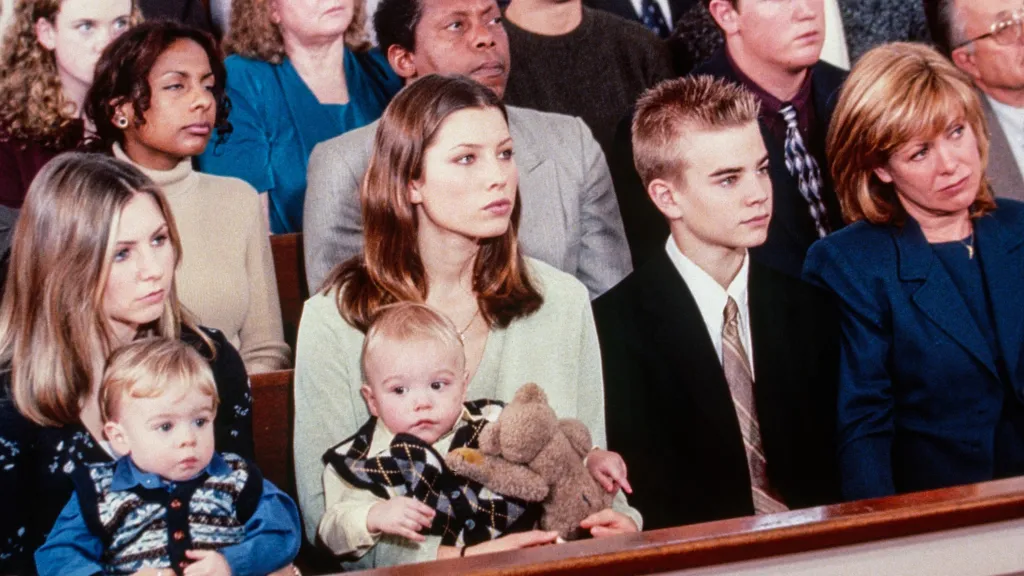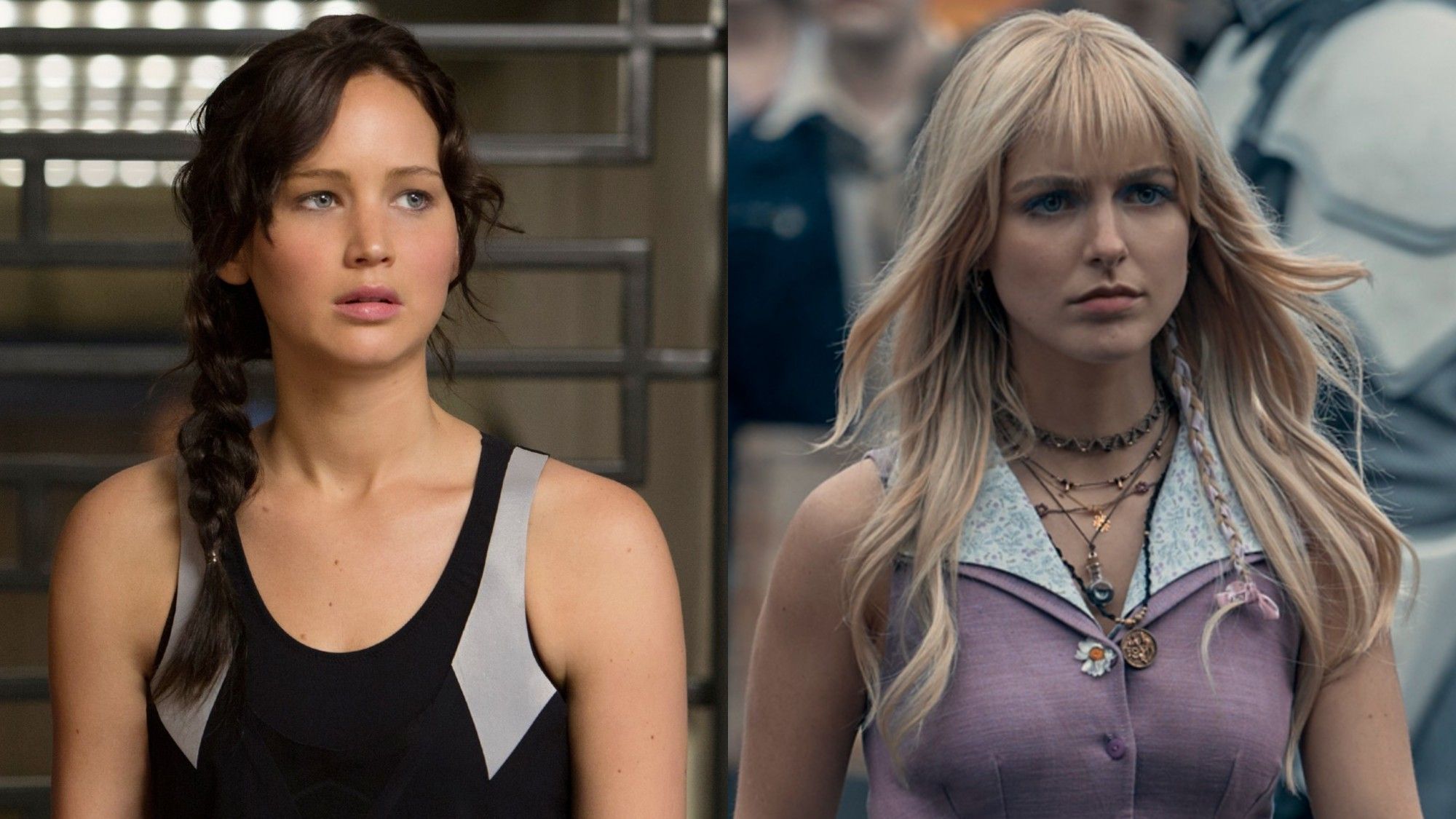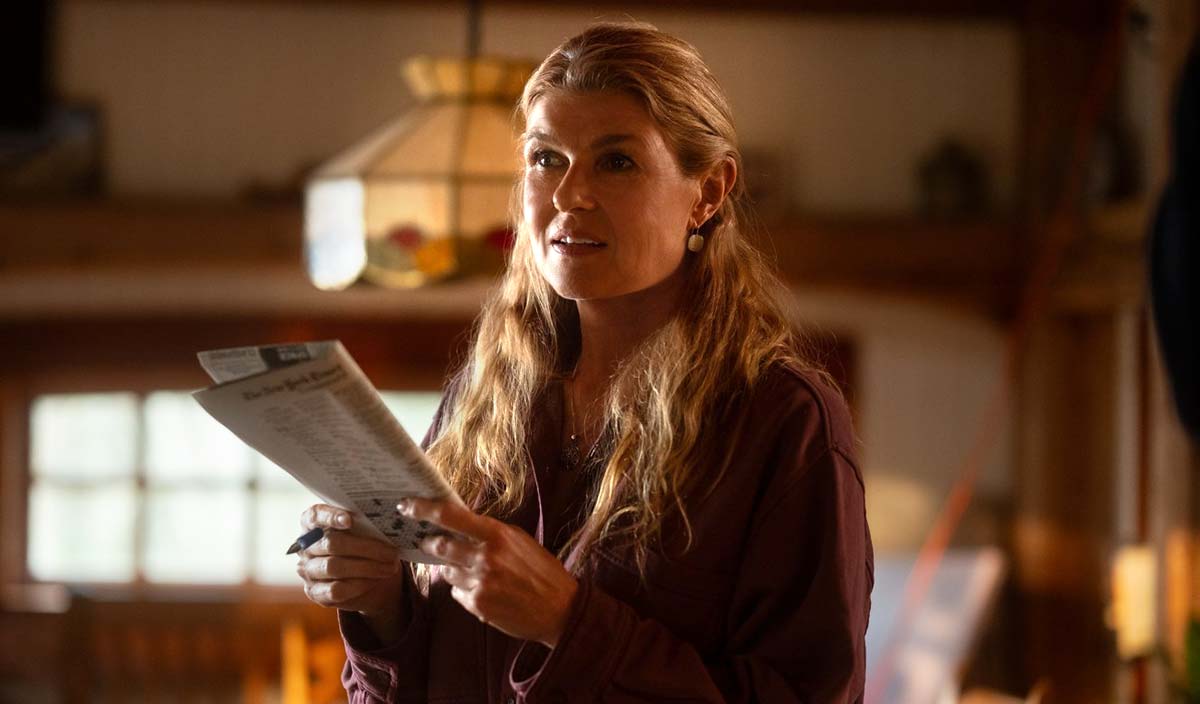
It’s one thing to survive a horrific car accident and emerge facing a full recovery. But what if one of the first people you encounter afterward is a woman who vaguely resembles your mother, claims to be her, and whom everyone else accepts as the real thing? That’s the unsettling mystery at the heart of Hulu’s new series “Phony,” which follows teenager Sonny (Sam Nivola) as he becomes convinced the woman filling his mother’s role isn’t Ellen (Connie Britton), the single parent with whom he shares an unusually close bond. The central question becomes whether something sinister has actually happened or Sonny’s perception of reality has fractured.
But for creator Nick Paley, the mystery is only part of the story. Speaking with The Playlist’s Brian Farvour, Paley explained that the show’s origins were much more personal, rooted in the uncomfortable process of growing up and recognizing that your parents are people entirely separate from you.
“The germ of this idea came from a coming-of-age story,” Paley explained, describing the adolescent need to see your family differently in order to establish your own identity. “When you’re coming of age, and you need to see your family in a new light to get away from them and figure out who you are separate from them, that’s the emotional underpinning of the story.”
Beneath the impostor premise, he sees something much more universal: the struggle to understand who you are outside the people who raised you. As Paley put it, everyone eventually confronts the same question: “Who am I separate from them?”
That question also informs the series’ title. As Paley explained, “Phony” refers not only to the possibility that Ellen isn’t who she appears to be, but also to the ways teenagers experiment with different versions of themselves while searching for an identity.
“As a high schooler, I feel like I was very much like him in the sense that I didn’t quite know myself, so I was auditioning different versions of myself constantly,” Paley said. “I think it’s common, and I think it’s sort of an achy time where you’re really pinning your whole identity on ridiculous details.”
Paley recalled his own teenage tendency to define himself through superficial details, including a hemp necklace with a red bead that briefly became central to his personality. “My whole personality is this necklace,” he remembered thinking. “If I just wear this, I’ll be okay. People will be like, ‘Got it. He’s the guy with the necklace.’”
For Paley, that uncertainty is central to the show’s larger themes. “The idea of ‘Phony,’ in the most emotional sense, is that search, that feeling that you’re inauthentic for so long, for so many years of your life,” he explained, describing the constant adolescent scramble for something that feels like a genuine identity. For Sonny, that uncertainty becomes considerably more frightening when it extends to the person he knows best.
Although “Phony” operates as a suspenseful mystery, Paley was determined to make something emotionally satisfying beyond its twists. His early influences included the Dardenne brothers and Asghar Farhadi, filmmakers whose grounded dramas shaped his approach to storytelling. Later, after becoming roommates with Zach Woods and discovering the Upright Citizens Brigade comedy scene, his interests expanded to include humor alongside more serious material.
“I realized that the things that felt the most true had comedy and heart in addition to the deep drama,” he explained, citing Kenneth Lonergan as another important influence. “I feel like he’s amazing at humor, and he also writes such incredible dramas.”
That combination was especially important to “Phony.” Paley wanted the mystery to remain entertaining without overwhelming the relationships, warmth and humor that distinguish the show from more conventional psychological thrillers.
“I’ve spent so much time thinking about how to make this mystery very fun and satisfying,” he said, but he was most excited to explore “the warmth and the drama and the humor.” Even the trailer reactions surprised him, with viewers wondering exactly what kind of show they were watching. Alongside the suspense, he wanted friendship, character, and the emotional awkwardness of growing up.
In fact, Paley believes the mother-son relationship should be compelling enough to stand on its own, regardless of the central mystery.
“My hope was, if you were to take out the mystery entirely from the whole show, that the show would basically hold,” he explained. “I approached it like any drama story. I was trying to develop characters that felt really true to my experience and true to people I know.”
He developed this philosophy during his seven years as a writer and editor on “Marcel the Shell with Shoes On.” That film taught him that the more particular a character’s circumstances become, the more universally relatable the story can feel.
“The more specific you get, the more universally you become in the storytelling,” Paley said. He recalled audiences often telling him that Marcel’s grandmother, Nana Connie, reminded them of their own grandparents, despite the obvious absurdity of identifying with an elderly Italian shell who arrived in a coat pocket. The lesson stuck: strange, deeply particular details often make characters more recognizable, not less.
For Paley, the connective tissue between “Marcel” and “Phony” is sincerity. Both projects treat their characters affectionately, even when their behavior becomes ridiculous. Rather than making people the targets of jokes, he prefers finding humor in how genuinely they believe what they’re saying.
“The humor of ‘Marcel’ comes from its ultra sincerity,” he explained. “Even in the jokes, when somebody is saying something sort of absurd, my goal is always to feel like the sincerity of it is the joke,” rather than pointing out how stupid or fallible the characters might be.
That sensibility also informed his casting of Nivola, whose ability to balance sincerity with humor became essential to the show’s shifting tone. Paley considers the young actor particularly gifted at making earnestness funny, a combination he believes is surprisingly difficult to achieve.
“His timing is insane,” Paley said, recalling moments when he wasn’t even certain something he had written qualified as a joke until Nivola delivered it. “I would write a joke and be like, ‘I don’t even know if that’s a joke.’ And then I would give it to Sam,” who would somehow find a delivery that made the line land.
That ability proved especially valuable in a series where the central character’s growing paranoia could easily become exhausting.
“I didn’t want to make ‘Jacob’s Ladder,’” Paley said, referring to the 1990 psychological horror film. “When you’re relying on that type of arc, you kind of have to always escalate, and I feel like the jokes allow the waves of tension to come and go and to release.”
Nivola’s dramatic abilities were equally impressive. Paley recalled being particularly moved by the actor’s work in the second half of the season.
“There are scenes in the back half of the season that I just was blown away by,” he said. “I knew from our early work that he had the ability, but he just brought it to a level that I was shocked by.” In fact, Paley admitted he found himself “crying in the edit” while working with Nivola’s performance.
Britton, meanwhile, presented an entirely different opportunity. Having played so many memorable mothers, particularly in “Friday Night Lights,” she brings an established sense of warmth and maternal reassurance that “Phony” can deliberately challenge.
Paley admitted that those associations probably factored into his decision on some unconscious level, although his admiration for Britton’s abilities was the primary motivation. He singled out her remarkable attentiveness as an actress, describing the way she listens and responds to other performers as something almost tangible.
“She has an insane ability to pay attention, which sounds sort of simple and strange,” he explained. “In conversation or in a scene, the quality of her attention is so deep and rare that it almost feels like an active form of love. It’s incredible to watch.”
That familiar warmth becomes especially useful in a series that questions whether the person we trust most is actually who we believe them to be. Britton’s history of playing nurturing, emotionally grounded characters gives Paley another expectation to undermine.
“There was a benefit here where, of course, Connie Britton stands for something because she’s played characters that are mothers,” he said. But he was just as impressed by her willingness to push beyond those associations.
“She is always seeking a risk in her work,” Paley explained, praising how adventurous Britton has been in choosing projects. He was particularly excited that she wanted to “play with that image and subvert it and deepen it,” rather than repeat a familiar maternal role.
As for the larger mystery, Paley revealed that the first season’s destination was established surprisingly early. He initially sent a logline to producer Charlie Alderman in March 2021, and the pair spent approximately a year and a half developing the pitch. By the end of that process, the season’s fundamental structure, including its conclusion, was largely in place.
“I’ve been working on this show for five years, and so this was mapped out from year one, probably,” Paley explained. Although writer Anthony King later joined the project after the pilot and helped refine the narrative in the writers’ room, the fundamental destination never changed.
“The big idea was always there,” Paley said, careful not to reveal what that idea actually entails.
Five years after that initial pitch, Paley was still putting the finishing touches on visual effects when the interview took place, reflecting on the long journey from an intimate coming-of-age concept to a fully realized psychological mystery.
Ultimately, beneath its unnerving premise, “Phony” is interested in something almost everyone experiences: the realization that the people closest to us may be more complicated than we ever imagined, and that figuring out who they really are is inseparable from discovering who we are ourselves.
This interview has been edited for clarity. “Phony” is now streaming on Hulu. Watch our full conversation with Nick Paley below.

Brian Farvour is a film/television critic and entertainment journalist whose work has also appeared on Fandomwire. He previously co-hosted The Playlist Podcast.