There are far easier ways to make an animated movie than spending years painstakingly moving puppets a fraction of an inch at a time. In fact, there are probably few ways to make a movie more difficult. But don’t tell Travis Knight to take the easy route. LAIKA’s director and CEO has spent much of his career championing stop-motion animation. With his latest film, “Wildwood,” he and his team have apparently made things even harder on themselves. And considering the staggeringly beautiful results, it’s difficult to argue with their methods.
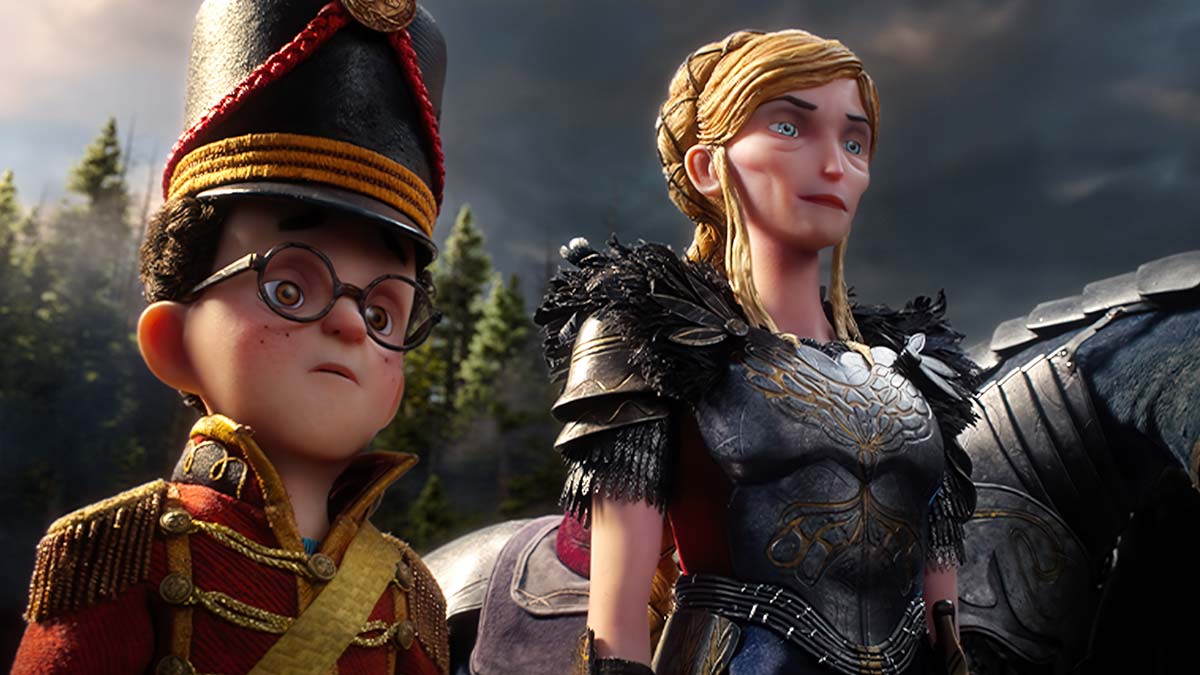
Based on Colin Meloy’s novel, “Wildwood” follows a young girl named Prue who ventures into a mysterious, enchanted forest after a murder of crows snatches her baby brother. What follows is an enormous fantasy adventure filled with strange creatures, warring factions, dark magic, and some genuinely frightening and brutal moments. It’s also a gorgeous piece of filmmaking, almost impossibly intricate in its execution.
Knight first encountered the story 16 years ago, while Meloy was still writing the book, and immediately knew he wanted to adapt it. One significant problem: he had no idea how to pull it off.
“I knew I wanted to make it. And then I had the horrible realization that I had absolutely no idea how to make it,” Knight told The Playlist’s Mike DeAngelo during an interview for The Discourse podcast. “It required us to be better than we were. It required us to be more than what we were. The film asked a lot of us, and we were not ready.”
No single technological breakthrough suddenly made the project possible. Instead, LAIKA spent years developing the story, characters, and world while its techniques and craftsmanship improved with each successive production. Even after five films’ worth of advances, Knight found the studio still had plenty of work ahead.
“Seven years ago, I told the team, all right, we’re making ‘Wildwood.’ And the universe smiled, a knowing smile, and it said, fine, but first you will suffer beautifully. Because we were not ready.”
Even then, the scale of the undertaking forced everyone to keep evolving as artists and technicians. That suffering, however, is something Knight considers essential to the art form. When asked whether he ever wishes there were an easier way to make these movies, he admitted the thought certainly crosses his mind.
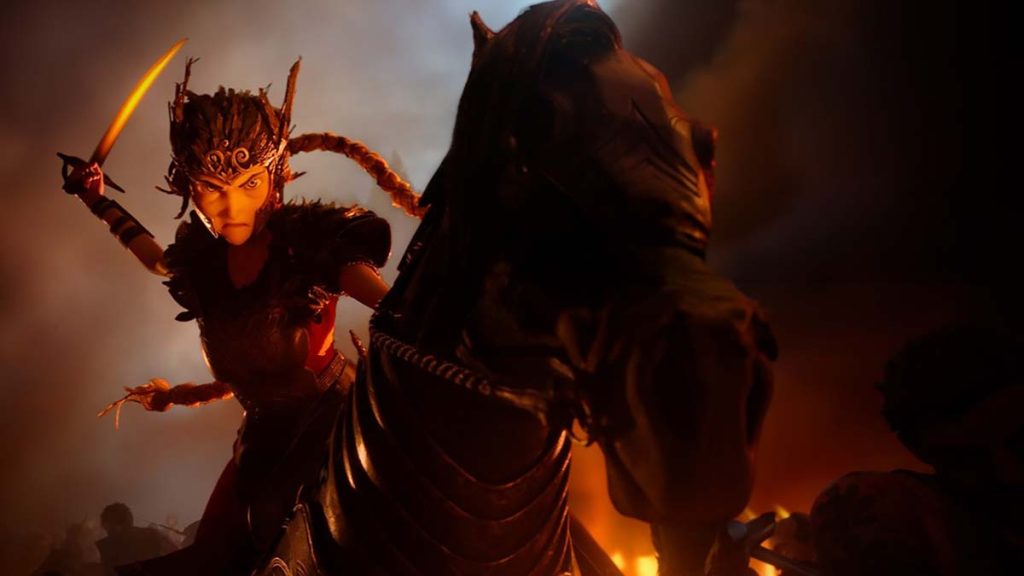
“There is an easier way. But I would argue there is not a better way,” he explained. “As much as I think that stop motion is the worst and most painful way there is to make a movie, I also think it has more joy than any other form of filmmaking that I can imagine.”
For Knight, that joy comes from the countless artists whose work makes every frame possible, and the extraordinary amount of human effort that goes into bringing these miniature worlds to life.
“What you’re looking at when you’re looking at a movie like this is the accumulation of thousands and thousands and thousands of acts of effort and devotion and care on the part of exquisite human beings who devote their time and their creativity, their ingenuity, their humanity to bring something to life a frame at a time,” he said. “It is the most human form of filmmaking. And it’s one of the things that I think gives it its beauty, which is why I’ve devoted my entire life and career to this form of filmmaking.”
Naturally, that brought the conversation to artificial intelligence and its increasingly prominent role in the entertainment industry, with studios exploring AI-generated imagery and other shortcuts, could Knight ever see LAIKA incorporating the technology into its filmmaking process?
“Absolutely f*cking not,” Knight responded without hesitation. “AI is theft. It’s the ingestion of years and years and years of human creativity and ingenuity, regurgitated back. It has no humanity. It has no spirit.”
Knight acknowledged that AI is extraordinary, transformative technology with potentially tremendous benefits in areas such as medicine and analysis. But when it comes to replacing human creativity, he has little patience for the argument.
“I’ve devoted my entire life to the human artist. I will continue to devote my life to the human artist,” he said. “We’re not churning butter by candlelight while we’re making these movies. We use computers. But we use computers as tools. We use computers as tools to advance human creativity and artistry. And AI does not do that. It is basically, as far as I consider, it’s larceny.”
He continued, “A machine has never fallen in love. A machine has never lost someone. A machine has never had its heart broken. A machine has never lost a brother. Only a person has. And so if you’re going to tell a story about these things, it has to be a person.”
Knight conceded that AI might eventually approximate those experiences, but argued that whatever it produces would still filter actual human emotions and experiences through a machine. For all its technological promise, he believes the potential dangers shouldn’t be underestimated.
“While I can appreciate how extraordinary the technology is, I also think it’s dangerous, and we need to treat it very carefully,” he said.
Of course, LAIKA’s commitment to doing things differently extends beyond its animation techniques. The studio has never been particularly interested in shielding younger audiences from frightening imagery or difficult subject matter, and “Wildwood” is certainly no exception. DeAngelo mentioned watching the film with his seven-year-old son, who enthusiastically described his favorite quality of the movie in two words: “It’s brutal.” Knight laughed and responded, “Well, bravo.”
“We don’t file off the rough edges because the rough edges are where you feel something,” Knight explained. “And we have great respect for younger people and for younger audiences. And we treat them with respect. They have complex inner lives, just like we as adults do, and we want to make sure that we’re showing sensitivity and respect and authenticity towards their experience.”
As for what comes next, Knight revealed he’s developing several projects, including some unrelated to the fantasy genre. After spending the better part of two decades bringing “Wildwood” to life, he’s eager to challenge himself in different ways.
“I love challenging myself as an artist, as a filmmaker, as a storyteller. I don’t want to repeat myself,” he said. “I have a number of different things that I’m developing right now, none of which are like anything that I’ve done before.”
That prospect excites him, though he admitted there’s always some fear in venturing into unfamiliar territory.
“I’m always terrified about the things that I dive into, and I’m afraid that I won’t be able to do it justice. I’m afraid that something I love will not resonate with other people. But that’s my responsibility. That’s my job: to give people a reason to care.”
Perhaps he’s earned the right to try something a little smaller. Though knowing Knight, even a modest chamber drama would probably involve several hundred puppets and a few years of sleepless nights.
“Wildwood” opens in theaters October 23. You can watch our full conversation with Travis Knight below.

Mike DeAngelo is a film writer, podcaster, and entertainment journalist whose work has appeared in Variety, The Hollywood Reporter, IndieWire, and beyond. He is the host of The Playlist’s podcasts The Discourse and Bingeworthy.