64 years ago today, on October 24, 1962, John Frankenheimer’s The Manchurian Candidate arrived in American theaters with Frank Sinatra, Laurence Harvey, and Angela Lansbury in a political thriller whose fictional nightmare seemed alarmingly compatible with reality.
Two days earlier, President John F. Kennedy had addressed the nation about Soviet nuclear missiles in Cuba and announced a naval “quarantine” that brought the United States and the Soviet Union perilously close to nuclear war. The crisis would continue until October 28. So the film’s release dropped during one of the most dangerous weeks in modern history.
The coincidence was remarkable, although there is no evidence that the filmmakers deliberately scheduled the release to exploit the crisis. Adapted from Richard Condon’s 1959 novel, with a screenplay by George Axelrod, the 126-minute film had been in production months earlier. Its timeliness came from something more unsettling than opportunistic marketing: it dramatized a world in which national security, political ambition, and invisible enemies could converge to undermine American democracy.
The premise follows Korean War veteran Raymond Shaw (Harvey), whose fellow soldiers believe he saved their lives. The truth? Their memories have been manipulated by Communist captors, and Shaw has been conditioned to become an assassin.
Major Bennett Marco (Sinatra), plagued by nightmares and inconsistencies in the official account, begins investigating. The conspiracy reaches into American politics through Shaw’s formidable mother, Eleanor Iselin (Lansbury), whose ambitions are entangled with those of her husband, Senator John Iselin.
As the missile crisis unfolded outside theaters, audiences could hardly ignore the film’s central anxiety: the possibility that the greatest threat to a country might be concealed within its own institutions.
The Most Sophisticated Paranoid Thriller
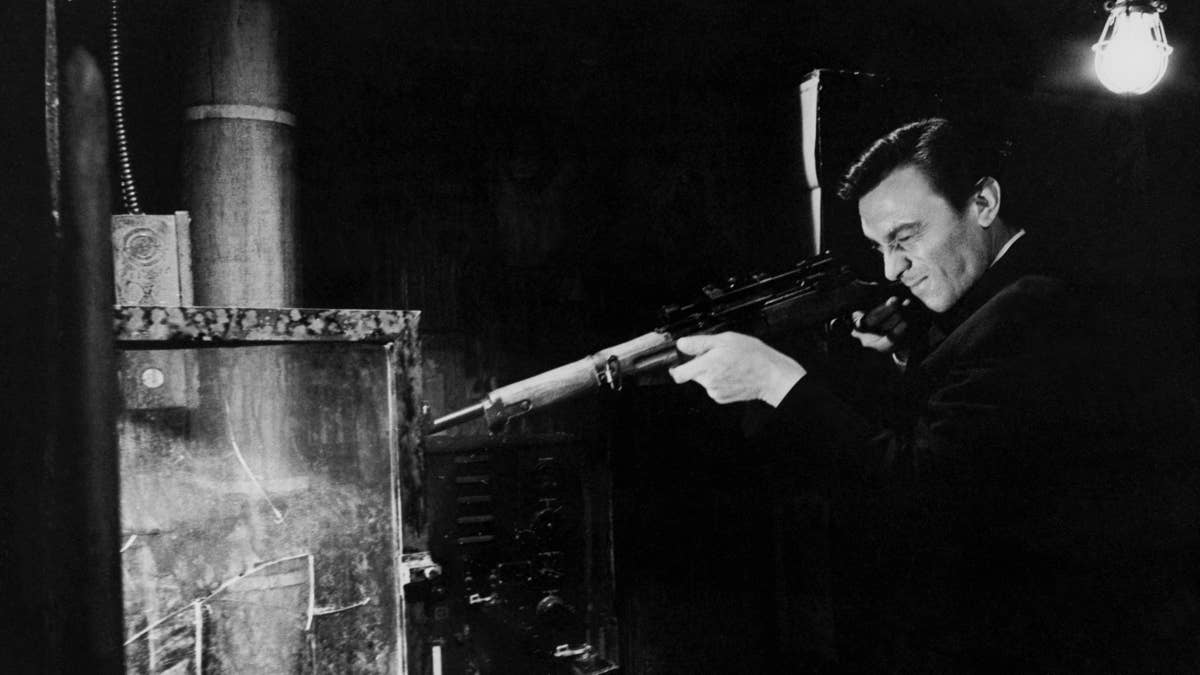
Frankenheimer’s achievement lies in making the conspiracy simultaneously terrifying and ridiculous. Senator Iselin’s opportunistic anti-Communism evokes Senator Joseph McCarthy, whose political career weaponized allegations of Communist infiltration.
The AFI Catalog records that the filmmakers consciously modeled Iselin on McCarthy. Screenwriter Axelrod went further, describing the film as an examination of McCarthy’s “brainwashing of an entire nation” through politics and mass media.
The film’s satire bites because its villains exploit weaknesses that already exist in American society. Political theater replaces evidence, public fear becomes a weapon, and the pursuit of power makes democracy vulnerable from within. Lansbury’s Eleanor is particularly chilling because she combines maternal authority with ruthless political calculation, while Harvey plays Raymond as a tragic instrument whose apparent heroism conceals his captivity.
Frankenheimer’s visual language strengthens the argument.
The celebrated brainwashing sequence fractures perspective, moving between an apparently respectable gathering of women at a horticultural lecture and the horrifying reality of American soldiers being manipulated by their captors. The disorientation makes viewers experience the same uncertainty that Marco confronts.
Black-and-white cinematography, abrupt tonal shifts, and meticulously controlled editing transform political suspicion into cinematic form. Roger Ebert later included the film in his Great Movies collection, observing that its title had entered everyday language as shorthand for a programmed assassin.
“The title of “The Manchurian Candidate” has entered everyday speech as shorthand for a brainwashed sleeper, a subject who has been hypnotized and instructed to act when his controllers pull the psychological trigger… That such programming is impossible has not prevented it from being absorbed as fact….”
He also raised a provocative historical question: might speculation about Lee Harvey Oswald’s motives have been less feverish without the film providing a template?
“…this movie, released in 1962, has influenced American history by forever coloring speculation about Lee Harvey Oswald. Would the speculation about Oswald’s background and motives have been as fevered without the film as a template? The film has become so linked with the Kennedy assassination that a legend has grown up around it.”
That question illustrates the movie’s extraordinary cultural reach. Yet its sophistication comes from more than predicting anxieties surrounding political violence. It asks how people distinguish genuine threats from manufactured ones when propaganda, institutional authority, and personal ambition all compete to shape reality.
From Contemporary Controversy to Cinematic Immortality
The film’s initial reception was divided.
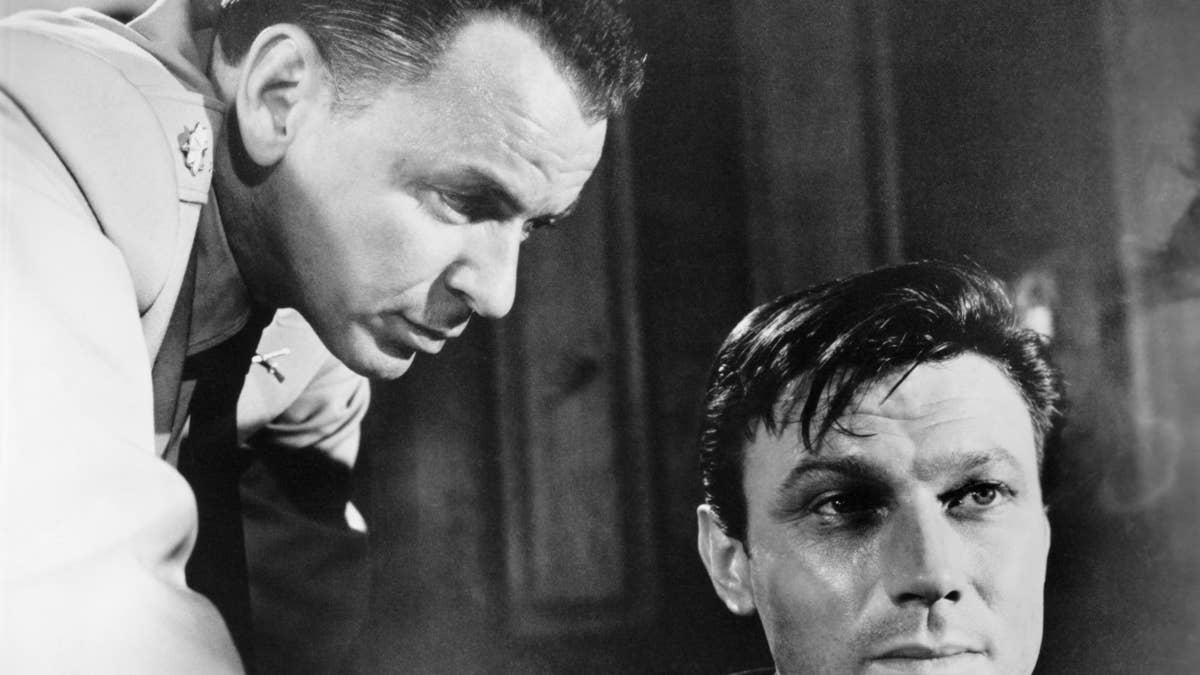
According to the American Film Institute’s historical record, The New York Times judged it unsuccessful as both satire and thriller, while The Los Angeles Times praised it as exceptional. Laurence Harvey complained that few critics understood its meaning. The film subsequently received two Academy Award nominations, including one for Lansbury, whose performance earned a Golden Globe.
Its later reputation has been considerably stronger. AFI ranked it No. 67 on its original 100 Years…100 Movies list in 1998 and No. 17 on 100 Years…100 Thrills in 2001. These rankings substantiate its standing as a major American thriller, although calling it the single most sophisticated paranoid thriller remains a critical judgment rather than an official consensus.
The film also acquired a mythology of its own. Claims that Sinatra withdrew it following Kennedy’s assassination in 1963 have been disputed by Michael Schlesinger, who oversaw its 1988 reissue and attributed its later unavailability to distribution rights and contractual disputes.
More than six decades after its release, The Manchurian Candidate remains remarkable because its nightmare is not simply foreign infiltration. It is the possibility that a democracy can be manipulated by people who understand its fears better than its citizens understand their manipulators. Released as nuclear confrontation threatened the world, Frankenheimer’s masterpiece turned Cold War paranoia into a searching examination of power, propaganda, and the fragility of political judgment.