The 1980s was an exciting decade for factory-built performance. More and more fast versions of mass-produced hatchbacks began appearing and even the term “hot hatch” itself was coined during that memorable period. But while several iconic hot hatches form the 1980s are still revered by enthusiasts to this day, there are some brilliant machines that remain grossly underrated.
The term “hot hatch” began gaining traction during the second part of the 1980s, with more and more wild, motorsport-derived models being lunched.
Among those were the likes of the Renault 5 Turbo 2, MG Metro 6R4 or Peugeot 205 Turbo 16, three mid-engined legends born out of the highly-competitive Group B rally category.
Apart from those race cars for the road, more conventional performance models like the Peugeot 205 GTi, Volkswagen Golf GTI Mk 2, or the Lancia Delta HF Integrale also became icons of the 1980s, solidifying their place in automotive history books.
Nevertheless, several other hot hatches born during that decade didn’t exactly become legendary, despite being impressive performance machines. In following paragraphs, we’re going to rediscover five of these grossly underrated models and remember what made them spectacular.
1983 Fiat Ritmo/Strada Abarth 130 TC

Photo: Stellantis N.V.
Though Abarth gained worldwide fame during the 1980s for its collaboration with Lancia on models such as the Rally 037 or the Delta S4, the company also helped Fiat develop performance-oriented that attempted to go head-to-head with VW’s popular Golf GTI.
Unveiled at the 1981 Frankfurt Motor Show as the Ritmo Abarth 125 TC, the performance-oriented Abarth version based on the Fiat Ritmo (aka Strada) was improved as part of the second series revamp in 1982,
Debuting in 1982 as a 1983 model, the Abarth 130 TC wasn’t much different from other Ritmo versions, with only a rear spoiler and bespoke wheels hinting at its sporty nature.

Photo: Stellantis N.V.
Powered by a 2.0-liter Lampredi DOHC eight-valve four-cylinder rated at 128 hp, the hot hatch was praised for its handling, which resulted from the stiffer Abarh-tuned suspension.
With that massive 2.0-liter mated to a close-ratio five-speed manual, the 130 TC felt far livelier and far more thrilling to drive than any other Ritmo/Stada.
Unfortunately, the model failed to become as popular as it should’ve been, mainly because of fierce competition from more renowned rivals like the Golf GTI or the Peugeot 205 GTi.
1986 Shelby Omni GLH-S

Photo: Mecum Auctions
While not as popular as the were in Europe, hot hatches managed to find their niche in the US during the 1980s with models like the Golf GTI and Civic Si selling well nationwide.
Sensing the opportunity, the Chrysler Corporation partnered with the legendary Carroll Shelby and created a performance-oriented version of the Dodge Omni called GLH (Goes Like Hell).
While that model was pretty interesting, Shelby took it to another level in 1986 when he purchased 500 units and transformed them into the first Shelby-badged hot hatch ever produced, the GLH-S (Goes Like Hell S’more).
The Shelby GLH-S benefited from a long list of upgrades, including bespoke wheels, a revamped suspension system and a more powerful engine.

Photo: Mecum Auctions
That engine was the same Chrysler 2.2-liter turbocharged inline-four that powered the Omni GLH, but thanks to extensive tuning, which included an intercooler, a larger turbo and a modified throttle body, output rose from 146 to 175 hp.
The GLH-S was capable of accelerating from 0 to 60 mph (97 kph) in 6.5 seconds and ran the quarter mile in 14.8 seconds, which made it extremely impressive for its era.
Nevertheless, a high sticker price combined with no serious motorsport involvement and lack of availability outside the US limited its potential.
Now often forgotten, the Shelby Omni GLH-S remains one of the most underrated hot hatches of the 1980s and one of the most underrated American performance cars of all time.
1986 Lancia Delta HF 4WD

Photo: Stellantis N.V.
When it comes to iconic hot hatches, few are more highly-regarded than the Delta HF Integrale, which was one of the most dominant ranges of rally cars and road-legal homologation specials of all time.
However, enthusiasts often forget about its immediate predecessor, the Delta HF 4WD. Unveiled at the Turin Motor Show in the spring of 1986, this version saw Lancia concentrate the bulk of its rally efforts on the Group A regulations, since the wild Group B got banned due to serious accidents.
Nearly identical in appearance to the standard Delta, the HF 4WD was a completely different machine, since it debuted a new permanent four-wheel-drive system based on the one used in the mid-engine Delta S4.

Photo: Stellantis N.V.
Apart from the 4WD system, the model got several other upgrades, including a DOHC 2.0-liter turbocharged inline-four that featured a Garrett turbo and an air-to-air intercooler.
Rated at 165 hp, the engine allowed the car to sprint to 60 mph (97 kph) from a standstill in 7.5 seconds and, combined with the improved suspension and 4WD system, made it one of the most thrilling to drive hot hatches of the era.
While the formula was further refined in the Inegrale Deltas that followed, the less-glamorous, often-forgotten HF 4WD remains one of the most exciting hot hatches of the decade.
1987 Citroen BX GTi 16v

Photo: Stellantis N.V.
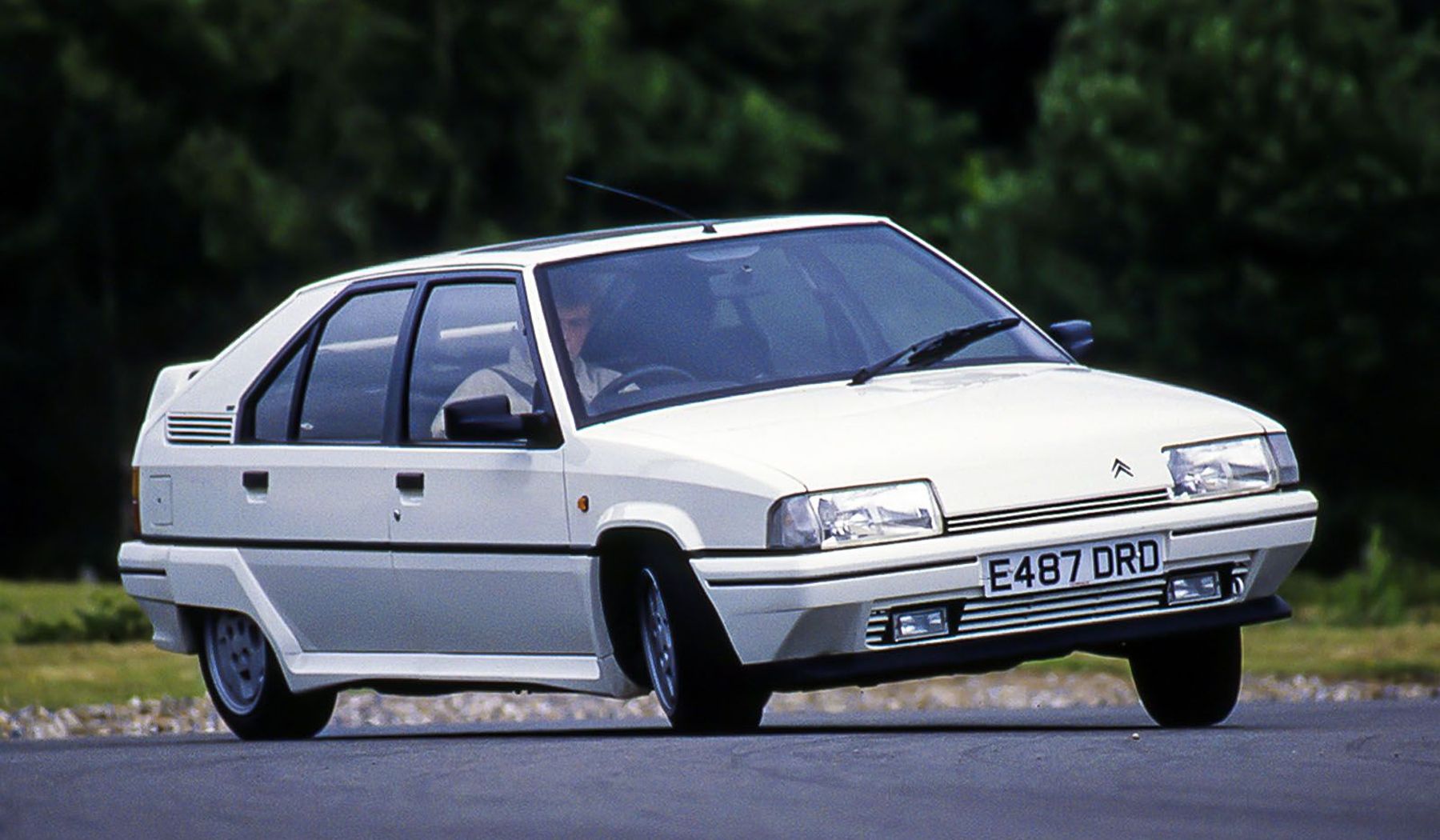
Originally introduced in 1982, the BX was the successor of the successful GS/GSA range. During its lifespan, it was available in various performance versions, with the most impressive being launched in 1987.
Dubbed GTi 16v, the model became the pinnacle of BX performance and differed from its rivals due to its lack of forced induction.
Like the name implies, the BX GTi 16v was powered by a 16-valve 1.9-liter inline-four that made a healthy 158 hp without the use of a turbo or supercharger.

Photo: Stellantis N.V.
Apart from that impressive engine, the BX GTi 16v featured distinch styling upgrades that made it look more aggressive and also came with Citroen’s advanced hydropneumatics suspension that made it one of the best-handling hot hatches of the era.
Able to accelerate from 0 to 60 mph (97 kph) in 7.6 seconds, the GTi 16v was as potent as many of its direct rivals, but failed to become as popular as it should’ve been mainly due to limited motorsport involvement and Citroen’s image as a manufacturer of comfort-oriented models, rather than performance cars.
Despite being often forgotten and still grossly underated, the BX GTi 16v remains one of the most impressive hot hatches of the 1980s.
1989 Volkswagen Golf Rallye G60

Photo: Volkswagen Golf Rallye G60
The original Golf GTI is widely credited for kickstarting the hot hatch segment back in 1975. Extremely popular, the performance-oriented Golf returned as part of the Mk2 lineup and continued to be one of the most highly-regarded models of its kind.
However, enthusiasts often forget that the most impressive Mk2 Golf was not the GTI. That title goes to the Rallye G60, a limited-edition variant launched in 1989 to homologate the Golf for Group A rally competitions.
Unlike the GTI, the Rallye was equipped with a bespoke body kit that made it look far more aggressive.

Photo: Volkswagen Golf Rallye G60
Mechanically, it came with VW’s Syncro four-wheel drive system, special suspension tuning, and was powered by a 1.8-liter four-cylinder rated at 160 hp courtesy of a G-Lader scroll-type volumetric supercharger.
The Rallye looked more aggressive and was more capable than the GTI, but, due to the fact that it cost roughly twice as much and it failed to be a resounding success in full rally trim, the model failed to reach the same heights of popularity as the GTI.
The Golf Rallye G60 was produced in a run of 5,000 units of which a surprisingly low number of cars are still around.
Though it failed to become an icon of the 1980s, the model remains one of the most exciting hot hatches developed in Europe during that decade.