Audi needs US production, but announcing it at a Trump rally has given labour a lever over a plant that still needs board approval. By Stewart Burnett
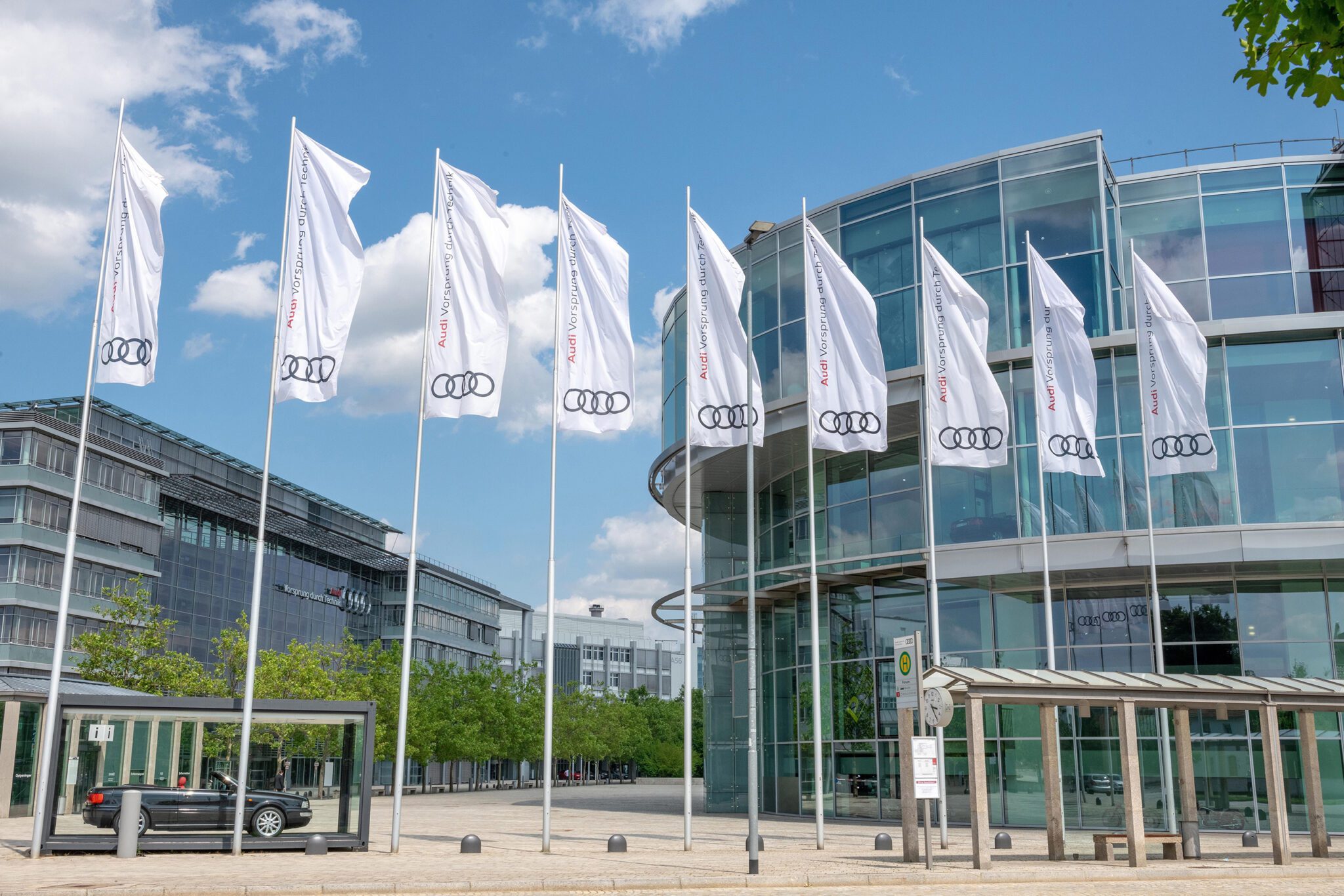
Audi will spend US$4bn on its first US factory, a plant in central Georgia capable of building 200,000 SUVs a year, which US President Donald Trump announced at a midterm campaign rally attended by Chief Executive Gernot Doellner. The appearance, which Germany’s IG Metall union says breached Audi’s own rules on political neutrality, appears to have given labour representatives critical leverage over a project that still needs approval from Volkswagen’s supervisory board.
The development comes at a time when the Group is cutting 100,000 jobs, a number which could reach 140,000 should the automaker proceed with four plant closures in its native Germany. Audi likely aims to use the plant to build the Q7, Q8 and Q9, create about 4,500 jobs and start production in the early 2030s, with roughly half its output exported. A US official told Reuters that Audi also plans to build 25,000 vehicles a year at the smaller US$2bn Scout Motors plant currently under construction in South Carolina.
Last year, volatile US tariffs cost Audi €1.2bn (US$1.4bn) because it imports every car it sells in the US from either Europe or Mexico. However, the rate on German-built vehicles has since fallen from 25% to 15%. Mexico, despite being a theoretically closer trade ally to the US, commands a 25-27.5% rate for Audi models.
In comments to reporters, Doellner defended both the investment and his presence at the rally, saying the Trump administration had asked Audi to make the announcement there after more than 70 locations had been assessed. “This decision was preceded by many months of careful planning and intense negotiations,” he said. “If the American president invites you, you accept the invitation. That is what respect for the office and for the country in which we invest demands.” Strikingly, he declined to say whether the deal includes tariff relief.
Unsurprisingly the backlash in Germany was swift and widespread. Christiane Benner, Head of IG Metall and Deputy Chair of Volkswagen’s supervisory board, said Doellner was “in flagrant breach of his own company’s rules,” since Audi’s code of conduct explicitly bars public engagements with candidates in the three months before an election. A person familiar with the matter told Reuters that Audi’s management board had cleared an exception beforehand. Meanwhile Daniela Cavallo, Chair of VW’s Group Works Council, said Doellner had “allowed himself to be turned into a puppet in the propaganda show” of Trump. “A campaign rally cannot be the right place to announce an investment of this magnitude,” said Olaf Lies, Premier of Lower Saxony, VW’s second-largest shareholder.
The timing of the announcement, in the middle of a historic restructuring and downsizing, is particularly sensitive. As aforementioned, Volkswagen has committed to 100,000 job cuts by 2030, and Audi’s Neckarsulm plant is one of the four German sites without a secure future beyond the early 2030s. The other three are Emden, Zwickau and Hanover. The next Audi A8 is now expected to move over to Porsche. “This is not a decision against Germany. Germany remains the backbone of Audi,” Doellner said, though Metzler analysts noted that “the optics are not great, jobs are being created in the US while Audi is reducing the capacity globally”.
The commercial case is stronger than the politics: Audi is the last of Germany’s premium brands without a US production foothold, and its US deliveries were roughly flat through the third quarter after a 16% slump in 2025. The logic mirrors that of Nissan’s localisation drive and, in reverse, of Europe’s Made in Europe rules, which push Chinese brands to build locally: tariffs reward the companies that build where they sell.
To be sure, the timing also cuts both ways. Trump banks the political benefit before the 3 November midterms, while Audi’s plant will not open until after his term ends in January 2029, so its business case depends on his highly divisive tariff regime outlasting his tenure. Final approval rests with a supervisory board on which labour holds half the seats, and Benner has already set out her terms: “firm prospects for workers at all sites, particularly those here in Germany, must be clearly defined and set out.”
Audi needs a US plant, and the supervisory board is likely to approve one, but Doellner’s rally appearance has likely raised the price for no readily apparent commercial reason. Labour representatives now have grounds to demand firmer commitments for German sites, Neckarsulm included, just as Volkswagen is trying to shed capacity there.