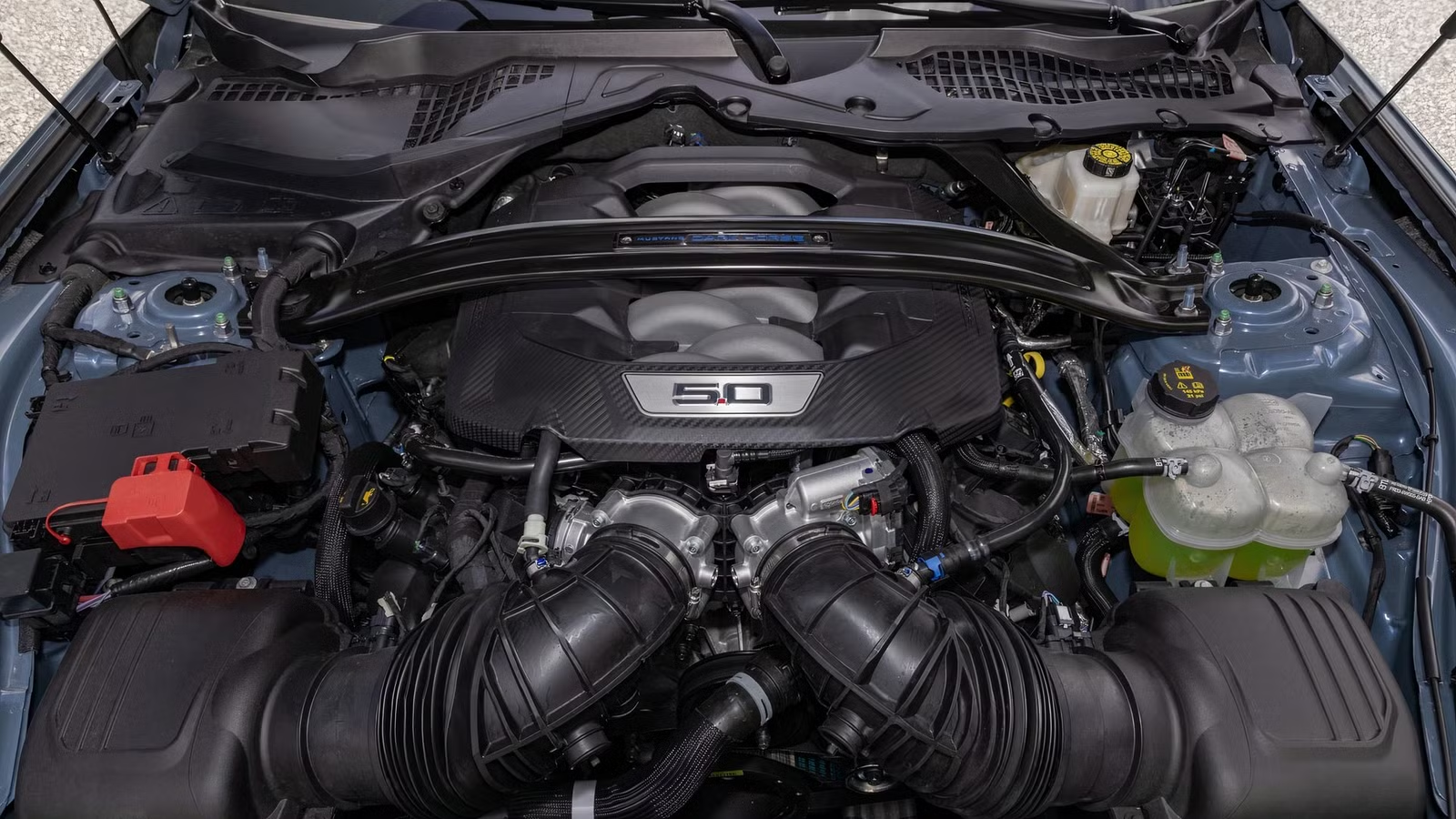
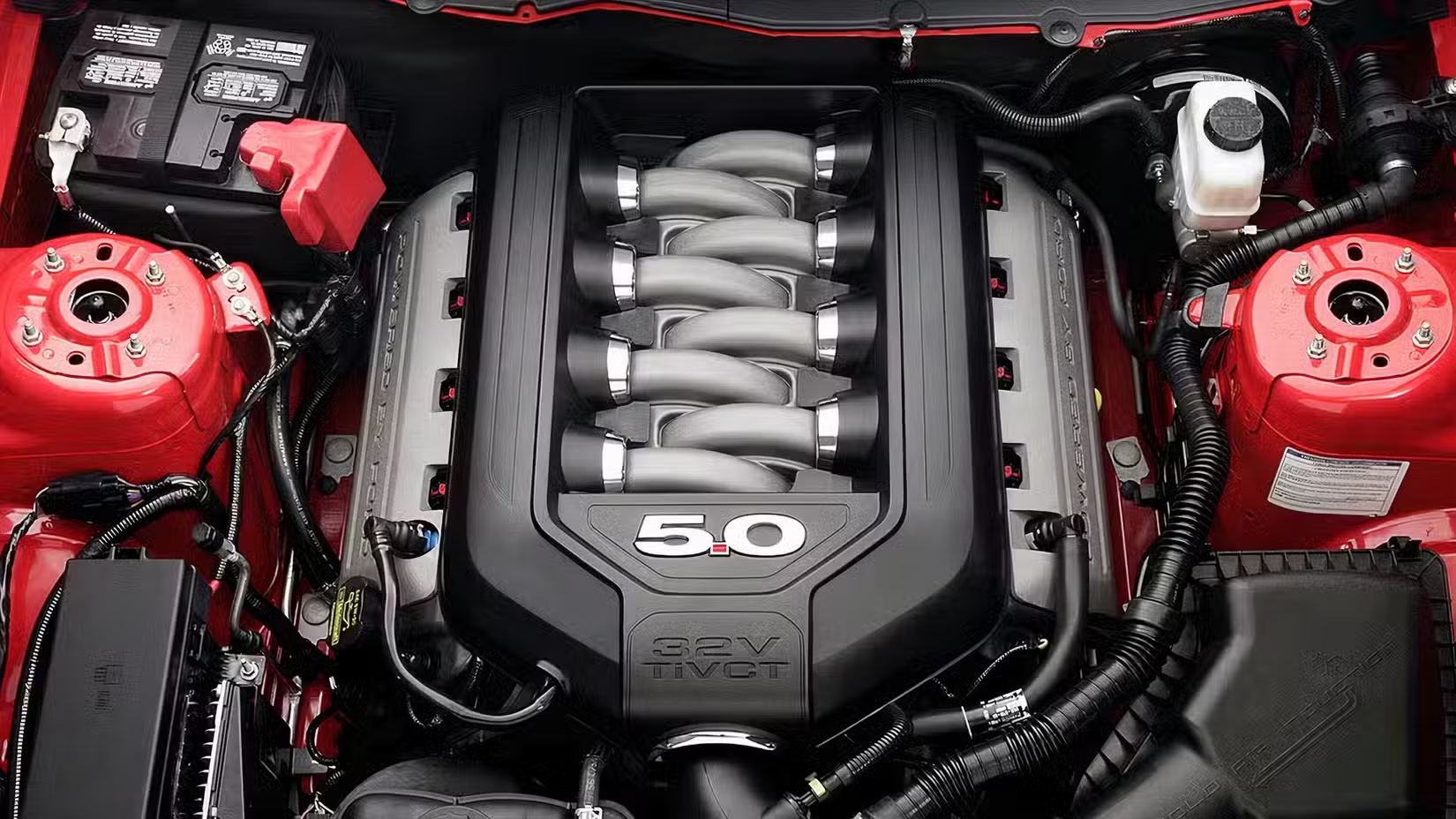
Automakers love turning engine names into brands, but that branding can create a misleading expectation. If two vehicles have the same engine, they should deliver roughly the same experience, right? The 2026 Ford Mustang GT and Ford F-150 prove otherwise. Both are available with Ford’s 5.0-liter Coyote V8, yet one wants you to chase the tachometer while the other is built to pull a trailer. The difference starts with engine tuning, but it extends much further. Transmissions, gearing, weight, throttle mapping, tires, sound, and even seating position help determine what an engine feels like from behind the wheel.
The Mustang GT And F-150 Give Ford’s Coyote V8 Two Personalities
The Mustang’s 5.0-Liter V8 Wants You To Chase The Tachometer
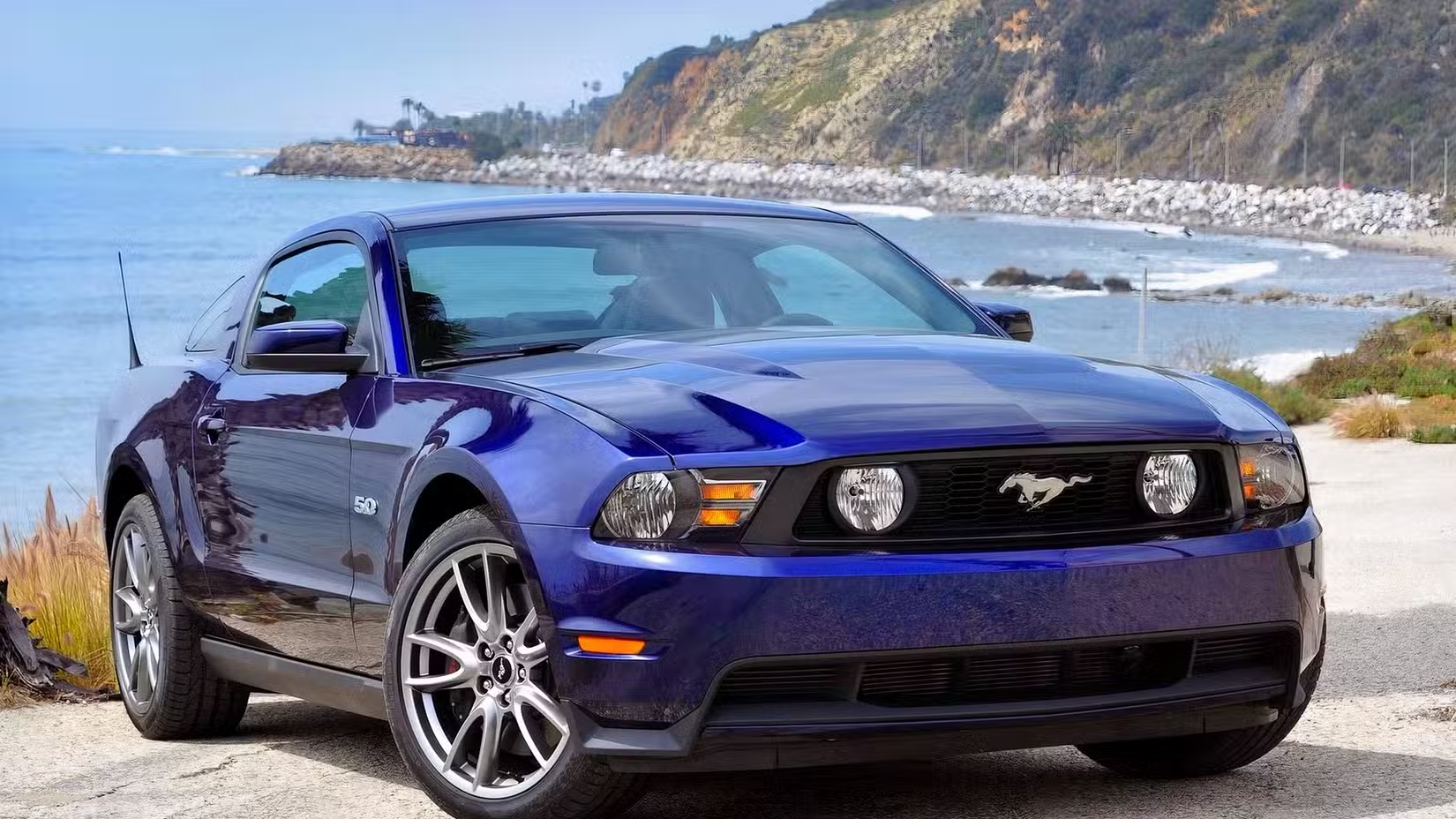
The Mustang’s version of the Coyote saves much of its excitement for the upper end of the tachometer. Its standard 480 horsepower arrives at 7,150 RPM, while peak torque does not arrive until 4,900 RPM. With the available active-valve performance exhaust, output rises to 486 horsepower at 7,250 RPM and 418 pound-feet.
Those figures tell you how the engine wants to be driven. It can move the Mustang at lower speeds without difficulty, but its real character appears when you let it rev. The engine continues to build power after many truck engines would already have upshifted. That rising acceleration, combined with the increasing intake and exhaust noise, makes the Mustang’s Coyote feel energetic and theatrical.
The F-150’s Coyote Concentrates Its Strength Lower In The Rev Range
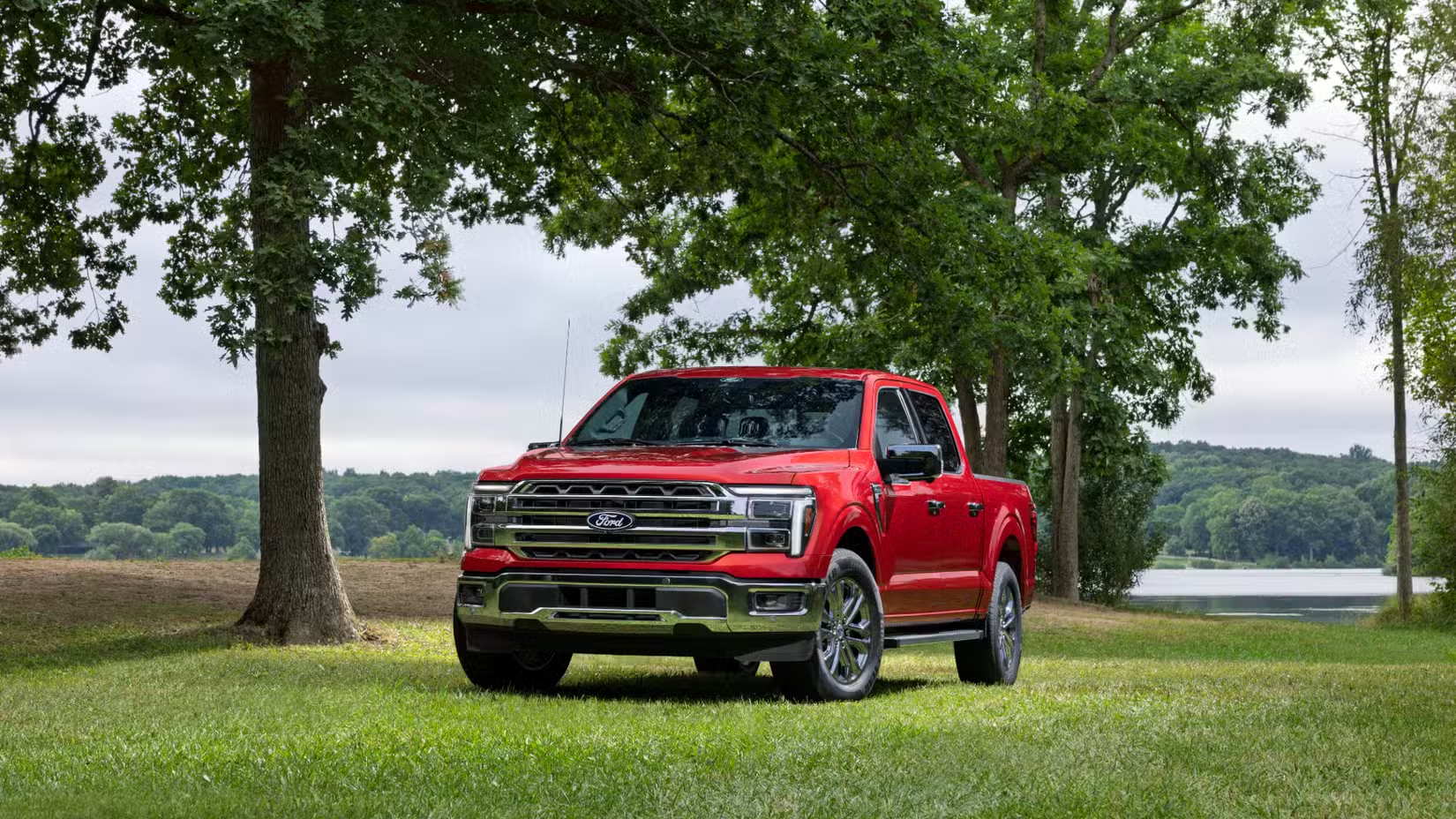
The F-150’s 5.0-liter V8 produces 400 horsepower and 410 pound-feet. Peak torque arrives at 4,250 RPM, which is 650 RPM earlier than in the standard Mustang GT. Its horsepower peak also arrives considerably sooner than the Mustang’s 7,150-RPM maximum.
That does not mean the F-150 always has more torque at every low engine speed. It means its calibration and supporting hardware are designed to deliver useful power without requiring you to chase the Mustang’s upper-RPM excitement. Predictability becomes particularly important when easing away with a trailer or controlling wheelspin on an unpaved surface.
Transmission And Gearing Decide How Much Power You Actually Feel
Gear Ratios Can Make The Same Output Feel Urgent Or Relaxed
The Mustang GT’s available ratios reflect its performance purpose. The automatic GT comes standard with a 3.15:1 limited-slip rear axle, while Ford offers more aggressive alternatives. Performance-oriented configurations can use a 3.55:1 ratio with the automatic or a 3.73:1 Torsen differential with the manual.
The F-150 offers different axle ratios depending on its configuration and intended capability. Truck buyers may select gearing based on towing, payload, fuel economy, or off-road use. Its larger tires also affect the overall ratio between the engine and pavement. Consequently, two engines producing similar torque can create noticeably different acceleration. The engine is only one component in the multiplication process.
Shift Programming Changes The Engine’s Personality
Both vehicles can use a 10-speed automatic, but sharing a transmission model does not guarantee identical behavior. The control software decides when to upshift, how quickly to downshift, when to lock the torque converter, and how long to hold a lower gear.
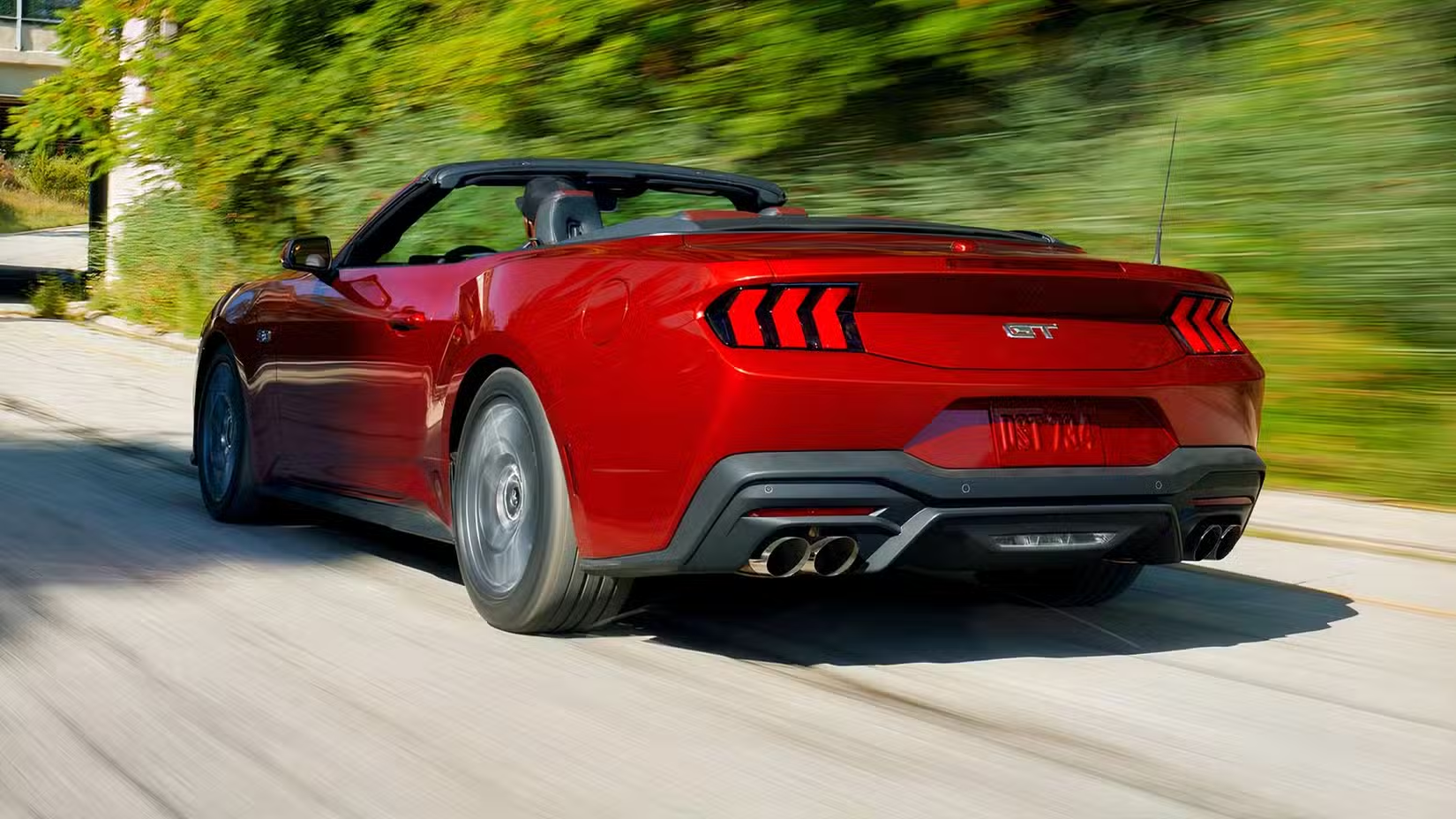
Under aggressive driving, the Mustang can keep the Coyote closer to its horsepower peak. It can downshift decisively and hold gears as the engine approaches the upper end of the tachometer. That behavior makes the V8 feel alert and eager.
The F-150 must consider additional variables, including payload, trailer weight, road grade, traction, and powertrain temperature. Tow/haul mode can delay shifts and increase engine braking, but its purpose is control rather than theater. What you interpret as engine response may actually be transmission behavior.
Weight, Throttle Mapping, And Traction Change The Result
The Engine Must Accelerate The Entire Vehicle
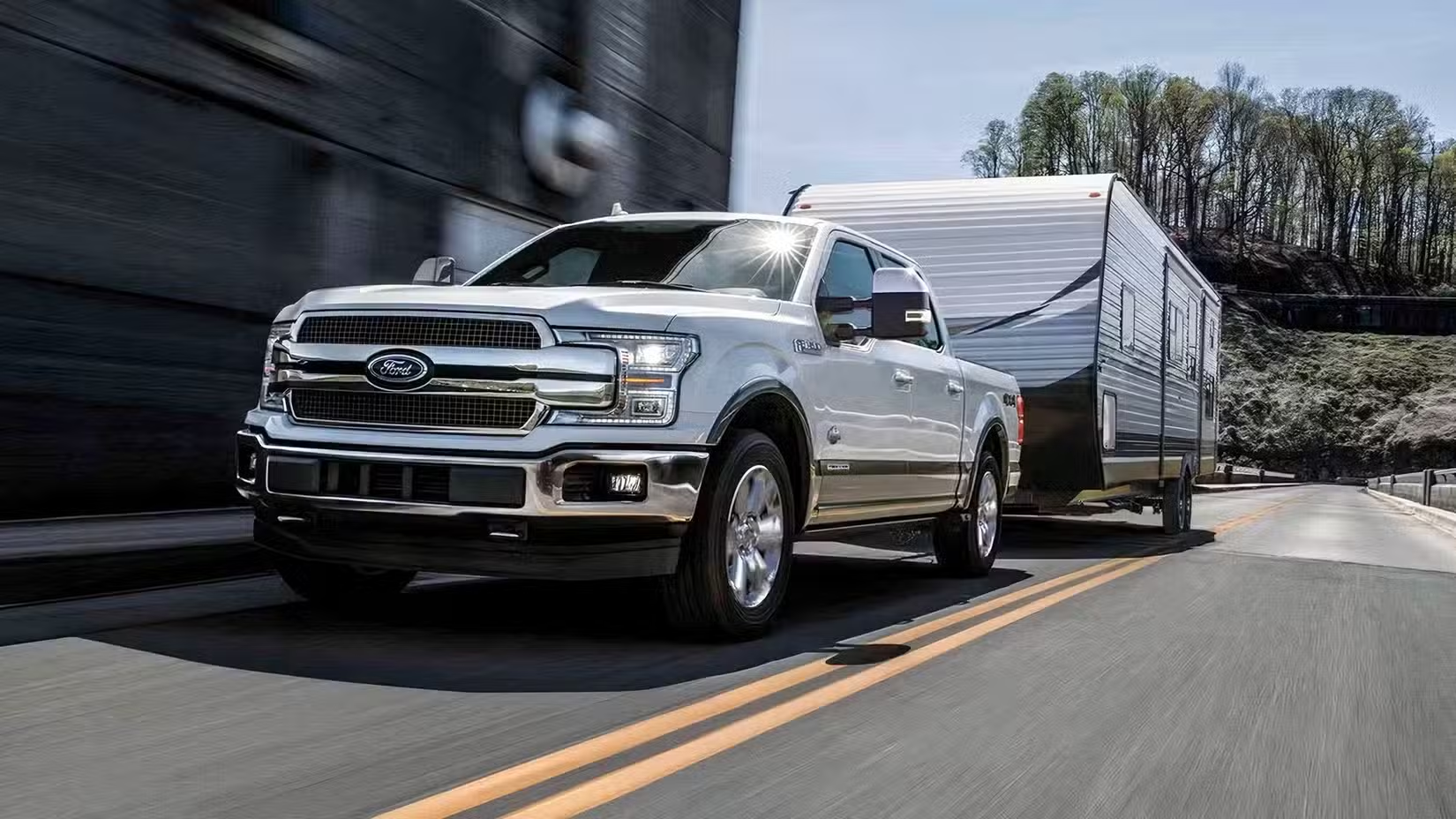
Ford lists the manual Mustang GT fastback at approximately 3,731 pounds. The F-150 curb weight varies considerably depending on the cab, bed, drivetrain, and equipment, but many configurations weigh well over 4,500 pounds. A four-door 4WD truck can carry a substantial weight disadvantage before anyone adds cargo or connects a trailer.
The Mustang, therefore, combines more horsepower with less mass. Using its approximate curb weight and 480-horsepower rating produces a power-to-weight figure of about 7.8 pounds per horsepower. A 5,000-pound F-150 with 400 horsepower would carry roughly 12.5 pounds per horsepower.
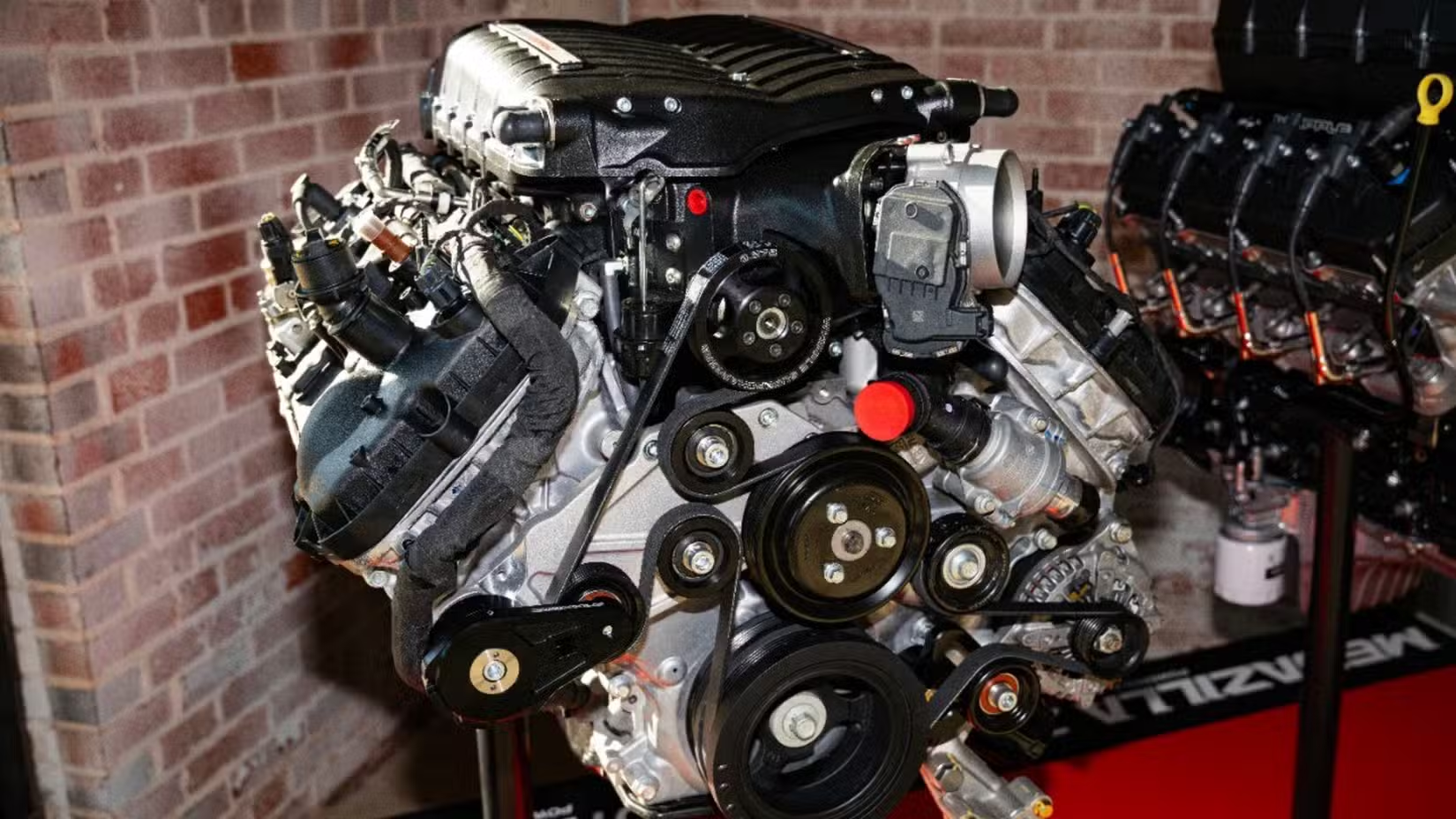
Modern accelerator pedals do not directly open the throttle with a mechanical cable. They send a request to the powertrain computer, which determines how the engine should respond. A manufacturer can make the first portion of pedal travel open the throttle more aggressively, creating an immediate sensation of power. A more progressive map makes it easier to control the vehicle smoothly. That restraint can be useful when towing, driving off-road, or trying to avoid wheelspin in a lightly loaded pickup.
Drive modes can change that relationship without adding any horsepower. Sport mode may sharpen accelerator response and encourage downshifts, while tow/haul programming focuses on load management. Traction control can also reduce throttle input or apply the brakes when the tires begin to slip.
The Mustang Feels Better For Speed, While The F-150 Feels Better Under Load
Sound, Seating Position, And Chassis Response Favor The Mustang

The Mustang does not merely accelerate faster. It is designed to make that acceleration feel more dramatic. You sit lower, closer to the road, with a better sense of speed. Its suspension limits excess body movement, its steering responds more directly, and its performance tires transmit changes in direction more quickly.
Sound reinforces the experience. The Mustang’s intake and exhaust allow more of the V8’s personality into the cabin, especially with the active-valve exhaust in its louder settings. As the engine climbs toward its horsepower peak, the increasing noise tells you that something exciting is happening.
The F-150 uses the same basic engine, with a taller body, a longer wheelbase, larger tires, and a cabin designed to remain comfortable during daily driving and long trips. Those qualities can make the powertrain feel smoother and more distant. If speed and driver involvement define “better,” the Mustang GT is the clear winner. Its version of the Coyote feels sharper because the entire car helps it.
Reliability Scores Are Similar, But Ownership Costs Tell An Interesting Story
According to iSeeCars, both the Ford F-150 and Mustang have an average lifespan of over 150,000 miles and a more than 20 percent chance of reaching 200,000 miles. That said, iSeeCars doesn’t differentiate between engine options, so take that number with a grain of salt.
Edmunds’ TCO, however, lets us glimpse what ownership costs look like for specific trims/engines, and the Ford F-150 with the 5.0-liter Coyote is actually cheaper to own than the 2026 Mustang GT. Maintenance and repair costs are fairly similar, but where the Mustang costs more is in insurance, financing, fuel, and depreciation – common for sports cars. Strip away the sporty consumables and the sports car tax, and you’ve got the same engine, in different tunes, providing drivers with low-cost durability.
The Mustang GT offers a more exciting experience on an empty road. The F-150 delivers a more appropriate experience when towing a trailer. Neither vehicle would improve by blindly adopting the other’s calibration. The Coyote supplies the foundation, but the Mustang GT and F-150 determine what that foundation becomes.
Sources: Ford, Car and Driver, Edmunds, MotorTrend, Kelley Blue Book