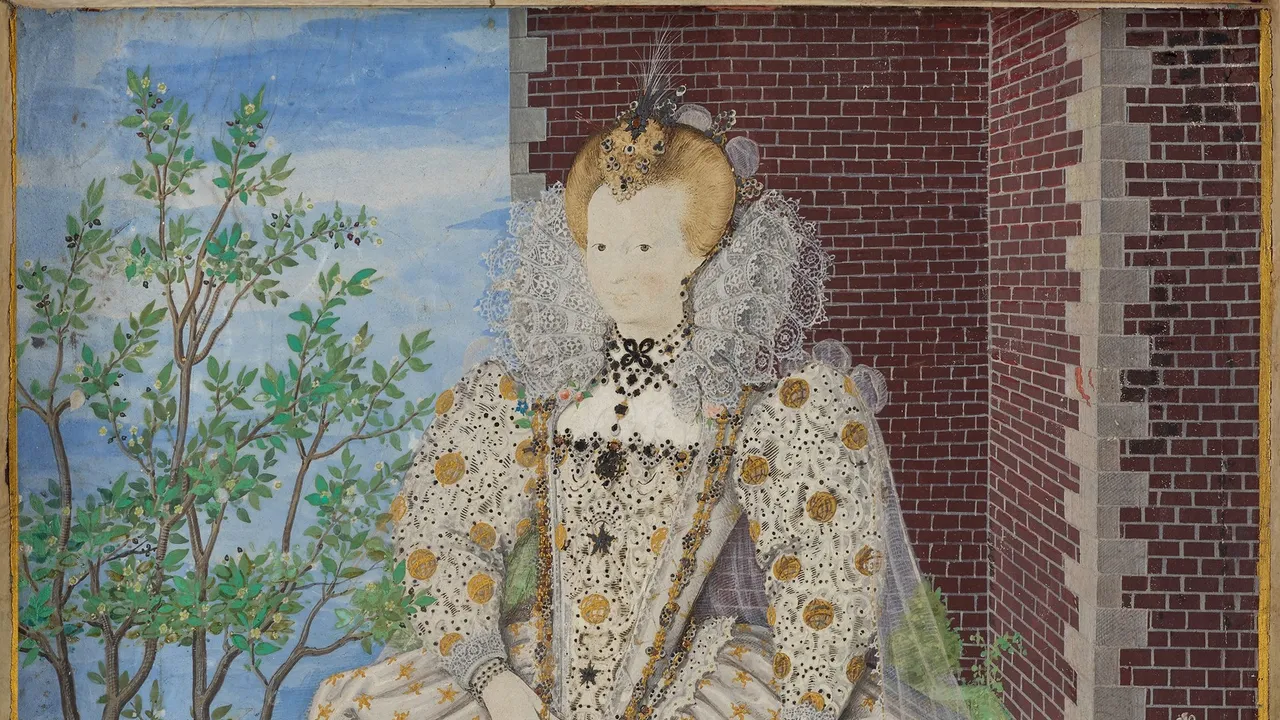
“This was a miniature designed to present Arbella as, among other things, a Queen-in-waiting, another Elizabeth I, but younger and still of child-bearing age,” said Goldring. “Note all the images of fertility and fruitfulness in that garden.”
Small and therefore easy to transport, portrait miniatures such as these were designed to be used in dynastic marriage negotiations between Europe’s royal courts and powerful families. But as Goldring and Rutherword would discover, this particular miniature was more than just a pretty picture of a would-be bride.
“One of the most extraordinary things Emma and I discovered was that Hilliard’s miniature of Arbella was, at one stage, intended for use by the Elizabethan spy services as a prop in a plot to wrong-foot Philip II of Spain,” said Goldring. By leading Philip into believing Arbella was marrying the son of his ally, the Duke of Parma, Protestant England could drive a wedge between two Continental Catholic powers.
“Arbella stands with the world at her feet: She is presented as royal, she is poised to marry into an alliance which will be for England’s good, but she is about to lose it all,” said Rutherford. In the end the marriage plot fell through and the portrait never made it to the continent. Tucked away and forgotten for centuries, it served as a woebegotten metaphor for Arbella’s life.
“When she failed to fulfill her one role in life to become queen, and then her grandmother died a few years later, she rebelled on a grand scale,” said Rutherford. In her 30s Arbella made a last ditch grab for power—or simply agency—when she married William Seymour (another former claimant to the throne) in secret. Word of the marriage reached the top, as it always does (Will these courtiers never learn?) and Arbella’s former rival for the crown, now King James I, had the couple locked up, separately.
Arbella escaped, disguised as a man in a wig, boots and sword, with plans to flee to France with her ill-begotten husband. Seymour made it to safety and prospered like a man. She was caught and sent to the Tower. In a tragically poetic twist of fate, she died in 1615 following a hunger strike in what were likely the former Tower lodgings of her forebear, Anne Boleyn, that other dynastic pawn-turned-power player of the Tudor age.
“I think that this portrait has gone a long way to reviving an interest in Arbella. It has humanized someone who was previously just a footnote in history and fleshed out her story in a way that perhaps no other artefact might have done,” said Rutherford. “And everyone loves a new discovery.”