I get ridiculously excited when two swordsmen spend five minutes talking and neither draws his weapon. One of them says something polite. The other understands it as an insult. Somebody bows a little too slowly. And I’m sitting there practically begging everyone to remain civilized because I know exactly what happens when the talking stops. That kind of tension is addictive.
The sword might be the most dangerous object in the room, but the person holding it usually has considerably more interesting problems. And good lord, when the fighting finally happens! There is something magnificent about watching a character’s entire personality emerge through the way they handle a sword. I adore all of it, especially when a story understands that the most difficult battles sometimes happen long after everyone has put their weapons away. And who does it better than the whole Samurai culture? Here are 7 greatest Samurai TV shows of all time, ranked.
7
‘Lone Wolf and Cub’ (1973–1976)
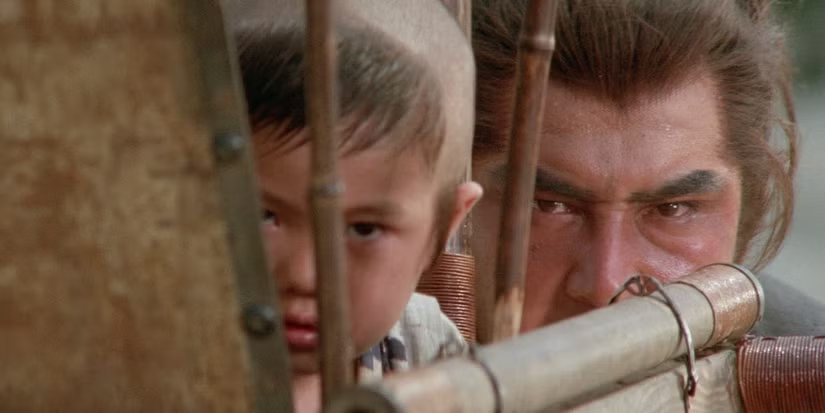
Former executioner Ogami Ittō (Kinnosuke Yorozuya) is betrayed by the powerful Yagyū clan, loses his wife, and takes to the roads of feudal Japan with his infant son Daigorō. Lone Wolf and Cub follows the disgraced samurai as he becomes an assassin for hire while pursuing revenge against the people who destroyed his family. The extraordinary complication is that his young son accompanies him everywhere, traveling in a wooden cart through a country filled with people determined to kill his father.
There is something wonderfully unsettling about watching Ittō move through ordinary villages with that cart. One moment he looks like an exhausted parent traveling with his child. Then assassins appear, and his terrifying reputation suddenly makes complete sense. Based on the manga by Kazuo Koike and Goseki Kojima, the series understands how loneliness can become a way of life. Yorozuya barely needs dialogue to communicate Ittō’s sorrow or determination. And Daigorō makes everything more affecting because every confrontation threatens the only family his father has left. I’d recommend this especially to somebody who believes older samurai television cannot deliver genuinely formidable action.
6
‘Afro Samurai’ (2007)
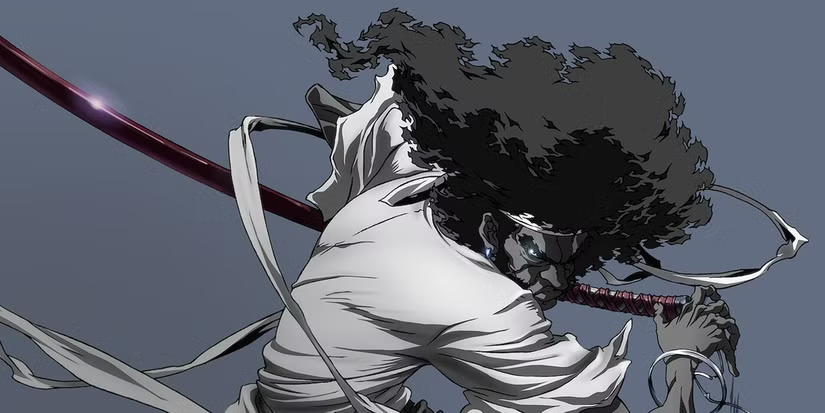
A boy watches his father murdered by a swordsman named Justice, who claims the legendary Number One headband. Years later, Afro (Samuel L. Jackson) possesses the Number Two headband, allowing him to challenge Justice while making himself a target for practically every ambitious fighter alive. Afro Samurai turns that wonderfully simple revenge premise into five episodes of astonishingly stylish violence, accompanied by the constantly chattering Ninja Ninja, also voiced by Jackson.
I have an enormous weakness for how confidently this show combines samurai mythology with hip-hop. The RZA‘s music gives the fighting a completely different pulse, while Afro’s almost stubborn silence makes Ninja Ninja’s nonstop commentary even funnier. Then the story begins returning to Afro’s childhood, particularly the friendships destroyed by his commitment to revenge. Those memories complicate what initially looks like a straightforward journey toward one final opponent. I particularly love the grotesque creativity of the Empty Seven Clan and its mechanical assassin. The whole thing is gloriously excessive, but its melancholy keeps the bloodshed from becoming empty spectacle.
5
‘Rurouni Kenshin’ (1996–1998)
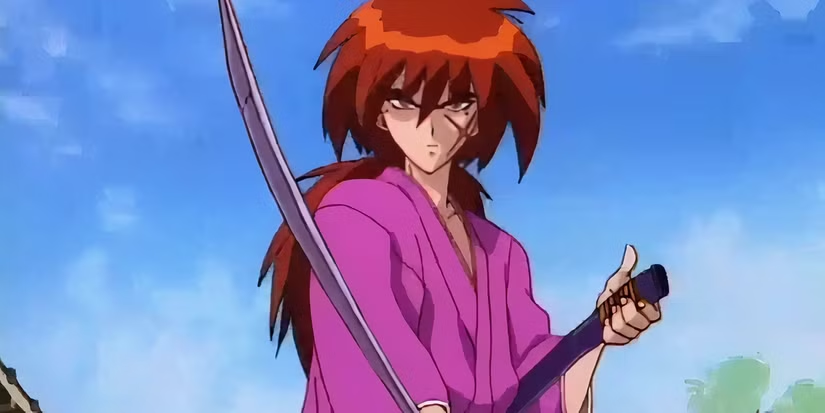
Kenshin Himura, voiced by Mayo Suzukaze, was once a feared assassin known as Battōsai during the violent years preceding Japan’s Meiji era. Now he wanders the country carrying a reverse-blade sword and refusing to kill, eventually finding companionship with Kamiya Kaoru and several other unlikely friends. Rurouni Kenshin follows his attempts to build a peaceful life while enemies from his past repeatedly challenge whether somebody responsible for so much bloodshed can genuinely change.
The Kyoto story is where I become almost unreasonable in my praise. Makoto Shishio is a magnificent antagonist because his belief that the strong should rule directly challenges Kenshin’s determination to protect the vulnerable. And Sōjirō’s smiling composure makes his confrontations with Kenshin deeply unnerving. Kazuhiro Furuhashi directed the original anime, whose strongest episodes give these fights genuine ideological weight. Kenshin possesses extraordinary abilities, yet his commitment to avoiding lethal force constantly limits how he can use them. That’s the character’s greatest attraction. Watching somebody capable of killing almost effortlessly fight desperately to avoid doing so is infinitely more interesting than another unbeatable swordsman collecting victories.
4
‘Blue Eye Samurai’ (2023–)
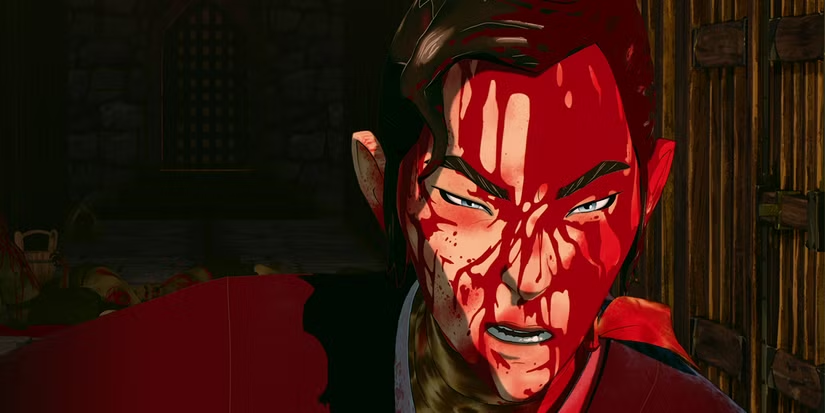
Mizu (Maya Erskine) is a mixed-race swordfighter living in seventeenth-century Japan, where her blue eyes mark her as an outsider. Disguising herself as a man, she sets out to find and kill the white men who might be responsible for her birth. Blue Eye Samurai brings her into contact with aspiring apprentice Ringo (Masi Oka), proud swordsman Taigen (Darren Barnet), and ambitious noblewoman Akemi (Brenda Song), all of whom complicate a journey Mizu would prefer to undertake alone.
I was completely sold during the early confrontations, where Mizu’s opponents underestimate her until they discover just how disastrously wrong they were. But the episode built around a traditional puppet performance is the one I desperately want people to experience. Creators Amber Noizumi and Michael Green intertwine the theatrical story with Mizu’s personal history, making the fighting increasingly painful to watch. Her skill is extraordinary, yet nearly every relationship becomes another reminder of what vengeance has cost her. And the animation! Sword movements have weight, injuries affect performance, and even the quieter exchanges look beautiful. Mizu may be terrifying with a blade, but her inability to accept affection is what makes her heartbreaking.
3
‘Samurai Jack’ (2001–2017)
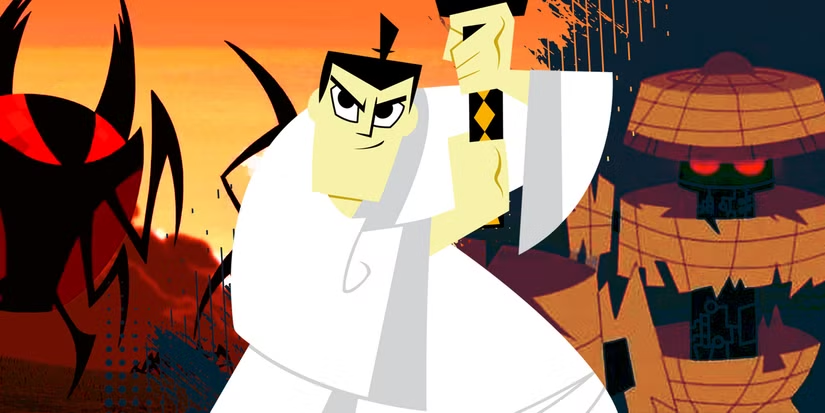
An ancient warrior known as Jack (Phil LaMarr) prepares to defeat the shape-shifting demon Aku, only to be thrown thousands of years into a future where Aku controls the world. Samurai Jack follows his attempts to return home, encountering bizarre civilizations, dangerous bounty hunters, extraordinary warriors, and occasionally some wonderfully ridiculous personalities. Jack possesses the sword capable of defeating Aku, but finding a way back to his own time proves considerably harder than simply winning fights.
I think Genndy Tartakovsky, who created the series, understood visual storytelling better than practically anybody working in action animation. The encounter with three blind archers is magnificent because Jack must learn to fight without depending on his sight. Entire passages communicate through movement and sound while dialogue becomes almost unnecessary. And then there’s the Scotsman, whose wonderfully argumentative friendship with Jack remains one of my favorite things about the show. The 2017 revival takes the character somewhere much darker, showing how decades of failure have damaged his confidence. Suddenly, the seemingly unstoppable hero is exhausted. That willingness to let Jack struggle emotionally makes his journey so much richer.
2
‘Samurai Champloo’ (2004–2005)
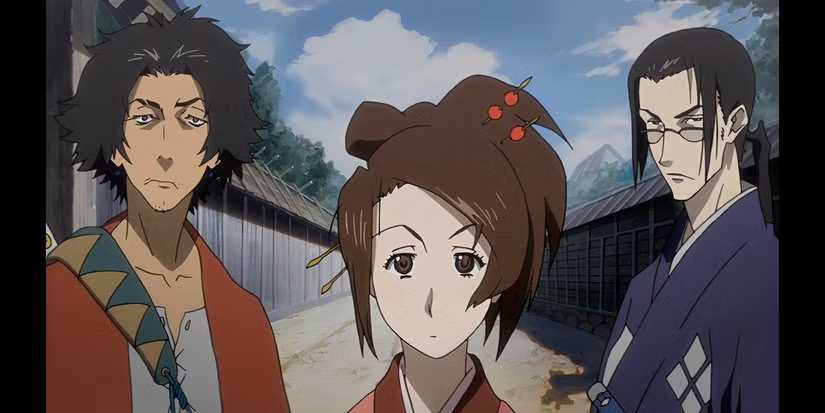
Fuu, voiced by Ayako Kawasumi, is searching for a mysterious samurai who smells of sunflowers. Her unlikely companions are Mugen (Kazuya Nakai), an impulsive swordsman whose fighting resembles controlled chaos, and Jin (Ginpei Sato), a disciplined former student of classical swordsmanship. Samurai Champloo follows their journey across Edo-period Japan, where the three regularly find themselves involved in ridiculous disputes, dangerous encounters, and situations that have almost nothing to do with their original destination.
I could watch Mugen and Jin fight each other forever. Their contrasting techniques communicate their personalities before either opens his mouth, and their reluctant partnership gradually becomes wonderfully affectionate. Shinichirō Watanabe created and directed the anime, incorporating hip-hop, graffiti, and gloriously unconventional humor into its historical setting. The music from Nujabes and the other contributing artists gives the journey an atmosphere unlike anything else. Yet the episode involving Jin’s attempt to help a woman trapped in a brothel is especially moving because his quiet compassion becomes more important than his technical mastery. And somehow this same show finds room for an absolutely ridiculous baseball match. I adore that unpredictability. Every destination offers a new reason to enjoy traveling with these three.
1
‘Shōgun’ (2024–)
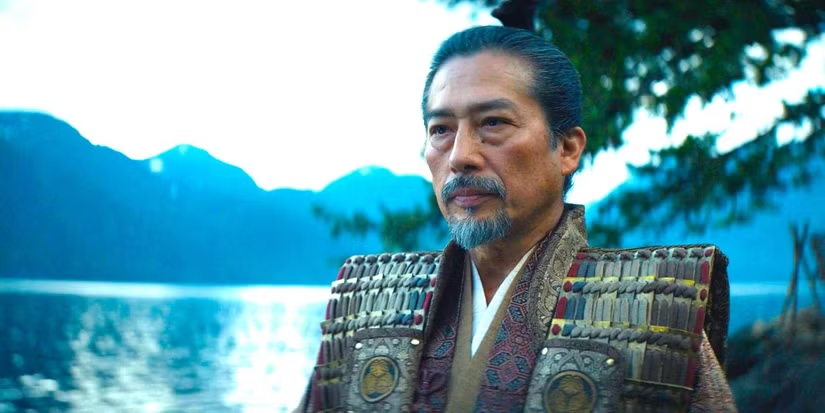
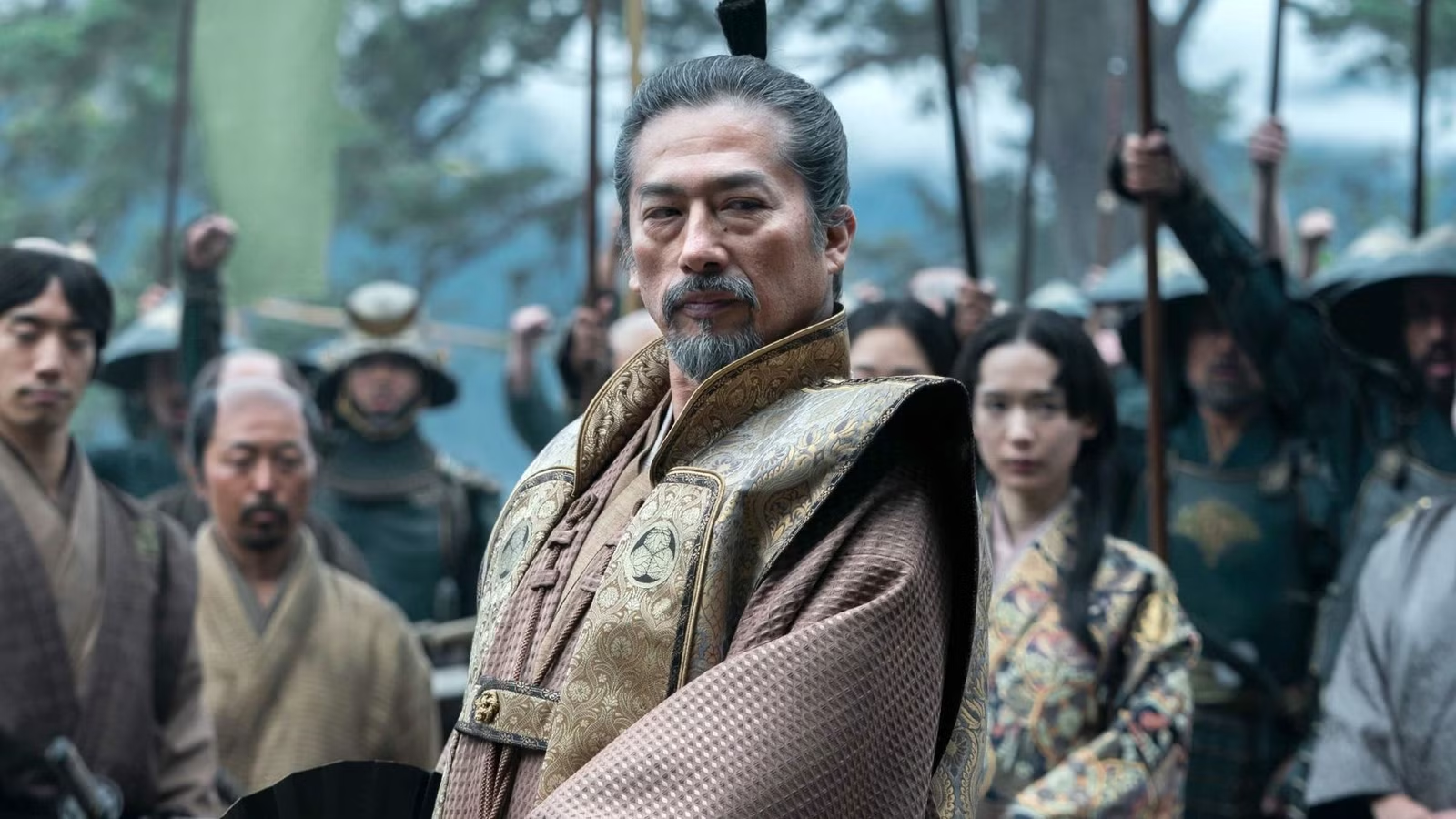
Shōgun is undoubtedly the finest Samurai show from recent times. An English navigator named John Blackthorne (Cosmo Jarvis) arrives in Japan in 1600, where rival political factions are maneuvering for control following the death of the country’s ruler. Lord Yoshii Toranaga (Hiroyuki Sanada) recognizes Blackthorne’s potential usefulness in his struggle against the other regents, while noblewoman Toda Mariko (Anna Sawai) becomes the interpreter connecting their vastly different worlds. Shōgun adapts James Clavell‘s celebrated novel into an extraordinarily intricate drama about loyalty, ambition, faith, and the dangerous obligations governing samurai society.
I could listen to Toranaga negotiate for hours. Sanada makes the character’s composure fascinating because every apparently minor decision carries political consequences. But Mariko is the person who completely won me over. Her confrontation with the guards preventing her departure from Osaka Castle is breathtaking. She understands the danger perfectly, yet insists upon her position with extraordinary dignity. Rachel Kondo and Justin Marks created this television adaptation.