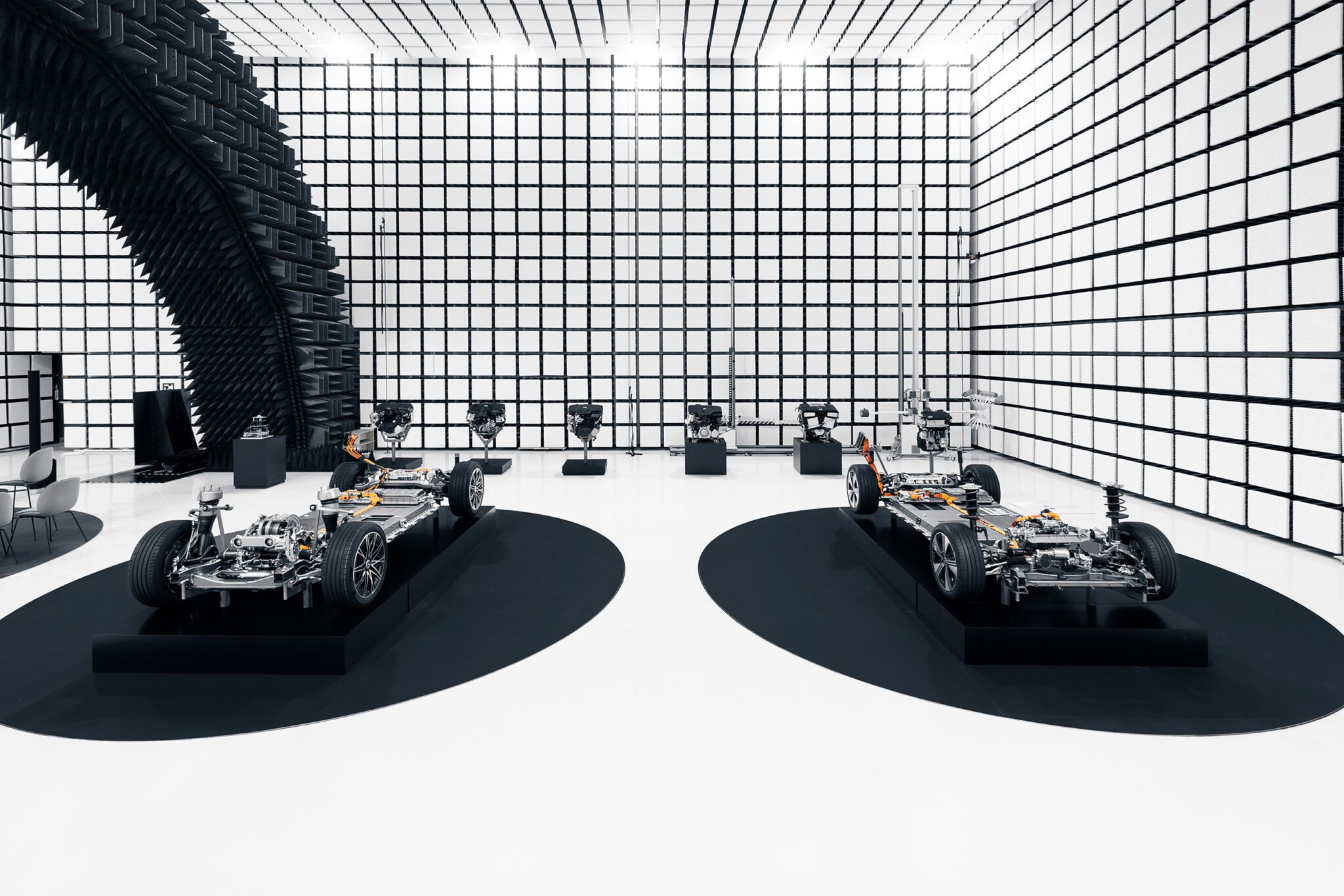
Mercedes-Benz is investing in combustion and battery technology in parallel, keeping both routes open across its model ranges
Mercedes-Benz has fitted its first electric turbocharger, drawn from Formula 1 technology, to a revised 1.5-litre gasoline engine as it sets out its powertrain roadmap. The M 252 LS delivers 170kW plus 23kW, the strongest four-cylinder output in the brand’s compact range.
The turbocharger runs off the 48-volt system and can also recover exhaust energy. In the GLB 250 it is about a tenth of a second quicker than the old top M 260 engine with around 17% less CO₂, Mercedes says.
The automaker is cutting cobalt and nickel by pairing lithium manganese oxide with nickel manganese cobalt cathodes, and says cobalt-free cells under development could add up to 30% range over lithium iron phosphate. Its in-house 800-volt drive unit will also move up from the CLA and GLC to the E- and S-Class, so shared hardware can carry more than 40 launches due by the end of 2027.
“No technology shapes the character of a vehicle as much as the powertrain, whether fully electric or hybrid. Our customers around the world have different needs and expectations,” Jörg Bartels, Vice President of Powertrain Development at Mercedes-Benz, said.
“That is why we are committed to utilising the best technology in such a way that it delivers tangible added value and inspires our customers. True innovation arises where technical excellence translates into an intuitive driving experience and creates an almost instinctive emotional connection between the driver and the vehicle.”
Why this matters:
- E-turbos move into volume segments. A 48-volt electric turbocharger on a 1.5-litre compact engine takes technology previously reserved for high-performance AMG models into the mainstream, which could bring down costs across the supply base.
- F1 lineage outlasts F1 itself. The system draws on MGU-H technology that Formula 1 dropped from its 2026 power unit rules, partly on cost grounds, suggesting road cars may become the main outlet for a technology the sport has moved on from.
- Combustion development continues. A 17% CO2 reduction alongside faster acceleration from a smaller engine shows Mercedes is still investing to keep combustion competitive in compact models, a hedge if EU 2035 rules allow continued hybrid sales.