A pair of films may have played a critical role in moving voters to vote for the Change bloc over the bloc of Prime Minister Benjamin Netanyahu in the Israeli elections held Tuesday.
The first has become a box-office hit. The second didn’t play in the country at all.
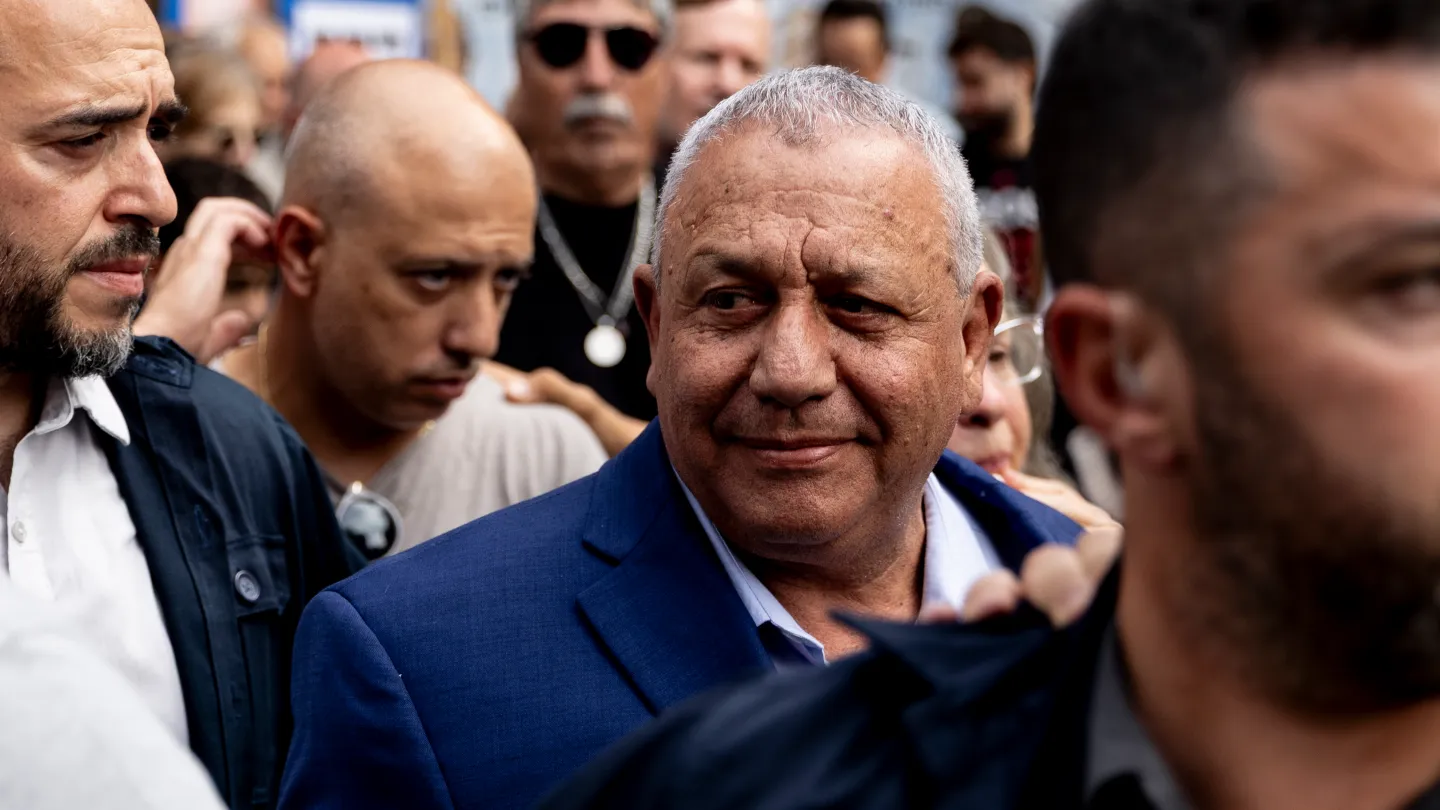
As Israeli election results come in, the anti-Netanyahu “Change” bloc led by former military commander Gadi Eisenkot’s center-right Yashar (Straight) party is in a dead heat with the far-right government of Netanyahu, the leader of Likud and the longtime prime minister in power during and after the October 7 attacks. Two of the three television decision desks put the tally of 120 parliamentary seats at 51-51; a third puts it at 52-49 for Netanyahu, according to exit polls. (Netanyahu holds a larger seat advantage with 42% of the vote counted as of late Tuesday night, but that is likely to change given the source of the outstanding votes.) The goal is to reach a 61-seat Knesset majority, and whoever holds the lead with all the votes counted will set out to form a coalition with smaller parties to achieve that number.
The first of the two potentially change-making films is Avi Nesher’s Our Loves. An action-tinged sentimental story of Israelis fighting to survive during the October 7 Hamas attacks, the movie does not wear politics on its sleeve.
But in showing an absent army and focusing on security failures, the film is, for all its undercurrents of unity and patriotism, at least implicitly critical of the Netanyahu government in charge at the time. Moreover, it’s a hit. Released purposefully two weeks before the election, the drama has garnered 150,000 admissions in Israel — a high tally for a non-Hollywood movie in the small country, and a number possibly greater than the margin of defeat for Netanyahu’s bloc. (A Knesset seat under the current tallies requires about 50,000 votes, and the change bloc’s margin of victory was two seats.)
Nesher has been outspoken that he does not support the Netanyahu government and said he believes that its members wouldn’t like the film. “I do not share the government’s point of view at all. I’ll be one of those people who are not voting for this government,” he told The Hollywood Reporter at TIFF, and he has continued comments to that effect in the Israeli press.
Nesher’s words carry weight, not only because he is a beloved filmmaker but because he has made movies about finding one’s way out of previous eras of crisis (his Rage and Glory and Image of Victory are both set around the nation’s founding conflict in 1948) and he is seen as a form of artistic light in the darkness.
That Eisenkot, 66, lost his son fighting in Gaza also gives the movie a kind of heft on his behalf; it’s easy to watch the film and think of the candidate and what he went through. (Less so Netanyahu, whose own son has until recently been in Miami.) There’s even a tough military character in the film not much younger than Eisenkot.
The second cinematic wrench is NAZA, Yuval Abraham and Rachel Szor’s documentary hit involving two dozen IDF whistleblowers revealing how Netanyahu’s government has conducted the war in Gaza. Though not released in Israel, word of it has been all over the Israeli press in recent weeks.
The effect is tricky — even many Netanyahu critics have criticized the movie for not telling the whole story; an anti-IDF film wouldn’t necessarily sit well with at least some Eisenkot supporters either. But the Netanyahu government tried to capitalize on this fact by making noise that they would attempt to strip Abraham and Szor of their citizenship (there is no known legal basis for them to do this).
While that move played to Netanyahu’s base, it didn’t seem to move the needle with the great swath of voters that Likud needed to win over — and in fact may have backfired, making it seem like the government was not open to any criticism, something Change voters absolutely feel should be in play.
Gauging the effect of a single doc on a complicated real world situation isn’t easy, of course. But mainstreaming the conversation about the war — newspapers have been filled with op-eds in the media-happy country since its Venice premiere last month — may have dinged the man who’s led it.
Meanwhile, a film fixture ended up potentially moving the film needle herself Tuesday. Wonder Woman star Gal Gadot — the closest the country has currently to a national icon — released a video Tuesday of herself at the polls saying she was voting for Change. She flew in from Los Angeles to vote and in her Instagram post urged all Israelis to the same (some 80% did) before noting her anti-Netanyahu preference.
She then even appeared in a sketch on Eretz Nehederet (the Israeli SNL) that aired election night while the polls were still open, getting into an Uber and talking about living in Los Angeles as an Israeli.
She offered perhaps one of the greater unspoken truths about the region when the driver asked her if it was hard to be an Israeli abroad.
“I’m always explaining to people,” she said, alluding to the media ecosystem. “What you see there you don’t see here. And what you see here you don’t see there.”