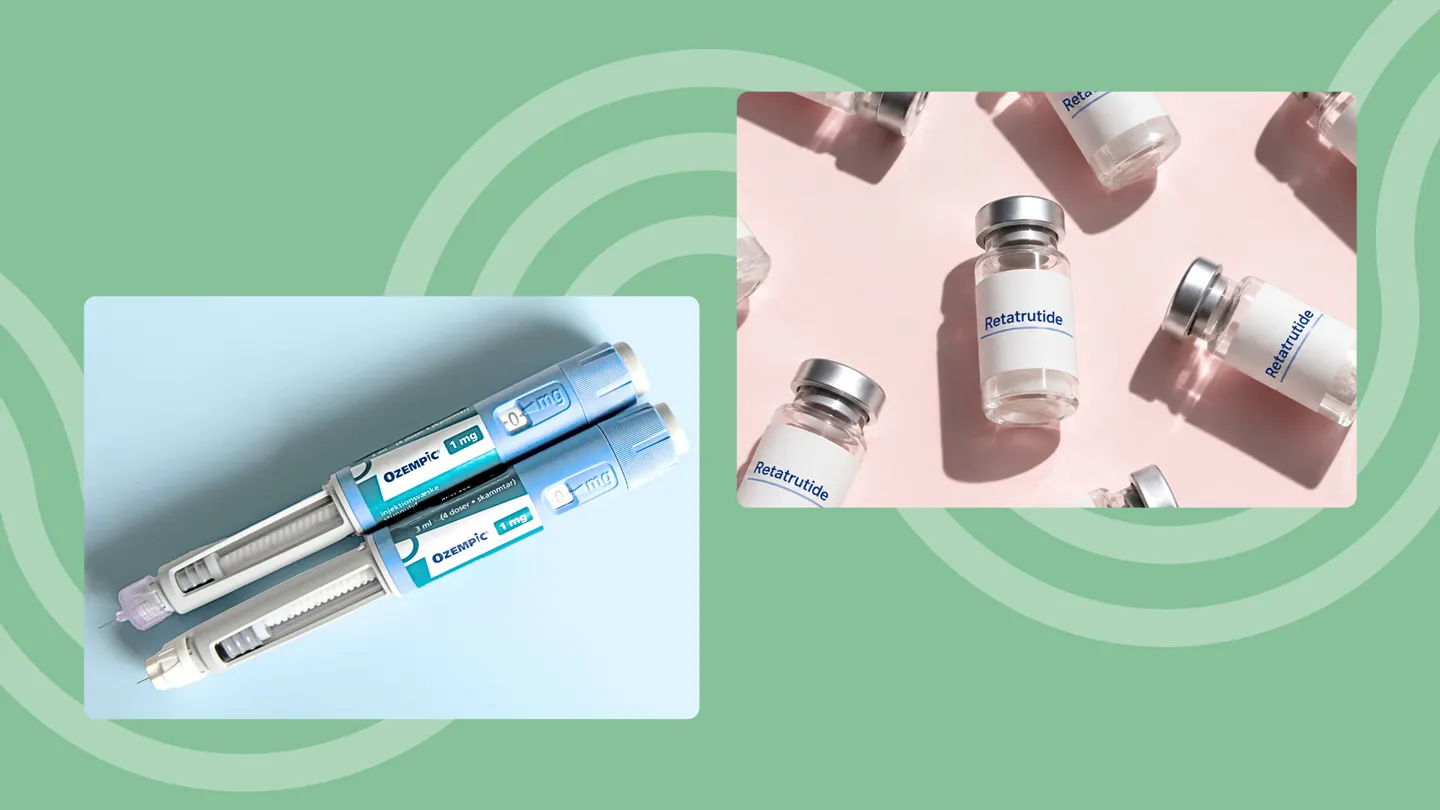
Adults taking the higher dose of retatrutide were the most likely to stop the drug before the end of the trial: About 8 percent of people taking the 12 mg dose dropped out, compared with about 5 percent of those taking 9 mg of retatrutide and 3 percent taking Ozempic.
Retatrutide Works Differently From Ozempic
Retatrutide is a triple-agonist medication, explains Richard Siegel, MD, co-director of the Diabetes and Lipid Center at Tufts Medical Center and an endocrinologist at Tufts Medicine Weight and Wellness Center in Stoneham, Massachusetts. That means the drug acts on three different hormone receptors in the body: glucagon-like peptide-1 (GLP-1), gastric inhibitory polypeptide (GIP), and glucagon (GCG). The medication has earned the nickname “triple G” as a result.
Semaglutide works on one receptor, GLP-1. Tirzepatide, the active ingredient in Mounjaro and Zepbound, works on two receptors: GLP-1 and GIP.
Like the injectable form of Ozempic, retatrutide is injected once a week. The medication reduces appetite and slows digestion to support weight loss. Retatrutide’s “triple agonism” may even increase how much energy someone burns, Dr. Siegel says.
Study Findings Don’t Surprise Doctors
Previous clinical trials already suggest that retatrutide can lead to significant weight loss, Drs. Ali and Siegel both say, so the results are not surprising.
Retatrutide targets three hormone receptors compared with Ozempic’s one receptor, which helps explain why it would lead to greater weight loss, Ali says. “A fairer trial would be comparing retatrutide to Zepbound,” he adds. “It’s been shown to be more effective than Ozempic or Wegovy. It would be a better comparison to see if this third receptor helps weight loss more compared to the two targeted by Zepbound.”
Ali stresses that retatrutide is not intended for average weight loss efforts. These medications are designed for people with class 3 obesity or close to it, Ali says. “It’s not really for people with small amounts of weight to lose.”
Ali notes that all obesity medications need to be taken long-term, given that most people regain weight if they stop using the drugs. “There has to be a shift in treating obesity like a long-term disease, similar to diabetes and high blood pressure,” he says.
When Will Retatrutide Get FDA Approval?
Retatrutide is not yet available for use in the United States outside of clinical trials. However, a Lilly spokesperson told Everyday Health that the company plans to submit the drug for approval soon.
“Lilly plans to submit a Biologics License Application (BLA) for retatrutide to FDA in Q1 2027 for the treatment of obesity, based on the TRIUMPH trials in obesity, knee osteoarthritis pain, and moderate-to-severe obstructive sleep apnea,” the spokesperson said. “Type 2 diabetes submission will follow in 2027.”