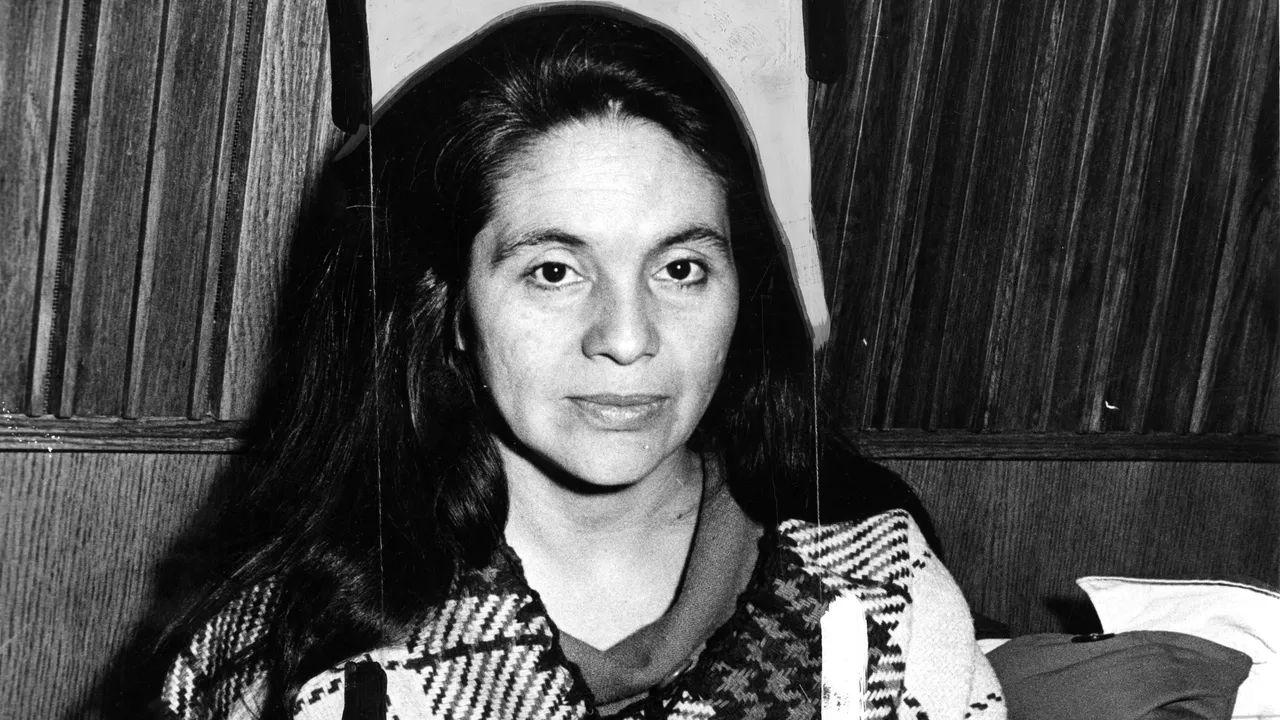
On Wednesday, October 28, news broke that labor leader Dolores Huerta had died at the age of 96.
Huerta left behind a large and devoted family, as well as a proud legacy of lifelong activism: She co-founded the United Farm Workers of America union to improve working conditions for farm laborers, earning the Presidential Medal of Freedom in 2012 and becoming the first Latina to be inducted into the National Women’s Hall of Fame, among other achievements. So why are so many of Huerta’s obituaries leading with the fact that she accused Cesar Chavez of rape earlier this year?
Of course, a remembrance of Huerta’s public life would be incomplete without some mention of Chavez. After all, he and Huerta co-founded United Farm Workers in 1962 and, together, led multiple strikes and boycotts in an attempt to secure fair wages and other labor rights for largely Spanish-speaking migrant workers. Huerta was also in a long-term partnership with Chavez’s brother Richard, with whom she had four children.
Huerta’s decision to make public the traumatic experiences that soured her relationship with Chavez feels in character for a woman who faced police brutality in 1988 while peacefully protesting for farmworkers’ rights. But seeing that story placed front and center in multiple reports of Huerta’s death feels like an insult, sidelining the decades’ worth of tireless advocacy that preceded—and followed—it.
With Huerta’s death arriving amid outcry over the pervasive nature of sexual assault on college campuses (and everywhere else), it’s heartening to think that present-day survivors might look to Huerta as an example of someone whose life was not defined by the trauma she endured, but by the heights she reached as an activist and community leader. What are we telling those survivors instead when we let Chavez’s name cast a long and ugly shadow over Huerta’s work?
While Huerta’s history with assault shed a necessary light on the rampant culture of misogyny and sexual misconduct within even some of the most nominally progressive organizing spaces, it feels like a disservice to her to frame the impact she had on the world primarily through the lens of her fraught dynamic with Chavez. If Huerta’s pain can serve as a reminder that intersectionality and respect must be centered in all forward-thinking movements, then it’s certainly worth discussing—but let’s not let it distract us from commending the agency and power she displayed throughout her life, too. That, after all, is Huerta’s real legacy.