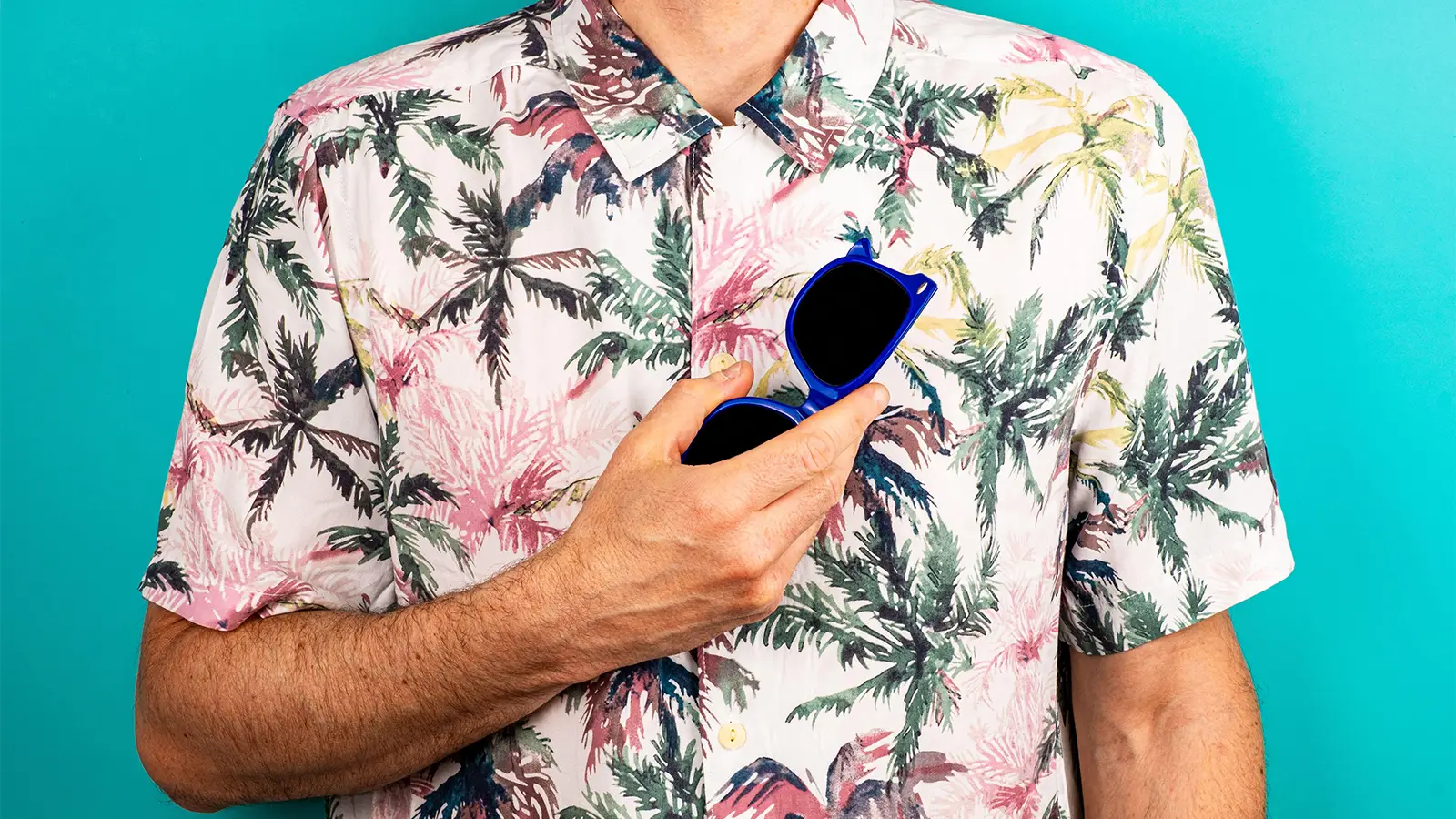
“Can you get the doctor with the Hawaiian shirt back? We have a question. We’d like to see him.”
A family said this to a nurse in my intensive care unit (ICU). They had met a parade of physicians that day, and there was no doubt they were referring to me.
I don’t remember the date. I remember the feeling. I was a first- or second-year attending at UCLA, and my family had just come home from Hawaii. This was to be my first morning back at the hospital, and I was not ready to trade the beach, with my children running in and out of the waves, for a white shirt and bland tie. Perhaps part of it was defiance. I put on the Hawaiian shirt and went to work.
Despite my fears, there was no stern elder or fashion police meeting me at the door to order me back into my uniform. I exhaled and slowed my pace. Patients started talking to me: “Hey, doc, like the shirt” or “Hey, doc, cool shirt, my brother lives in Kona and…” They reached out person-to-person, using a colorful shirt as a bridge they could cross.
Not every review was kind. One patient asked, “What kind of doctor doesn’t take this seriously enough to dress appropriately?”
It was a fair question, and I had to show what kind of doctor this was. One woman was facing an extensive operation for what looked like cancer. I diagnosed coccidioidomycosis instead, and she was spared the operation. Her husband sent me two framed original Hawaiian shirts from the 1950s. I have them still.
I was not alone in my rebellion. A hepatologist rotated through cowboy boots and Art Deco ties and played harmonica in the stairwell. We had polka-dot bow ties and bolo ties. We wrote our notes by hand: one cardiologist in fountain-pen calligraphy, another in macrographic script, a third in the classic four-line case summary that was nearly always spot on. We had individuality, and patients could see it and respond.
The shirt taught me, slowly, about my relationship with patients, and now, from a greater vantage point, about my profession. Over the 35 years since, I have watched medicine change and witnessed that change accelerate. The electronic record retired the pen. A lab coat once carried a pocketful of pens, each with its own ink stain; now weeks pass without one touching my hand. The medical center has become a sea of scrubs and fleece pullovers. On ICU rounds, families struggle to tell us what the consulting teams said, and they cannot identify which team said it. The passing groups all look the same, trailing the same computer cart, with faces glued to the screens.
Some of this is progress: A typed order can be read by the next person who picks it up. But we standardized more than our handwriting. One reasonable change at a time, we became an amorphous herd. We made ourselves interchangeable before anyone could make us replaceable.
The latest step is the one our professional leadership still says will not come. The vice president of Digital Health Innovations at the American Medical Association said in 2024 that artificial intelligence (AI) is there “to assist physicians in caring for patients, not to do the work of physicians.” I hope she is right. But hope is not evidence, and the evidence points the other way.
In a 2024 randomized trial of physicians working alone and with a large language model (LLM), the model did not improve their diagnostic reasoning. The LLM, allowed to work alone, outscored both groups. In a 2023 study, blinded clinicians compared physicians’ and a chatbot’s answers to patient questions posted on a public forum, and the chatbot’s replies were rated empathetic nearly 10 times as often!
Both studies have limitations. The trial was small and built on written cases; the forum physicians were volunteers and answering strangers, in a quarter of the words. Even so, in peer-reviewed studies, we have been beaten on clinical reasoning and beaten for empathy. But look at what was measured: reasoning through a written case, a written reply to a stranger. That is work any member of an interchangeable team could do. Neither study measured what the family in my ICU was asking the nurse for: one particular doctor, picked out of the parade and called back.
Meanwhile, the share of American adults with “a lot of trust” in physicians and hospitals fell from 72% to 40% in under 4 years. A quarter of Americans now tell Pew they use AI chatbots to diagnose symptoms, and this number is growing every day. Patients who once asked for the doctor with the Hawaiian shirt have begun asking the chatbot first.
I still wear the shirt to work. Some mornings in the ICU a family still stops a nurse and asks for the doctor in the Hawaiian shirt, and the nurse knows who they mean. No trial has measured that.
One morning the shirt will not come in. A family will stop a nurse and say, “Can you get the doctor back?” The nurse will ask, “Which one?” They will look down the hall at the scrubs, the fleece, and the carts, and at the faces turned to the screens, and they will have no way to say.