This post is Part 1 in a two-part series.
When my toddler son feels overwhelmed or upset, he almost always comes to me and says, “Tell me a story.”
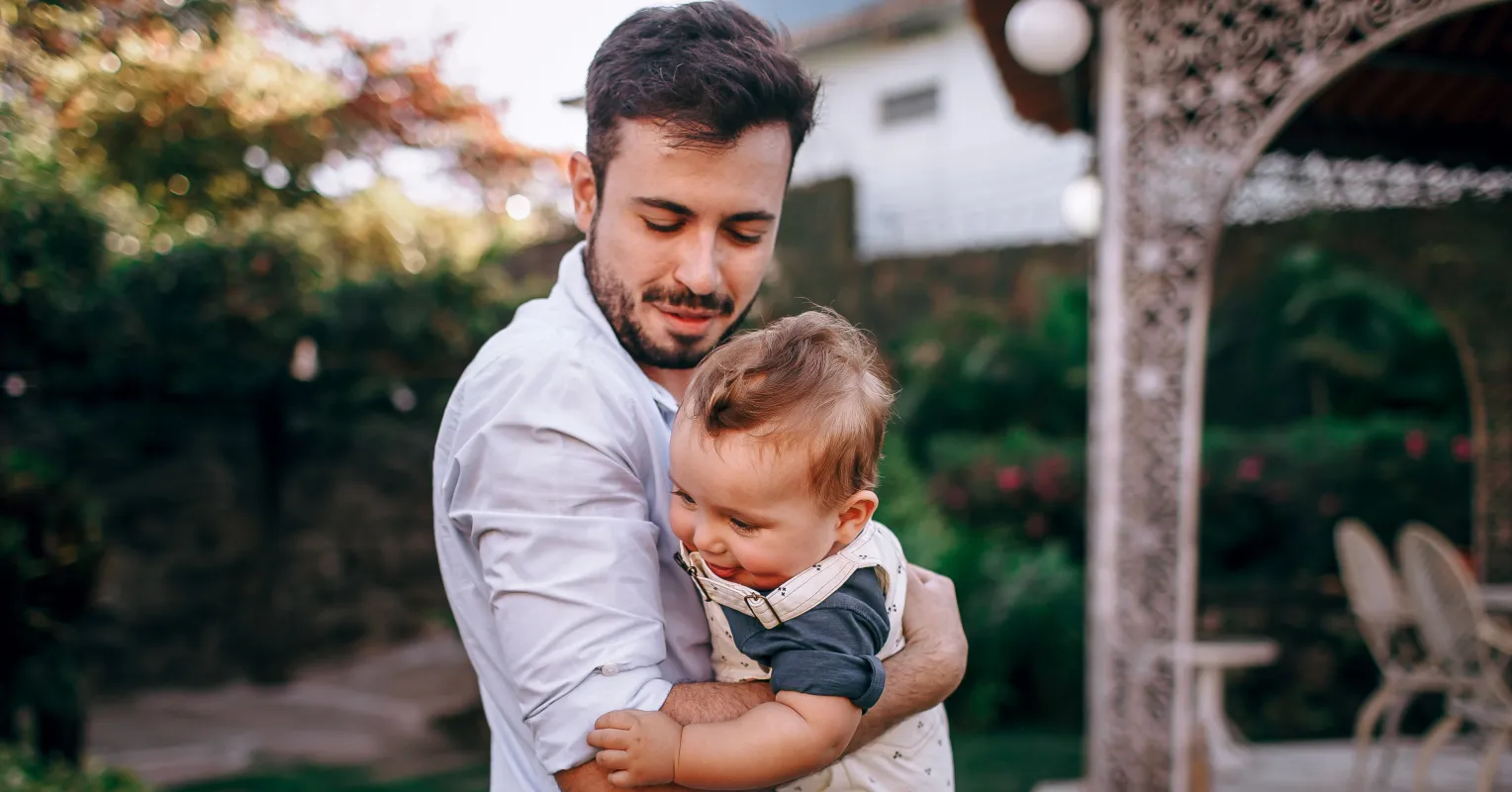
I pick him up, settle him on my lap, and begin the way I always do: “Once upon a time, there was a smart, kind, happy little boy…” He may still be crying when I start, but by the time I reach “kind and happy,” he is catching his breath and staring up at me. The story that follows usually involves some of his favorite things to do: swimming, playing on the playground, or going on walks, and almost always animals. On the way to the swimming spot, a dog, a duck, and a pig might join in and help him into the water. Two or three minutes into our story, he has calmed down enough to go about his business.
This past year, I discovered a talent I never knew I had. Apparently, I am really good at improvised storytelling. I knew that fatherhood would bring me joy. What I did not expect was how much I would come to enjoy these moments. I have caught myself yearning for them. There is something deeply moving about being trusted with helping him settle.
Of course, storytime is only one of the many things we share. We go on walks and read together, and he absolutely loves being tossed into the air. The storytelling is simply one of the moments that stays with me.
All this has made me wonder what fatherhood has done to my own brain.
As a behavioral neuroendocrinologist, I study the relationship between hormones, the brain, and behavior. Leading up to his birth, I read extensively about changes that accompany pregnancy and motherhood, and there was plenty to learn, including significant shifts in hormones and in brain structure and function that extend well into the transition to motherhood [1]. It never occurred to me, though, to read about the changes I would go through myself as a father. Professional expertise, it turns out, does not prevent personal blind spots.
So, I started reading more about the science that might inform our little father-son ritual.
A child’s request: He asks
“Tell me a story” is a request that I have come to want and expect.
Neuroscientists use the word reward for how experiences acquire value and shape what we seek. Enjoying something and wanting more of it are related but not identical. I can feel delighted as my son settles, and separately find myself hoping for another chance to share those minutes.
A study by James Rilling and colleagues [2] offers a glimpse into how the brain’s response to infants changes. The researchers scanned the brains of men before and after they became fathers for the first time, alongside men who did not become fathers. After childbirth, the new fathers showed stronger activity in reward and motivation regions when a cue signaled a chance to see an infant’s picture. The comparison group showed no such increase. In other words, once these men became fathers, the prospect of seeing a baby engaged their reward circuitry more strongly, which echoes my own wish for another chance to share those minutes with my son.
Much of my own research uses animal models, so this is a natural place for me to dig deeper. A vole cannot tell us what fatherhood feels like, but it can help us understand what makes care possible. Prairie voles are an especially useful model because males help raise their young.
In one experiment, male prairie voles that had spent two weeks paired with a female groomed unfamiliar pups more than sexually inexperienced males did [3], so experience had changed how they responded to young. The paired males also had more of a particular dopamine receptor called D1 in their nucleus accumbens, a region involved in reward and motivation. When researchers blocked those receptors in the nucleus accumbens, the paired males spent less time grooming the pups [3]. Effectively, interfering with a dopamine signal in a reward-related brain region altered a specific act of care, suggesting that this signaling helps drive caregiving.
For me, the satisfaction of helping my son is part of what draws me back, even when it takes patience.
Physical comfort: I pick him up
The next part of our ritual is physical. I sit on the couch, cross my legs, and settle him on my lap, often while he is still crying.
This closeness makes me think about oxytocin, a hormone with many functions, including a role in social bonding [4]. Ruth Feldman and colleagues [5] observed parents during a 15-minute play-and-contact session with their four- to six-month-old infants. Fathers who engaged in more active physical contact and exploratory play showed an increase in salivary oxytocin afterward. Fathers who engaged in less did not.
Mothers in the same study showed a different pattern. Their oxytocin tracked affectionate touch, like caresses and soft kisses, rather than playful contact. Tossing my son into the air or tickling him silly is probably the closest match to the playful kind. Settling him on my lap for a story is the quiet counterpart.
A saliva sample cannot tell us what oxytocin is doing in the brain, and the study does not show that contact caused the response [5]. Still, it suggests that fathers’ oxytocin can vary with how they engage with their infants. When I pick up my son, I know that being together can change how he feels. But now I am increasingly curious about what it might be doing to me.
The power of ritual: I say the familiar words
Every story begins with the same sentence, and that sentence is part of what works. He knows what is coming. I know what will hold his attention, which is a familiar sentence and a voice that drops lower than usual. Once he settles, he stares up at me, enthralled, as the story continues.
Familiarity with one’s own child shows up in the father’s brain, too. Philip Newsome and colleagues [6] scanned 32 first-time fathers about eight months after childbirth. The fathers responded more strongly to videos of their own infants than to an unfamiliar infant, in brain regions involved in understanding others, emotional regulation, and reward. Fathers who had reported stronger bonding at three months later showed a stronger own-infant response in a region involved in interpreting other people’s internal states. This study links fathers’ closeness with their later brain responses to their own child.
That fits what the ritual feels like from the inside. The bond between me and my son grows through small, repeated, shared things.
But the story is only part of it. In Part 2, I look at what it takes to stay with him when the story is not enough, and at what that staying may be doing to a father’s brain.