Support CleanTechnica’s work through a Substack subscription, on Patreon, or on Stripe. Help us produce all of the high-quality, original content we publish week after week despite the challenges of content-scraping AI, antisocial media, inflation, and other hurdles.
BRUSSELS — Almost half of EU cities exceed air pollution limits set by a landmark EU clean air law, according to a new report from ClientEarth and World Resources Institute (WRI). The report raises concerns about the level of preparedness in cities across the bloc and outlines the changes needed across all levels of government to meet the new air quality standards, protect people’s health, and strengthen local economies.
The EU’s Ambient Air Quality Directive (AAQD) entered into force in December 2024, with stricter pollution limits to be met by Member States by 2030. According to the latest validated data from 2024, 181 of 394 cities analyzed (46%) exceeded the new limits.
ClientEarth lawyer, Emma Bud, said: “The new EU air pollution laws are a once-in-a-generation opportunity to protect Europeans from toxic air, but with almost half of cities falling short of the standards, alarm bells are ringing. We particularly need to transform the transport system in cities, reducing dependence on cars. Urban authorities can lead the way on so many of these policies, but they need strong support to protect people, including children and the most vulnerable.”
The report explains that meeting the new standards—particularly on tackling dangerous small particle (PM2.5) pollution—will require systemic changes to how governments work together and address the root causes of air pollution across sectors, including transport, agriculture, energy, and urban planning. The key to this deeper level of change, the report argues, is strong collaboration between all levels of government, as well as across business and industry sectors. To achieve compliance, authorities will need to implement measures suggested by the AAQD, including:
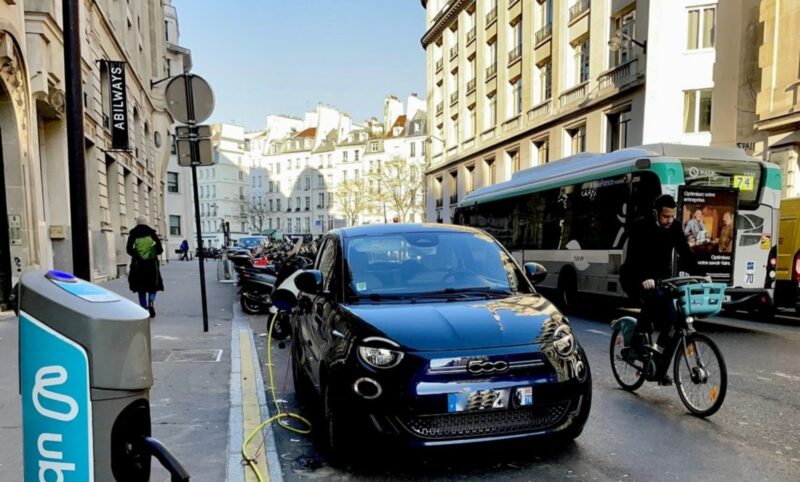
- Establishing low-traffic or car-free neighborhoods and tackling dangerous pollution particles from brake and tyre wear.
- Improving infrastructure to incentivize cycling and walking.
- Electrifying public transport and improving its affordability, efficiency, and quality.
- Tackling underregulated pollution sources from outside cities, including ports, airports, and agricultural ammonia emissions. Two-thirds of PM2.5 pollution measured in cities comes from outside their boundaries.
Using case studies from across Europe, the report shows how strong support for city leaders is key to tackling urban air pollution:
- In Krakow, city authorities banned coal and wood stoves. Between 1995 and 2019, 45,649 solid-fuel heaters were phased out, helping cut harmful PM2.5 pollution by up to 26% and cancer-linked benzo[a]zapyrene by 39-41%, with estimated economic benefits of €350 million a year. This success was driven by collaboration between EU, national and city authorities. Legal action by environmental groups helped catalyse the national legislation enabling the phase-out, while EU funding supported a city-led scheme to replace polluting heaters with alternatives.
- Madrid shows what is at risk when local ambition lacks national backing. A low-emission zone introduced in 2018 helped cut nitrogen dioxide pollution, with levels falling by 32% in its first year. The original scheme was later struck down by legal challenges from political opponents. It was reinstated by a national law mandating low-emission zones in every city of more than 50,000 residents. This shows the need for collaboration at all levels of government to make long-lasting changes.
Steven Bland, Strategic Lead, City Systems Europe at WRI, said: “Air pollution remains a major public health and economic risk in European cities—one that is compounded by heatwaves. Making real progress requires tackling pollution across major emitting sectors, embedding air quality outcomes into investment frameworks, and coordinated action from local, regional, and national authorities. The EU now has an opportunity to show that cleaner air isn’t just an environmental goal—it’s an investment in people and a stronger, more resilient European economy.”
Download the full report: New clean air standards for Europe: Implications for cities.
Courtesy of WRI.
Sign up for CleanTechnica’s Weekly Substack for Zach and Scott’s in-depth analyses and high level summaries, sign up for our daily newsletter, and follow us on Google News!
Have a tip for CleanTechnica? Want to advertise? Want to suggest a guest for our CleanTech Talk podcast? Contact us here.
Sign up for our daily newsletter for 10–15 new cleantech stories a day. Or sign up for our weekly one on top stories of the week if daily is too frequent.
CleanTechnica uses affiliate links. See our policy here.
CleanTechnica’s Comment Policy