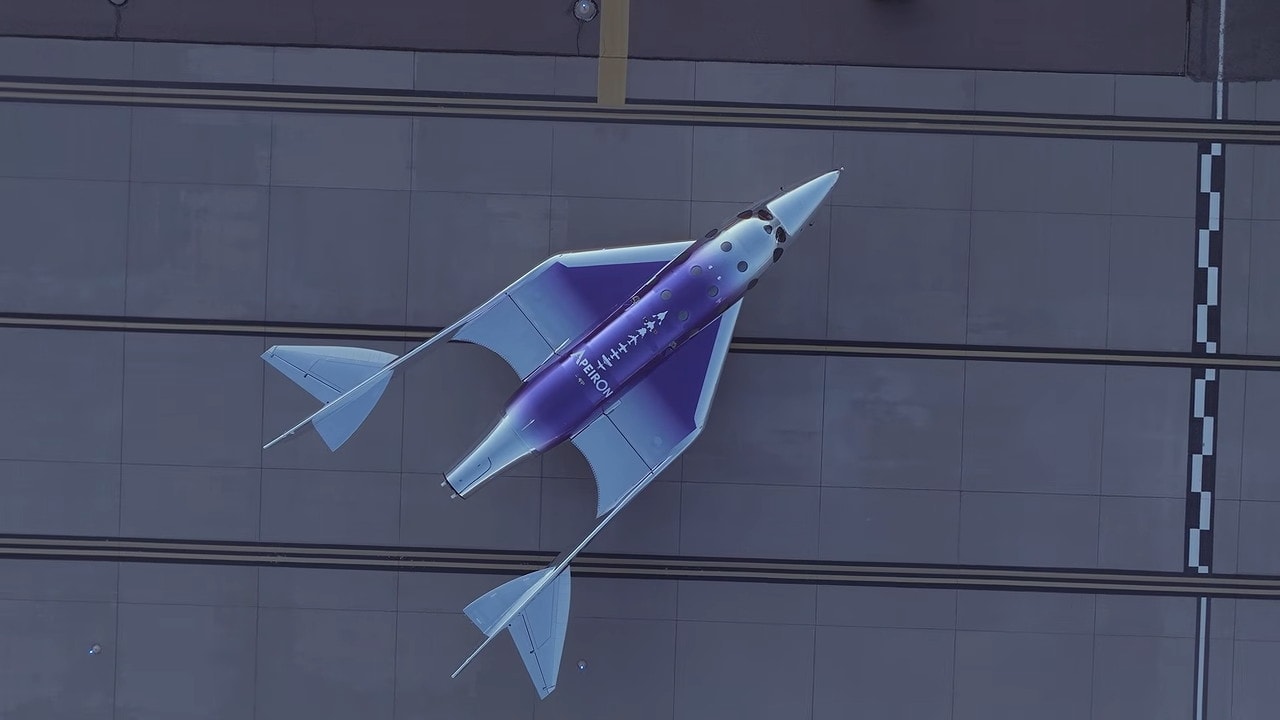
Virgin Galactic, the private space company founded by Sir Richard Branson, conducted its last flight to the edge of space back in 2024, when spacecraft Unity went beyond the Karmann line with people on board. Since then, the company has been hard at work putting together the next generation of spaceships, the so-called Delta class. And its first member, the Apeiron, just conducted its first flight. Well, sort of…
Officially called the Spaceship Apeiron, the vehicle was transported from its assembly location in Arizona to the place it will call home from now on, the Spaceport America base of operations in New Mexico.
The spacecraft didn’t go there under its own power, but tucked beneath the wacky aircraft called Eve, which will be used to carry it to launch altitudes when test flights and then commercial operations begin.
Over in New Mexico, Virgin’s engineers will begin work on completing avionics software integration and validation, while at the same time prepping the space vehicle for test flights. It’s unclear at this point exactly how long that will take, but if all goes according to plan, Spaceship Apeiron should conduct its first customer crew spaceflight in the second quarter of next year.
The trip from Arizona to New Mexico is an important moment for the company, but so is the fact that this is the first time we heard the name of the Delta class ship. Chosen from no less than 276 suggestions received from the global public earlier this year, Apeiron is the ancient Greek word for boundless or infinite.
The Delta class design, although looking pretty similar to the previous one, the Unity, is supposed to allow Virgin Galactic to fly paying customers for a brief period of time to the edge of space much more often than before.
Allowing for mass production, the ship should be able to carry two more passengers than Unity, meaning a total of six (plus two pilots), and should fly up to two times per week. The lifetime of each spacecraft is estimated at some 500 flights.
To build the new Delta class, Virgin Galactic partnered with some of the biggest names in the aerospace industry. Bell Textron, for instance, is responsible for making the ship’s unique feathering system, while Qarbon Aerospace was tasked with making the fuselage and wings.
The fleet that will make these spaceflights possible is ongoing, with the static test article and the second Spaceship (which could begin operations in early Q3) construction already underway.
Virgin says the design should allow for a cost profile that’s unprecedented in the industry – for the record, Unity tickets cost $750,000 back in the day. As a reminder, the previous design flew a total of 12 missions, seven of which had paying customers on board.