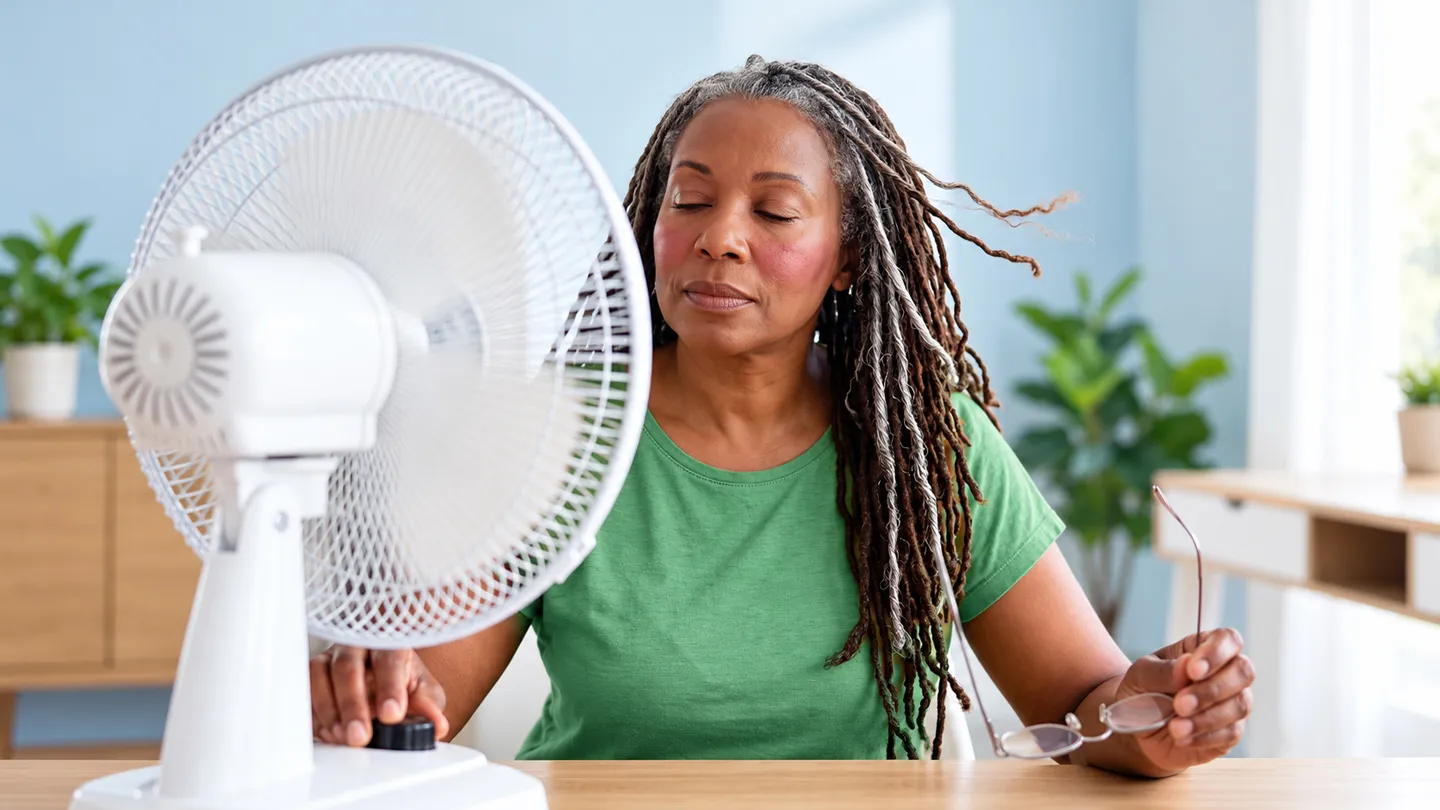
Hot flashes can hit at inopportune moments, such as during an already stressful presentation or important meeting. Plus, when night sweats disrupt your sleep, you may experience daytime fatigue, making it even more difficult to maintain focus and concentration on the job.
According to Mayo Clinic Proceedings, 13 percent of women ages 45 to 60 had an adverse work outcome related to menopause symptoms, and roughly 11 percent missed work days because of these symptoms.
“Hot flashes can be disruptive to your workday, and we know there are hundreds of thousands of dollars lost due to menopausal symptoms in the workplace,” says Dr. Loeb-Zeitlin.
How to Manage VMS at Work
- Focus on your breath. Next time you feel a hot flash coming on, try taking a few deep breaths. Paced breathing can activate the parasympathetic nervous system, which helps you relax. Try the 4-7-8 breathing pattern: Inhale through your nose for four counts, hold your breath for seven counts, exhale through your mouth for eight counts, and repeat.
- Think layers. Whether it’s wearing a light cardigan or jacket over a tank or tee, dressing in layers can make it easy to cool down quickly when a hot flash hits.
- Wear breathable fabrics. Natural fabrics, such as bamboo, cotton, and linen, let air circulate and absorb sweat, whereas synthetics, such as polyester, nylon, and acrylic, trap heat and moisture.
- Mind your meals. Caffeine and spicy foods can make menopause symptoms worse, so consider skipping the hot sauce at lunch and switching to decaf or herbal tea on workdays.
- Take a midday stroll. Building a brisk walk into your workday may help keep symptoms at bay. Research suggests regular, moderate-intensity exercise reduces both the frequency and severity of hot flashes.
- Be your own best advocate. There’s no shame in going through menopause, and speaking up for yourself can help stop the stigma and make it easier to handle symptoms. Try talking to your manager about moving your desk near a window, or request the flexibility to work from home when symptoms are severe. “We’re lucky that menopause is getting more attention … but, of course, advocate for yourself and take the time off that you need,” says Loeb-Zeitlin.