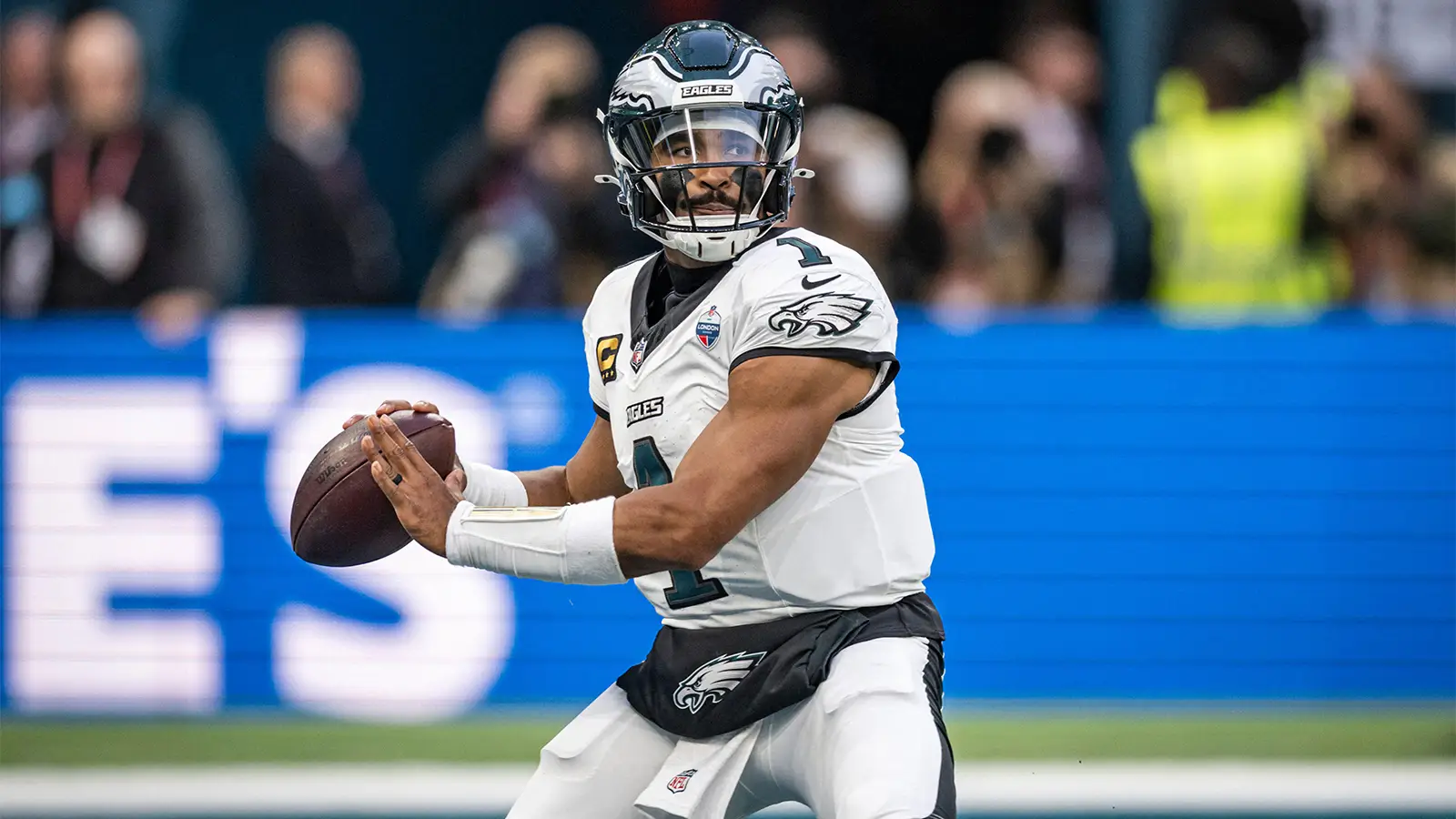
The recent medical crisis involving Philadelphia Eagles quarterback Jalen Hurts has reignited a fierce public debate over sports team transparency and injury reporting. Framing it as a communications issue, however, obscures the real issue behind Hurts’s medical condition: the clinical-ethical quagmire embodied in the dual-loyalty trap faced by team physicians. When a corporate entity employs a medical professional to protect the value of its primary operational assets — the players — the traditional fiduciary doctor-patient relationship is fundamentally altered.
The media’s frustration with the Eagles’ tight-lipped messaging is a symptom, not the disease. The core crisis is one of clinical autonomy.
By moving the focus from superficial demands for media transparency to the sensitive medical issues that team doctors face, the medical community can better understand how corporate sports medicine is compromised. This dynamic mirrors the NFL’s defensive history of managing concussions and chronic traumatic encephalopathy (CTE), shifting clinical accountability onto coaches and corporate executives rather than clinicians, and therefore compromising the integrity of the medical profession.
The Jalen Hurts Clinical Breakdown
The timeline of Hurts’s diagnosis underscores the intense clinical pressure team physicians face. On October 4, 2026, Hurts was cleated in his left calf during a game against the Los Angeles Rams. He reported discomfort to the training staff on October 8 (following a full practice), was placed on the injury report on October 9, and traveled with the team to London. On October 10, an ultrasound at the Cleveland Clinic in London — coordinated with NFL Chief Medical Officer Allen Sills, MD — revealed a superficial blood clot in his left calf.
Despite the diagnosis, team clinicians cleared Hurts to play the next day. He logged 62 offensive snaps against the Jacksonville Jaguars and then endured a long-haul trans-Atlantic flight home — a well-established risk factor for venous thromboembolism. By October 14, follow-up imaging showed the superficial clot had migrated. By October 19, it had progressed to deep vein thrombosis (DVT) and life-threatening bilateral pulmonary emboli, sidelining him for the season as he underwent aggressive anticoagulation therapy.
The NFL Players Association has demanded a full investigation into the medical care Hurts received. It remains unknown whether the competitive demands of a multi-billion-dollar franchise during an active game week influenced clinical decision-making.
The Reality of Patient Privacy in Elite Athletics
A player, like any other patient, has a fundamental right to keep their health information private. In a standard clinical setting, medical privacy is sacrosanct. However, in the high-stakes ecosystem of the NFL, teams often treat patient confidentiality as a corporate tool rather than a patient-centered protection.
Sills cited patient privacy when declining to discuss specifics of Hurts’s treatment, while the Eagles’ internal medical staff avoided the public record entirely. Yet, this stance rings hollow when the franchise selectively uses medical disclosures — issuing detailed press releases that trace his condition from a superficial calf clot to deep vein thrombosis and pulmonary emboli.
In professional sports, teams routinely disclose precise medical diagnoses to meet league injury-reporting requirements and comply with betting-market regulations. The corporate apparatus willingly broadcasts sensitive patient data when it serves operational or compliance needs, yet suddenly invokes the sanctity of “patient privacy” the moment critics question the underlying clinical rationale — such as the decision to allow a patient with an active blood clot to fly long-haul. The doctors’ silence is not a noble defense of patient confidentiality; it is a corporate buffer zone.
The Dual-Loyalty Dilemma: Medicine Versus Management
At the heart of the issue, team physicians operate much like corporate occupational health doctors. Their loyalty is divided. On the one hand, the Hippocratic Oath demands an uncompromised commitment to the individual patient’s long-term health. On the other hand, the physician is a salaried agent of a front office run by executives whose immediate objective is to maximize asset (player) availability and win football games.
When this tension boils over, the organization routinely shields its medical staff from direct accountability and puts the coaching staff in the crosshairs. By keeping evaluating clinicians from speaking to the media, the Eagles forced head coach Nick Sirianni to serve as a human shield, absorbing technical medical questions he was unqualified to answer.
This strategic deflection creates terrible optics for the medical profession. It implies that elite clinicians are either hiding because their clinical decisions cannot withstand independent peer review, or that corporate management is muzzling them to insulate the franchise from institutional liability. If doctors allow front-office managers or football coaches to dictate the clinical narrative of a life-threatening hematological crisis, they surrender professional autonomy to management.
Structural Echoes: From Concussions to Cardiovascular Crises
This subordination of clinical medicine to corporate management mirrors the NFL’s historical handling of brain trauma in professional football. On the opening day of the 2010 NFL season, Eagles players Kevin Kolb and Stewart Bradley sustained severe, highly visible concussions. The team’s medical staff followed rigid sideline protocols and cleared both players to return to the game within minutes — a decision that independent experts sharply condemned.
The organizational response in 2010 appears to have set the blueprint the Eagles used in 2026. Following those concussions, then-coach Andy Reid was left alone at the podium to defend complex medical decisions, declaring he had given reporters everything they needed to know, while his medical staff remained completely insulated from public scrutiny.
For decades, the NFL downplayed the long-term dangers of repetitive head impacts and CTE, treating player health as a proprietary operational asset rather than a public health priority. The current handling of Hurts’s vascular crisis suggests this structural trap remains unchanged. Team clinicians continue to check regulatory boxes to ensure player availability, leaving profound medical uncertainty and underlying conflicts of interest unaddressed.
The Wall of Silence
The Hurts case shows that the “wall of silence” in sports healthcare is not a public-relations mistake but a corporate design feature engineered to protect management. When life-threatening emergencies, such as pulmonary emboli, arise, the illusion of a standard doctor-patient relationship dissolves.
To preserve the integrity of the medical profession, sports medicine’s framework must be reformed. Team physicians cannot continue to serve as corporate agents who retreat into anonymity when clinical decisions lead to disastrous outcomes. True accountability requires dismantling this dual-loyalty trap and ensuring that clinicians answer only to the medical profession’s standards, not to the competitive and financial demands of executive management.