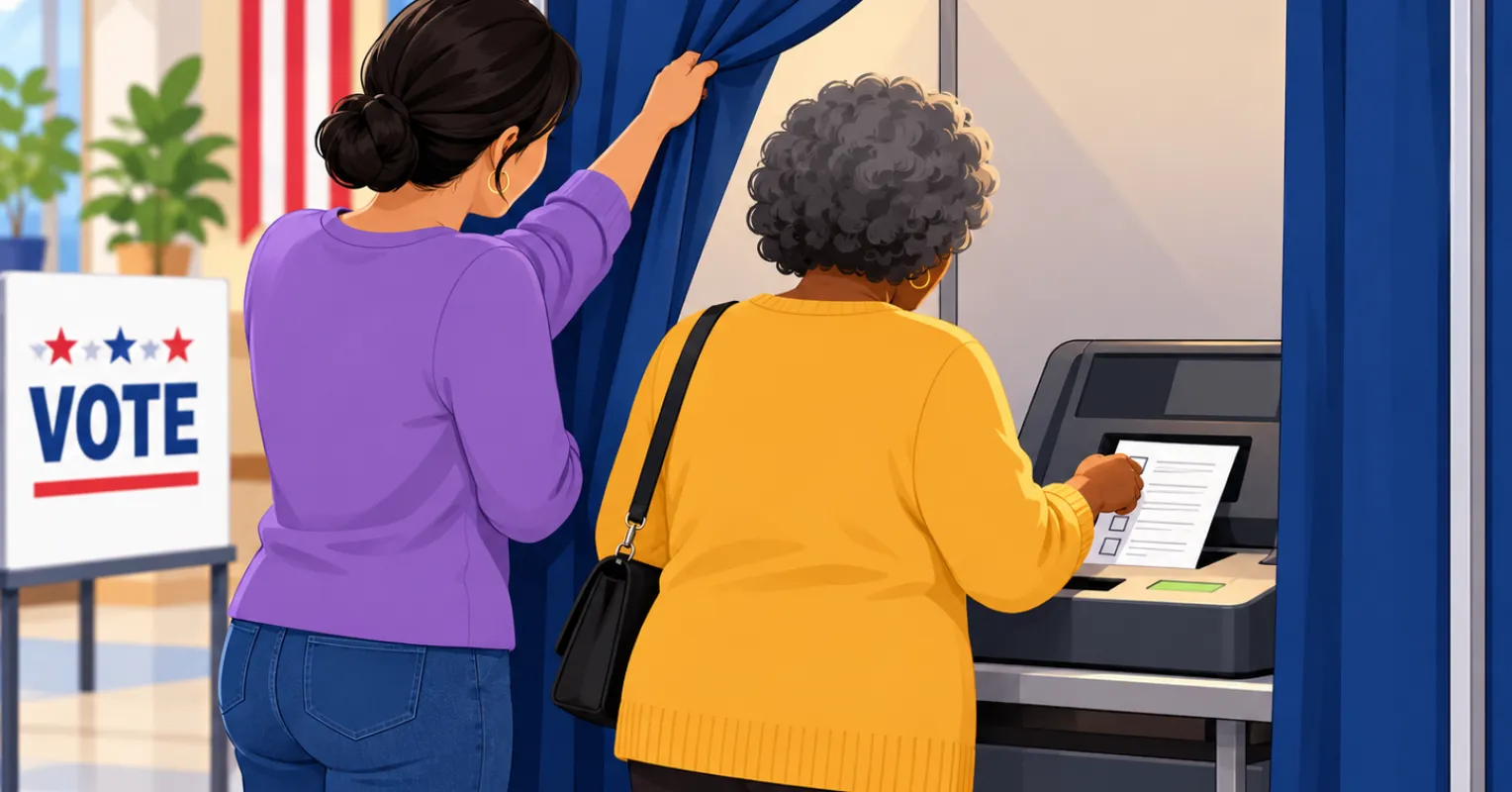
Voting is a fundamental right in free and democratic societies (Bazelon Center for Mental Health Law, 2026). The Equal Protection and Due Process Clauses of the Fourteenth Amendment to the U.S. Constitution provide important safeguards against arbitrary and discriminatory restrictions on voting rights. But what happens when individuals have schizophrenia, cognitive impairment, bipolar disorder, uncontrolled addiction, or other mental health disorders that may compromise their decision-making capacity? What does the law say about their right to vote, and who has the authority to determine when that right may be restricted?
Relevant Laws
Various federal and state laws protect voting rights, including those of people with mental health conditions or cognitive impairments. Under the Voting Rights Act (1965), individuals with disabilities who need assistance voting have the right to receive help from a person of their choice, subject certain exceptions (e.g., not an employer). For instance, someone with an anxiety disorder, cognitive impairment, autism, or other mental health condition that makes voting difficult may ask a friend or family member to assist them (Bazelon Center for Mental Health Law, 2026). The Americans with Disabilities Act (1990) also prohibits discrimination by state and local government officials, including individuals responsible for administering elections (U.S. Department of Justice, 2024). For example, election officials generally cannot prohibit voters with disabilities from bringing trained service animals into polling places. States cannot enact laws that discriminate against people with disabilities (Doe v. Rowe, 2001), for instance, disqualifying people from voting simply because they have a mental illness.
Under the National Voter Registration Act (1993), states may remove individuals from voter registration rolls based on mental incapacity, as provided by state law. However, states differ in whether and how they determine whether someone lacks the mental capacity to vote. For instance, Florida Statute § 97.041 prohibits individuals who have been adjudicated mentally incapacitated with respect to voting from voting unless their voting rights have been restored. New Mexico’s Constitution (Article VII, § 1) permits restrictions based on mental incapacity only when individuals cannot mark their ballots and cannot communicate their voting preferences. In contrast, California Elections Code § 2208 presumes that individuals retain the right to vote even when they have court-appointed conservators. Voting rights may be removed only following a specific court ruling, supported by clear and convincing evidence, that the individual cannot communicate a desire to participate in voting, even with reasonable accommodations.
Bottom Lines
Although voting laws vary from state to state, the following general principles apply across the United States:
- Mental health diagnoses do not automatically disqualify people from voting. Individuals do not lose their voting rights simply because they have a mental health condition, cognitive impairment, or intellectual disability, or because they take medication for a mental health condition.
- Voting rights may be restricted based on legal determinations of mental incapacity. In states permitting such restrictions, individuals may lose their voting rights through a court determination or other legally authorized process. These restrictions must comply with constitutional and federal disability-rights protections (Bazelon Center for Mental Health Law, 2026).
- Guardianship or hospitalization does not necessarily mean losing the right to vote. In many states, individuals retain their voting rights even when a court appoints a guardian to assist them with personal, financial, or healthcare decisions, or when they have been admitted to a mental health facility. The specific laws and court orders governing voting rights vary from state to state.
- Election officials must provide reasonable accommodations for voters with disabilities. This may include allowing individuals with mental health conditions or cognitive impairments to receive assistance from someone of their choice, subject to certain legal exceptions.
- Voting decisions belong to the voter. Individuals should not be prevented from voting simply because family members, mental health professionals (MHPs), caregivers, or others disagree with their political views or preferred candidates. Likewise, people providing voting assistance must respect the voter’s choices rather than substitute their own preferences.
A recent Wisconsin Supreme Court decision illustrates the importance of protecting the privacy of individuals whose voting rights have been restricted due to mental incapacity. In Wisconsin Voter Alliance v. Secord (2026), the court ruled that records identifying individuals who had been adjudicated incompetent to vote were confidential under state guardianship laws and were not subject to public disclosure. Protecting privacy also fits with the ethics of mental health professionals, which includes respecting patient’s right to confidentiality (ACA, 2014; APA, 2017; NASW, 2021).
Roles of Family, Friends, Caregivers, and Mental Health Professionals
Family members, friends, caregivers, and mental health professionals (MHPs) can play vital roles in helping individuals with mental health conditions or cognitive impairments exercise their right to vote. First, they can explore whether individuals are interested in voting and identify what assistance they may need to participate. This may include providing information about voter registration, early or mail-in voting, sample ballots, candidates’ positions and policies, and transportation options for getting to polling places (e.g., public transportation, rides from family or friends). For state-by-state voting guides, see https://www.aapd.com/voter-info.
If individuals experience anxiety or distress related to voting, supporters can help them identify ways to manage these concerns, such as voting by mail or using relaxation and breathing exercises. When individuals encounter barriers to voting (e.g., inaccessible polling booths, ballots that are difficult to read or understand), family members, MHPs, and others can help them advocate for reasonable accommodations and resolve accessibility concerns. While providing assistance with the voting process, supporters should respect individuals’ autonomy, ensuring that assistance facilitates their own voting decisions rather than influencing or substituting the preferences of others.
Generally, MHPs and other supporters are not legally required to assist individuals with mental health conditions or cognitive impairments in exercising their right to vote. Nevertheless, providing voting assistance may be an ethical or moral responsibility, reflecting respect for individuals’ dignity, worth, autonomy, and right to participate in democratic processes. Professional ethical standards for counselors, psychologists, and social workers emphasize respect for clients’ autonomy and self-determination (ACA, 2014; APA, 2017; Barsky, 2023; NASW, 2021). These principles support respecting and facilitating clients’ right to vote, should they wish to exercise it.
When individuals appear to lack the mental capacity to make informed voting decisions, supporters should not automatically assume that they have lost their right to vote. Instead, they can explore whether reasonable accommodations or supported decision-making could help individuals express their own voting preferences. For instance, some people with dementia experience greater mental clarity in the morning and increased confusion or cognitive difficulties later in the day, a phenomenon known as sundowning. For these individuals, arranging to vote in the morning, when they are more alert and better able to express their preferences, may be helpful. If individuals cannot communicate their voting preferences, even with appropriate assistance, supporters should refrain from making voting choices on their behalf.
If someone is coercing, intimidating, or manipulating a vulnerable adult to influence their voting decisions, this may constitute unlawful interference with their voting rights (Voting Rights Act, 1965). Depending on the circumstances and applicable state laws, such conduct may also raise concerns about abuse or exploitation that warrant reporting to adult protective services or election authorities (e.g., Florida Statutes, 2026, § 415.1034).
Conclusion
Having a mental health condition or cognitive impairment is not, in itself, a legal justification to restrict a person’s right to vote. Although voting rights may be restricted under certain state laws when individuals are legally determined to lack the capacity to vote, such restrictions must comply with constitutional, federal, and state protections. Family members, friends, MHPs, and other supporters can play important roles in helping individuals exercise their voting rights, including providing appropriate assistance and accommodations. They should also remain vigilant against exploitation, coercion, and discrimination, while respecting each individual’s autonomy, dignity, and right to participate in the democratic process.