I imagine my skeptical and slightly horrified reaction when I heard about Netflix’s attempt to replicate Philip Zimbardo’s Stanford Prison Experiment from the 1970s was similar to that of many other social psychologists and academics. In fact, a fellow grad student—and dear friend—from my doctorate program was the one who alerted me to the release of this new show, and we exchanged a series of predictable messages bemoaning the lack of scientific viability behind such an attempt.
The Stanford Prison Experiment was part of a number of studies spanning the 1950s-70s in the field of social psychology that shed light on the situational and group-based influences that shape behaviors when individuals are in the presence of others. Psychological processes enabling destructive conformity, obedience, and abuses of power became central to questions psychologists were attempting to understand regarding human behavior in the post-war period. This period also reflected significant social change and upheaval here in the United States, raising the stakes for social scientists to investigate how relationships with others, group dynamics, and power in particular influenced behaviors.
Over the summer in 1971, Zimbardo set up a makeshift prison in the basement of one of the buildings at Stanford University, randomly assigning young white males recruited to participate in this study as “inmates” or “guards.” Anticipating the potential stress that could develop from enrolling in a two-week study where an individual would potentially be incarcerated or affiliated with a “prison” as an assigned guard, Zimbardo and his team screened prospective applicants. The sample they settled on reportedly reflected the most psychologically healthy individuals of those who had applied, reflecting a group of young men most likely to withstand the potential stress of a 14-day prison simulation. He and his graduate research assistants were interested in exploring how power dynamics would influence the behaviors of participants placed in each respective role.
The results, of course, have become part of psychological lore. The interactions between the assigned prisoners and guards became so sadistic, disturbing, and cruel, that Zimbardo shut down the study after 6 days—revealing that in retrospect, he likely should have ended it even sooner. Ever the showman, even Zimbardo’s explanation for why he didn’t end the study sooner played into the narrative he had constructed regarding why the interactions between the two groups escalated to hostility so quickly: Zimbardo himself became lost in his “prison superintendent” role, losing sight that as the Principal Investigator (PI) of the experiment, his ethical responsibilities to the participants should have taken precedence
Taken in tandem with the Yale Obedience Studies conducted by Stanley Milgram in the 1960s, Zimbardo himself referred to his study as a “bookend” to such research at the time that was shedding light on the powerful role social interactions and group processes played in inciting destructive behaviors (Drury et al., 2012). The results of the study, what they reveal about group dynamics, how powerful social roles have the potential to overtake individual identity or responsibility—so many theories and themes regarding human nature (and nurture) have been dissected as a byproduct of this research.
Zimbardo himself continued to refer to this study over the course of his professional career, using it as the catalyst for other work, such as publication of his 2007 book The Lucifer Effect: Understanding How Good People Turn Evil, Ted Talks he gave on such themes as the psychology of evil, and other prominent popular cultural publications and appearances.
Fast-forward further, and American Psychologist publishes Le Texier’s (2019) scathing review of the scientific design of Zimbardo’s study, aptly titled, “Debunking the Stanford Prison Experiment,” and once again, academics are revisiting this infamous study. Among many of the claims Le Texier (2019) makes based on revisiting the archives of the data collected from the study and interviewing 15 of the former 22 participants, is the “questionable scientific validity” of the results. Le Texier (2019) argues that in assigning himself the prison superintendent role, during an orientation prior to the start of the simulation, Zimbardo very explicitly demonstrated to the guards how he expected them to behave towards the inmates.
Seemingly as part of the renewed controversy over the study, National Geographic released a documentary in 2024 entitled “The Stanford Prison Experiment: Unlocking the Truth,” which includes separate interviews with both Le Texier and Zimbardo. Filming also brings together many of the former participants of the study who had largely stayed out of the public eye, revealing resentment towards Zimbardo not only because of what they were put through as part of their participation in a study he designed, but also in how they perceive he capitalized on their suffering to craft a specific narrative regarding what the results of the study revealed.
Zimbardo categorically denies having coached assigned inmates in any way regarding the behaviors they demonstrated over the course of the study. Similarly, Le Texier maintains his previously written position by revealing in the interview he did not set out to undermine the authenticity of the study, but rather, came to such a conclusion through his investigation of archival materials from the study. Rather than answering the question of whether Le Texier’s (2019) critiques of Zimbardo’s research design were valid, the 2024 documentary poses more questions, as it is clear from watching the former participants interact with one another and reflect on the study that it did, in fact, leave a profound mark on them.
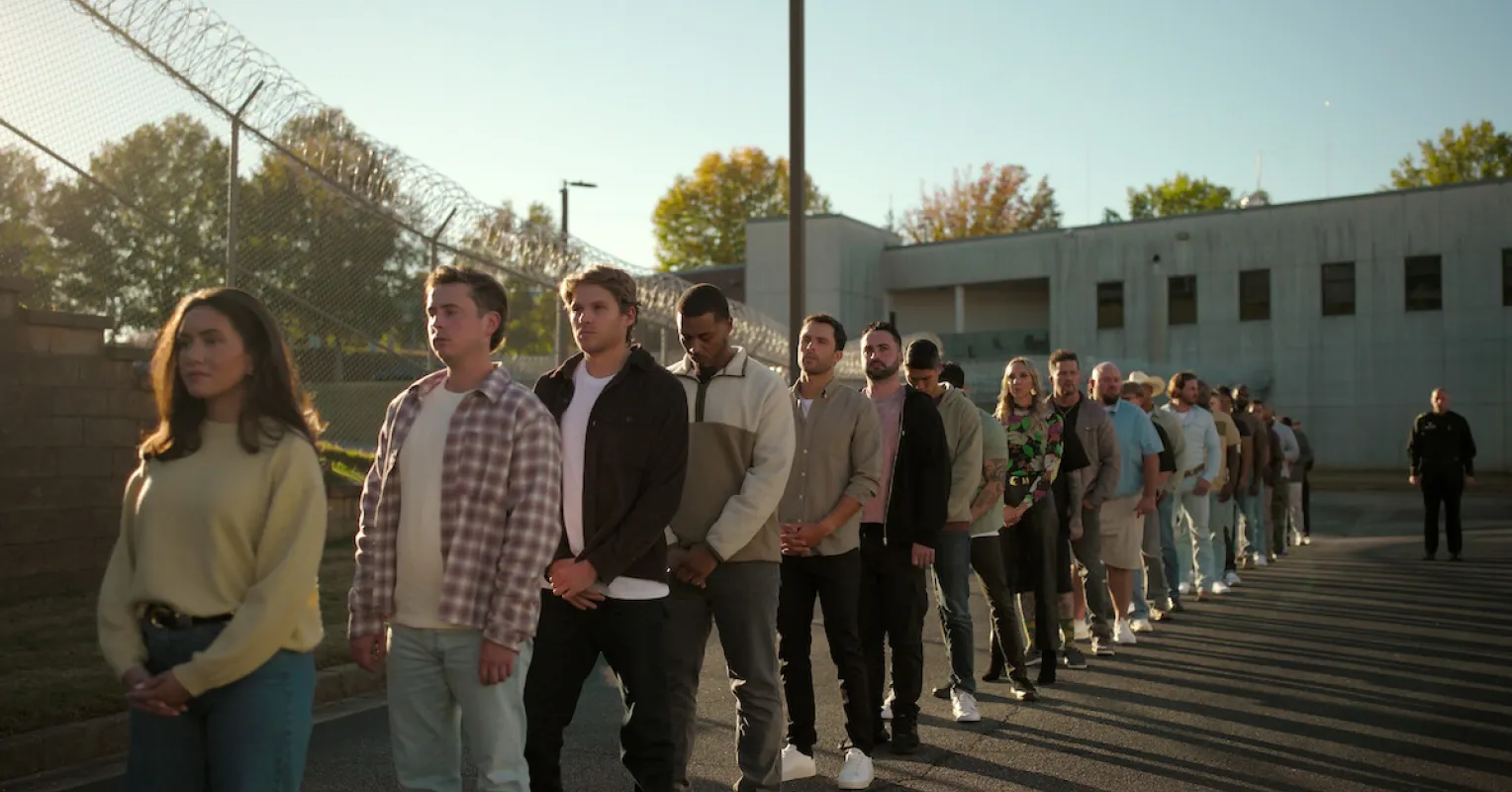
Episode 1 of this Netflix series appears to reflect on the continued controversy regarding the question of whether to trust Zimbardo’s claims from this study by presenting this simulation as “without bias.” To be clear: this most recent attempt at revisiting Zimbardo’s infamous study is in no way a scientific pursuit and entirely reality television fodder. Even with this qualifier, however, I can’t say I wasn’t compelled by what appeared to transpire in this six-episode reality TV series, dubbed as a contemporary, unscripted, redefined version of the Stanford Prison Experiment.
For my thoughts on what transpires over the course of this show—and whether it reflects any meaningful expansion regarding what we know from the original study—stay tuned for Part 2 of this article.
Copyright 2026 Azadeh Aalai