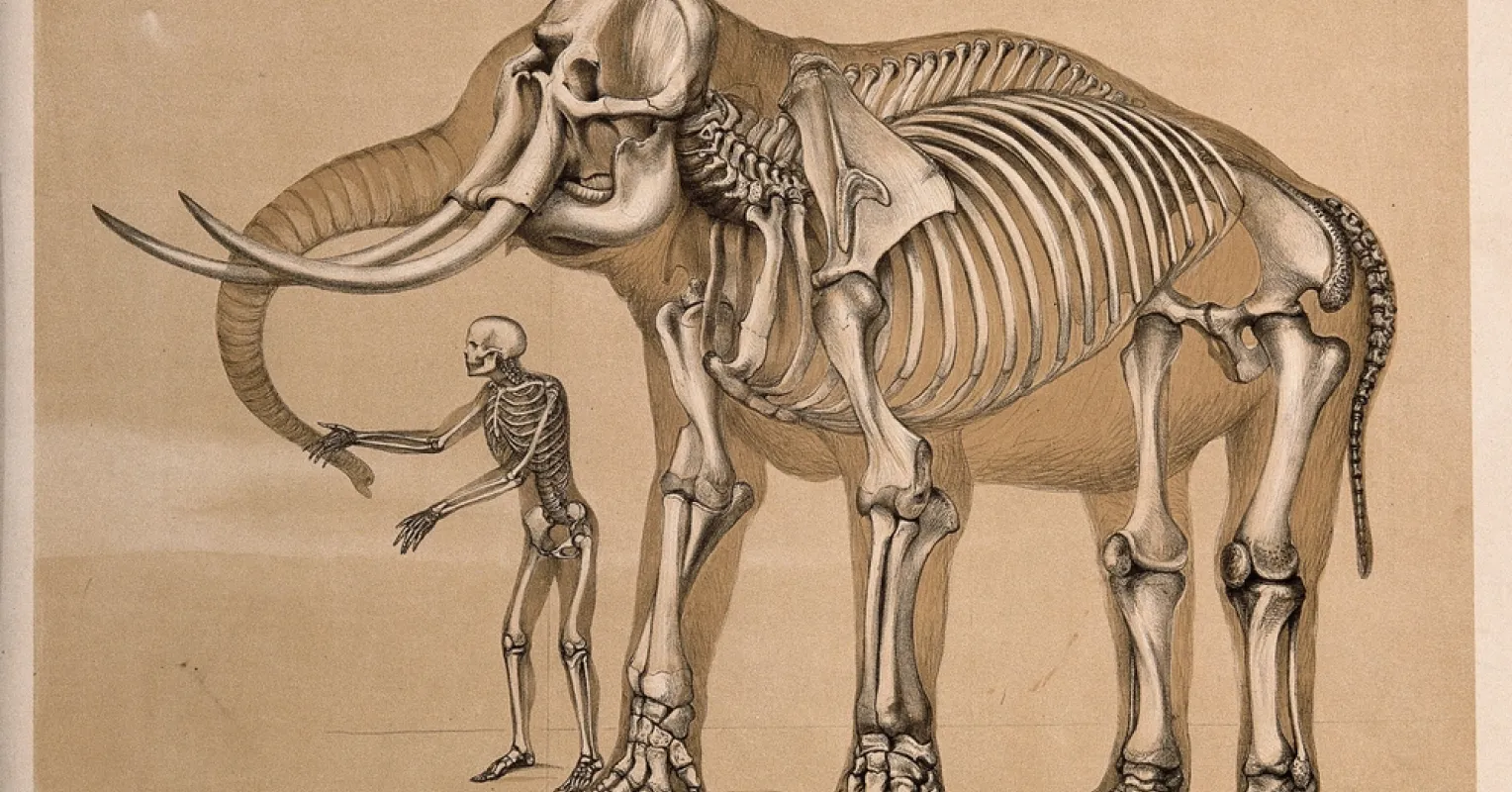
Some humans struggle to accept the fact that we are animals. In 1860, the scientist Thomas Huxley (grandfather of the author Aldous Huxley) caused an uproar when he voiced his support for Darwin’s theory of evolution and disputed that human beings were divinely created. In response, Bishop Samuel Wilberforce enquired sarcastically whether Huxley was descended from apes through his grandmother or his grandfather. Huxley replied that he felt no shame in being descended from apes, but he would be ashamed of the bishops’ ignorance of science.
Even now, some Christians believe that human beings are superior to all other animals because only we possess souls. As a result, we will spend eternity in heaven or hell, whereas animals simply cease to exist at death. From a different perspective, some contemporary scientists suggest that there is something special about human intelligence and consciousness that elevates us above our animal cousins. We are conscious, and they aren’t—or at least, we are more intensely conscious than they are.
Throughout history, many cultures and religions have expressed ambivalence and even hostility to the animal side of our nature. The ‘spirit’ and the ‘flesh’ were viewed as enemies. Christian ascetics like St. Simeon Stylites and Henry de Suso put themselves through appalling torments to try to tame their physical desires and make themselves more “spiritual.” Many cultures had (and have) a repressive attitude toward sex, viewing sexual impulses as a sinful expression of our lower animal nature.
Accepting Our Animal Nature
However, there are good reasons why we should accept our animal nature and try to live in harmony with it. I would like to introduce a simple new approach to life that I call ‘animalism.’ The basic principle is that, since we humans are essentially animals, we are happiest when we attune with and express our animal nature. This is why we love physical activities like sports, running, swimming, and making love. It’s why so many people love walking in the countryside, gardening, and preparing food. These are all activities that hark back to, and express, our animal heritage.
Research has shown that regularly practising such activities leads to greater well-being. People who garden regularly have a higher-than-average level of well-being.1 A 2023 survey of 2000 UK adults found that people who spent 20 hours or more in a green or natural space were significantly healthier and happier than average.2
In contrast, we feel least happy when we perform activities that are least connected to our animal nature. Staring at screens or immersing ourselves in TV programmes or social media may provide a short-term thrill, but in the long term, such activities make us feel restless and frustrated. Although city life can be stimulating, there are higher levels of anxiety and depression in city dwellers compared to those in the countryside.3 Researchers have coined the term ‘urban-rural happiness gap’ to describe the lower life satisfaction in cities compared to rural areas. This is a finding that holds true all over the world.4
No doubt this is partly due to the stressors of city life, such as noise and constant activity. But perhaps it is also because, as animals, we were never meant to live amidst concrete and glass, surrounded by electronic devices and metal machines. We are meant to be surrounded by trees, plants, fields, and other animal species.
Integrating the Animal and Human
You might argue that we humans are mental and spiritual beings, in a way that animals can’t aspire to. But even our spiritual nature harks back to our animal nature. Two essential aspects of spirituality are presence and mental quietness. Animals live completely in the present and do not appear to experience the incessant mental activity that afflicts us. So, in a sense, spirituality also aligns with our animal nature. And of course, presence and mental quietness are a powerful source of well-being.
That doesn’t mean we shouldn’t think. Thinking can be extremely useful, helping us to organize and plan. Innumerable human achievements have arisen from our capacity for contemplation and logical thought. But as spiritual teachers like Eckhart Tolle remind us, thinking should be a faculty that we can call on when we require it. The constant associational ‘thought-chatter’ that flows through our minds is unproductive, and even harmful.
Happiness Essential Reads
We can be rightfully proud of the human capacity for reason, and fields such as mathematics or philosophy. We can be rightfully proud of amazing expressions of human creativity such as poetry and music. But we should always remember that we are fundamentally animals and attempt to integrate our animal heritage into our lives. We should accept all our bodily instincts and processes as healthy and natural. We should ensure that we spend time in nature, and that we regularly practice ‘animalistic’ activities, like gardening, working with our hands, walking and running.
Our animal nature is not something we should rise above, but something we should honor and express.