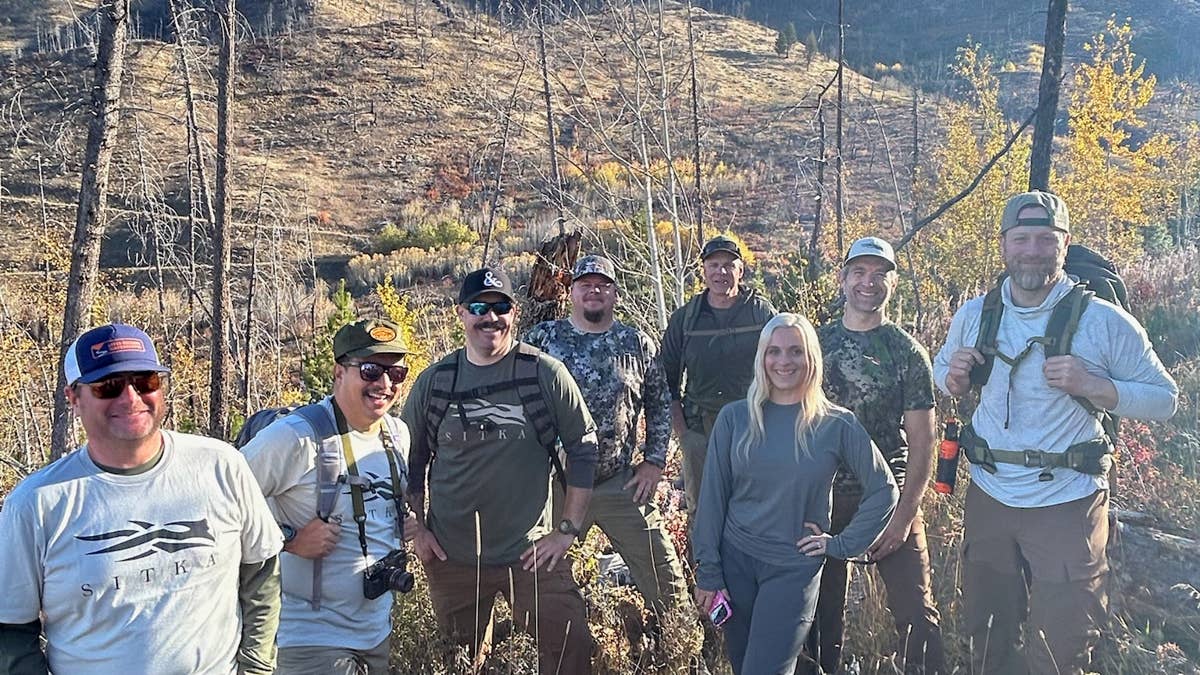
There’s a certain irony to hiking through Montana with a guy who has spent decades developing technical hunting apparel: You might expect him to tell you that you need more gear.
John Barklow’s answer is almost the opposite.
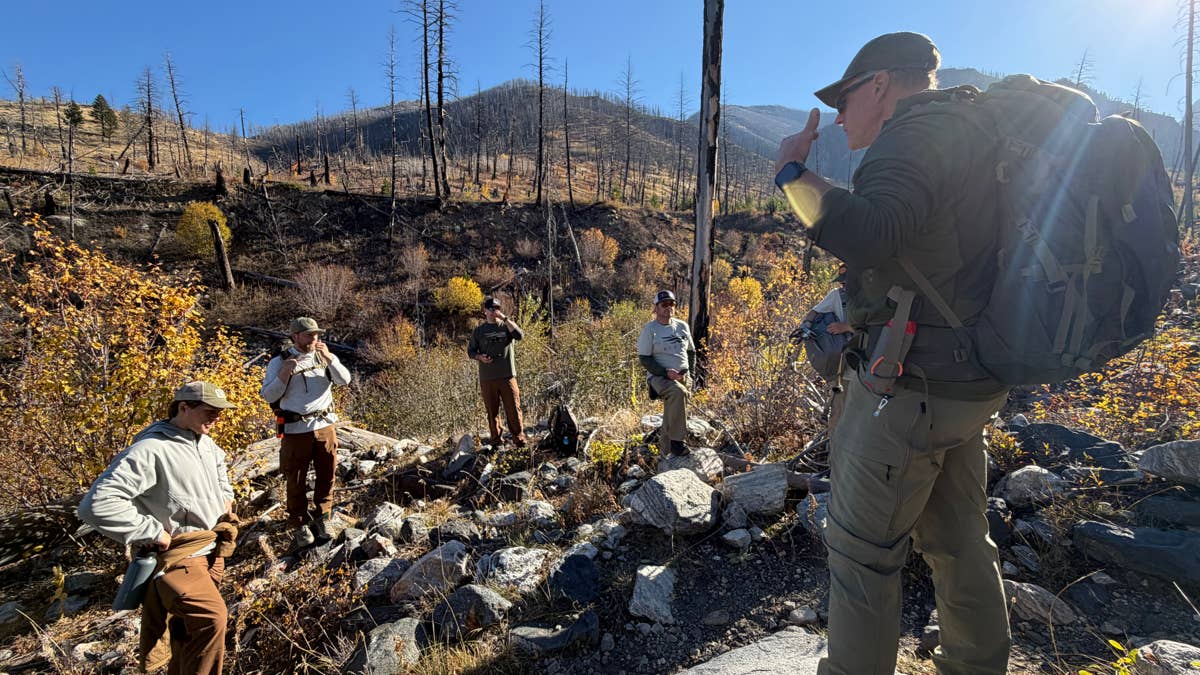
During a hike through Montana’s Absaroka Mountains, Barklow, SITKA’s senior product manager (and experienced outdoorsman), explained why hunters shouldn’t think about clothing as a collection of individual pieces. The goal isn’t to own a closet full of jackets, pants, and insulating layers. It’s to understand how those pieces work together as a system.
And according to Barklow, that system can be surprisingly simple.
SITKA’s current eight-piece framework includes a base layer top, base layer bottom, softshell pant, active-insulated midlayer, windproof jacket, static puffy jacket, rain jacket, and rain pant. The idea is that those pieces can be mixed and matched according to conditions and activity rather than simply stacked on top of one another.
“The human is a human,” Barklow told our group during the hike. Whether you’re hiking, fishing, elk hunting, or backcountry skiing, he explained, the body still warms up, sweats, cools down and regulates itself according to the same basic principles.
The trick is learning how to work with those processes instead of fighting them.
It’s Not About Wearing More Layers
One of Barklow’s biggest points was that randomly adding layers doesn’t necessarily make a clothing system better.
A technical system works because every layer has a specific job. SITKA describes those jobs in three broad categories: managing moisture, regulating body temperature, and protecting the wearer from the elements.
That means the right question isn’t necessarily, “How many layers am I wearing?” It’s, “What is each layer doing?”
During our hike, my husband was wearing the SITKA Alpha Fleece Hoodie over the Radiant LS Crew base layer as we climbed. As the incline got steeper, he could feel sweat beginning to bead on his forearms. But when we stopped for a short break, he didn’t stay hot or get clammy. His body had a chance to regulate.
When you’re moving uphill, your body is generating heat. Instead of trying to trap all of that heat with increasingly heavy layers, Barklow recommends learning how to release it. Open ventilation, remove a hat or hood, or take off a layer if necessary. Then, when the activity stops, it’s time to put that insulation back to work.
Rachel Schneider / Men's Journal
The Puffy Layer Isn’t Just for When You’re Cold
One of Barklow’s most practical pieces of advice is to keep a puffy jacket accessible.
He described reaching the top of a ridge after a roughly 50-minute climb, knowing he was about to stop for water, a snack, or some time glassing. That’s when he would pull the puffy out of his pack and put it on.
Barklow explained that the puffy jacket helps trap that heat while the body continues working to move moisture away from the base layer. SITKA’s current eight-piece guide similarly describes the static puffy as a critical part of the system, and it isn’t necessarily something you wait to put on until you’re already cold. It can be a tool for managing the transition from moving to stationary.
Your Base Layer Has One Very Important Job
Barklow was particularly emphatic about the importance of the base layer. It’s tempting to think of a base layer as something that’s primarily supposed to keep you warm. Barklow sees it differently. Its fundamental job is moisture management.
A good base layer pulls moisture away from the skin so that sweat doesn’t remain trapped against your body. SITKA’s current system describes the base layer as the foundation of the entire clothing system for precisely that reason.
And Barklow has a pretty straightforward rule when it comes to what material should be touching your skin. Synthetic or merino wool are both options, but cotton isn’t.
“Synthetic or wool are basically the two options,” he told us. “As long as it’s not cotton, it’s shooter’s choice.”
The choice between synthetic and merino, he explained, largely comes down to personal preference and the situation.
Synthetic fabrics generally dry faster and tend to be durable and less expensive. Merino wool takes longer to dry but has excellent natural odor-management properties, which can make it particularly appealing for long trips or situations where you’re spending a lot of time around other people.
Barklow himself said he tends to favor synthetic when he’s being active, a preference he developed during his time living in Alaska, but also wears plenty of wool depending on the circumstances. SITKA likewise describes synthetic as the faster-drying option and merino as the stronger choice when odor management is a priority.
There’s no universal winner. The important thing is understanding why you’re choosing one.
Rachel Schneider / Men's Journal
The Other Four Layers Have Jobs, Too
Once the base layers are doing their job, the rest of the system is about adapting to changing conditions.
The softshell pant provides protection while you’re moving. An active-insulated midlayer adds warmth while still allowing you to stay active. A windproof layer helps prevent heat from being stripped away by moving air. The static puffy provides insulation when you’re no longer generating as much heat through movement.
Then there are the rain jacket and rain pants. Those might seem unnecessary when the forecast looks favorable, but Barklow considers them insurance.
The current SITKA framework calls rain gear a non-negotiable part of the system because conditions can change quickly in remote areas. That’s another theme Barklow returned to repeatedly: You don’t necessarily need to wear every piece, you just want them available in your aresenal if you end up needing them.
The Goal Is to Stop Thinking About Your Clothes
The ultimate goal isn’t to spend the entire hunt thinking about your apparel, but instead, the opposite. A properly built system should eventually become something you don’t notice because it’s doing its job in the background.
SITKA has described Barklow’s approach as “systems thinking,” emphasizing that technical clothing is supposed to work together rather than function as a random collection of individual layers.
Barklow told us that he has seen people spend years accumulating gear without necessarily learning how to get the most out of it.
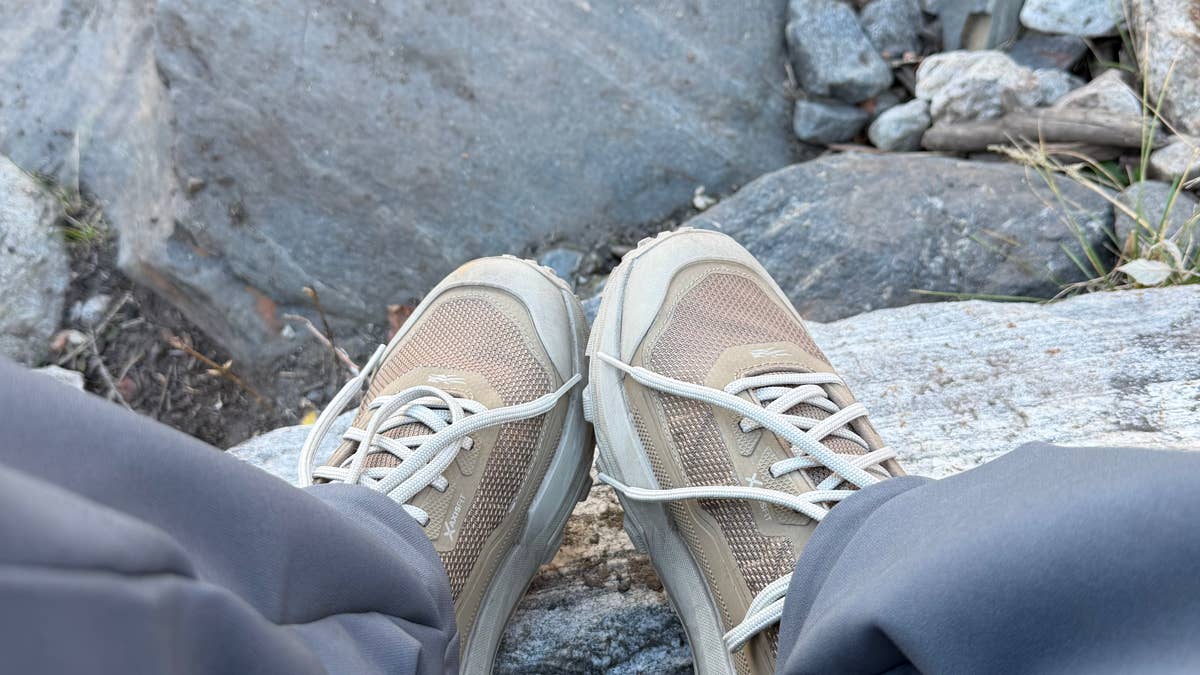
My own biggest surprises from the Montana hike weren’t necessarily the jackets. The socks and shoes ended up being MVPs.
My feet never felt sweaty, but they also never got overly warm or cold. The socks had enough compression that my feet felt secure without being uncomfortable, which mattered as we moved over uneven terrain.
Rachel Schneider / Men's Journal
The shoes were another standout. I liked the way they gripped the terrain while still allowing plenty of mobility, particularly on the inclines and uneven sections of the trail. My husband also appreciated the ventilation built into the Pursuit pants. The zippered vents were a small detail, but they became useful as our activity level changed.
Those details reinforced Barklow’s larger point. SITKA makes a lot of clothing. Barklow readily acknowledged that.
There are different pants, jackets, insulation weights, and fabrics because conditions, pursuits, and personal preferences vary. But he argued that most people don’t need to constantly add more pieces to their collection.
The better investment may be learning what the pieces you already own are actually designed to do. That means understanding when you’re generating too much heat, when you’re losing it, how to move moisture away from your skin, and when it’s time to add insulation.