Many of us treat cooking as a form of work, where the goal is to get to the food, and the process is just one more form of labor that we have to get through if we want to enjoy the reward at the end.
And when we work, our minds wander. We rehearse tomorrow’s meeting while we chop the onions. We keep our phone on the counter and check messages while keeping an eye on the pot. Dinner gets made, but we are barely there in the making of it. Our bodies are in the kitchen, but our minds are far away, pre-occupied with issues that seem more important.
But cooking can be much more than this. For me, it is how I slow down, how I focus my attention, and how I care for the people I love. Eric Ripert, the chef behind New York’s three-Michelin-starred Le Bernardin, draws the reader into this kind of cooking in his new book, Mindful Cooking: Simple Recipes for Nurturing Body and Soul. Ripert’s goal in the book is to encourage cooks to approach their task with more attention and less anxiety, an approach that grew out of time he spent in Buddhist monasteries in Japan and Korea. Ripert applies these techniques in his restaurant. As he told AARP, “A cook who’s shaking will not cook better than a cook who’s precise.” But this is not just a lesson for the pros. The mindset Ripert cultivates carries over to the home cook as well, and, more importantly, to life in general.
The trouble with being somewhere else
A 2010 study published in Science found that human minds frequently wander. In fact, the group sampled reported that their minds were on matters other than the task at hand nearly 50% of the time. And the more someone’s mind wandered, the lower their happiness, regardless of the activity they were engaged in.
There are many techniques that can help pull us back into the moment we are inhabiting. But for me, cooking is the most intuitive. It is a regular part of the day for most people, and its technical demands can force us to focus if we choose to do more than simply heat some ingredients up.
The fragrant waft of garlic in butter or oil is one of the most beguiling scents you will encounter in the kitchen. But the garlic can turn bitter in seconds if left over too high a heat. A sauce can break while we are distracted. A steak can turn from pink to gray in minutes while an egg yolk can become rubbery and unappetizing. Unless we pay attention to the pots and pans in front of us, a delicious meal can turn into something uninspiring … or worse.
But if we retain our focus and refuse to let our minds drift away, the rewards go beyond a pleasant plate of food. The act of cooking becomes an act of creation. And that in itself yields important benefits. Psychologist Tamlin Conner and her colleagues found that creative activities, including cooking, are associated with greater positive emotion and flourishing. That doesn’t mean we should treat cooking as a cure-all for the stresses of modern life. But the creativity and focus involved in intentionally making something with our hands is a powerful counterbalance to a day of screens and deadlines.
What Japan taught me
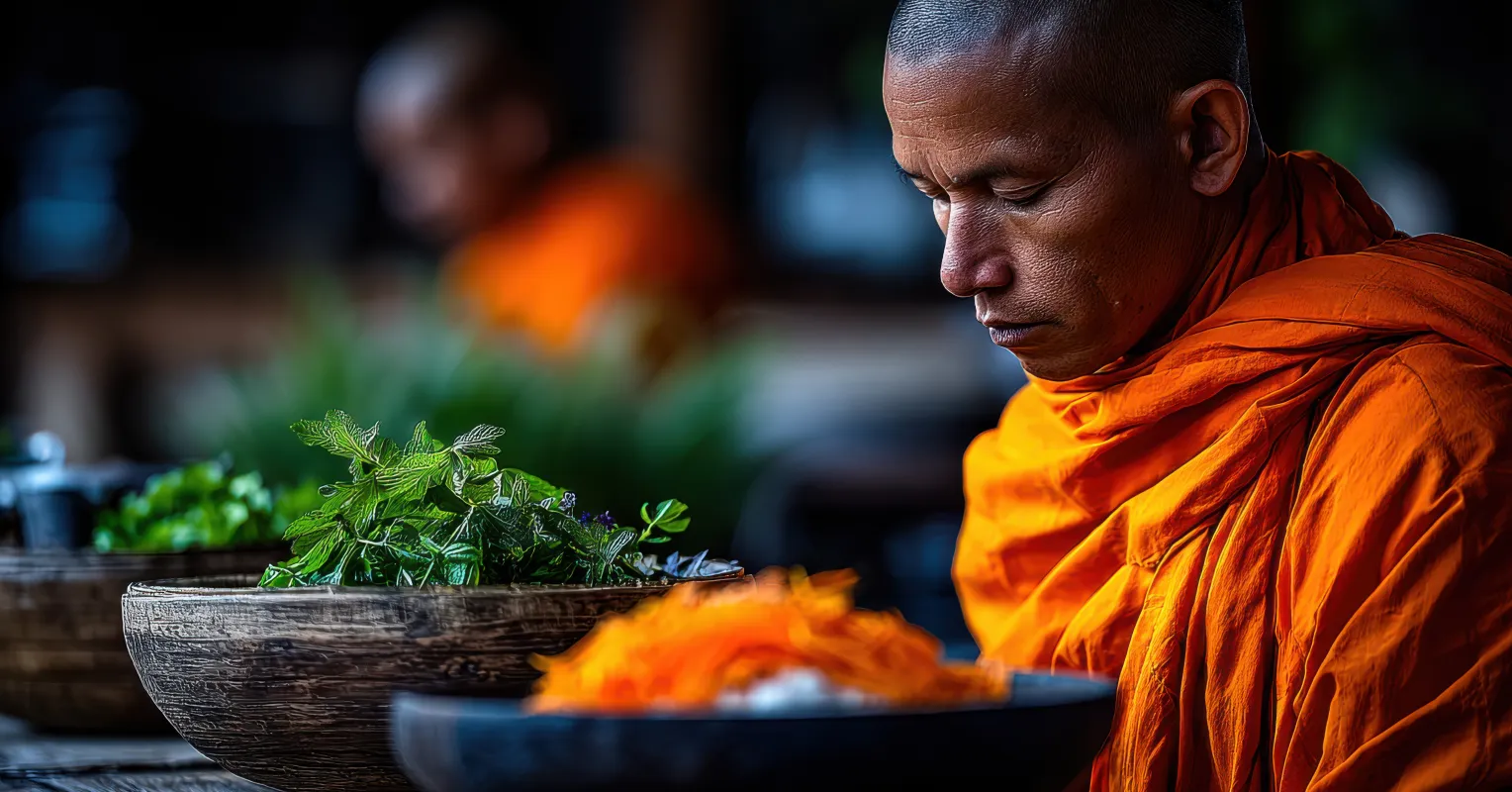
My understanding of cooking took on a new depth during a series of journeys I took through rural Japan with my late friend and mentor, Ito San. Alongside many other things, Ito San introduced me to kaiseki, the Japanese tradition of carefully composed, seasonal dining. In the course of these travels, I also came to appreciate shojin ryori, the vegetarian cooking of Zen Buddhist temples, where nothing is rushed and nothing is wasted. In both of these traditions, cooking is much more than a chore. Instead, it is elevated almost to the level of practice for living well.
This approach to cooking has deep roots in Japan. In his Instructions for the Cook, written in 1237, the Zen teacher Dōgen recounts coming across an elderly monk drying mushrooms under the hot sun. Dōgen asks why he does not leave the task to a younger person. The monk’s reply has stayed with me since I first heard the story. He says to Dōgen, “Someone else cannot do my work for me.”
Dōgen shares the same thought in a different way elsewhere in his book. “When you boil rice,” he writes, “know that the water is your own life.” Life is, in many ways, the sum of the small tasks we complete. None are without meaning if we choose to make them our own.
Steadying the hand
On Sunday afternoons, I will normally leave my phone in another room while I prepare dinner. Slowly, the week falls away, and all that is left is the cutting board in front of me.
The meal might be a procession of complex dishes. Or it might be something as simple as masoor dal, the red lentils my mother used to make. In either case, the meaning is mine to find. My mother is no longer here, but the movements she taught me have survived; they are reflected in my hands. Her love is in the way I cook, and the act of cooking is itself an act of remembrance.
Attention Essential Reads
The same practice has helped me stay devoted to my son, who is a cancer survivor. Illness teaches you how little you control. In the kitchen, I can still do something with my hands that channels my full attention toward someone I love. Ripert is right that a cook who is shaking does not cook well. Neither does a parent. Cooking steadies me, and my son needs me steady.
An invitation, not an obligation
Cooking should not become another self-improvement assignment, another standard to judge ourselves harshly against. Not everyone has the time or energy or inclination to cook from scratch every night, and a task that restores one person may be a burden to another. The point is rather to take note of the opportunities we have for paying attention, and to use them instead of seeking distraction.
If you cook tonight, leave your phone in another room. Notice the onions as they soften. Taste before adding more salt. When you sit down to eat, give the people at the table the same attention you gave the food.
We spend so much of our lives trying to get to the next thing. But sometimes, the next thing can wait.