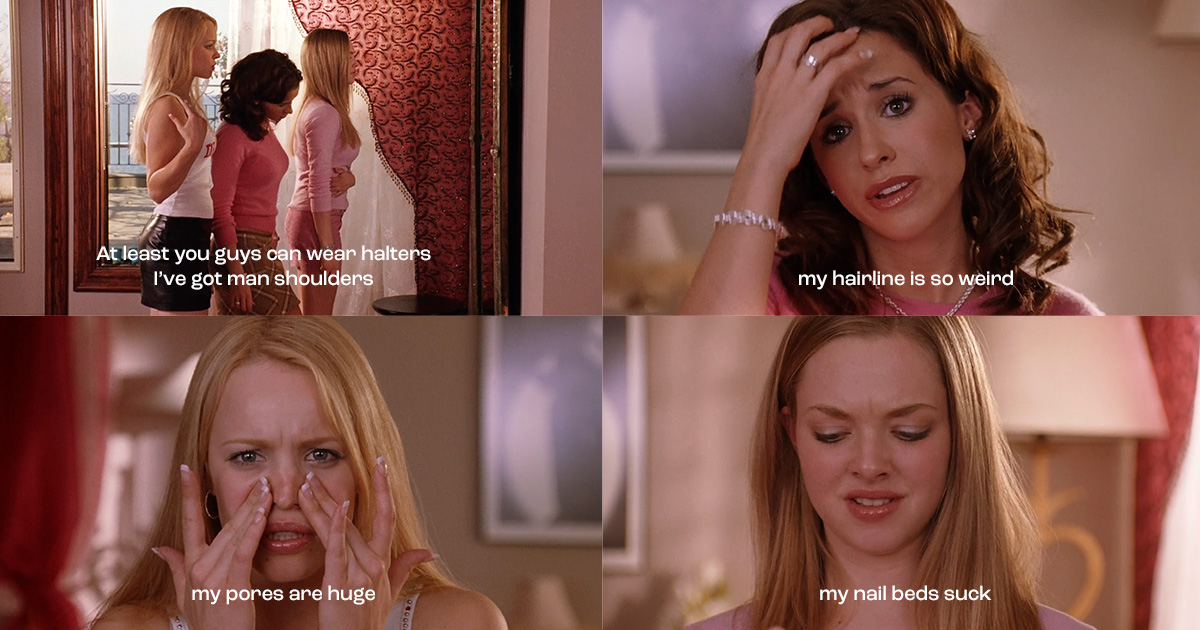
Hamilton says this dynamic can become particularly problematic when friends repeatedly reinforce one another’s insecurities. “Women may believe they are being vulnerable, relatable, funny, or supportive, but when conversations are repeatedly revolving around weight, wrinkles, aging, body shape, skin, and other perceived imperfections, something more complicated might develop,” she explains. Friendships, she adds, can unintentionally become spaces where women reinforce each other’s insecurities rather than encourage healthier relationships with themselves.
Social media certainly hasn’t helped either. Between filters, editing apps and an endless parade of seemingly poreless faces, the standard for what constitutes a normal appearance has become increasingly distorted. We’re comparing ourselves not just to other women, but to digitally enhanced versions of them. In fact, even when we know an image has been altered, that doesn’t necessarily stop us from measuring ourselves against it.
I wonder whether our friendships could offer something different. What would happen if, the next time a friend criticized her appearance, we didn’t immediately respond with a criticism of our own? What if we simply said, “I hate that you feel that way,” and moved on?
Camila Greenberg, a sovereignty coach and manifestation expert, agrees that reassurance alone isn’t always the answer. “If someone fundamentally believes she’s unattractive, my reassurance might make her feel better temporarily, but it won’t necessarily change the belief she holds about herself,” she explains. “Sometimes, immediately contradicting someone’s insecurity can even make her feel unheard.”