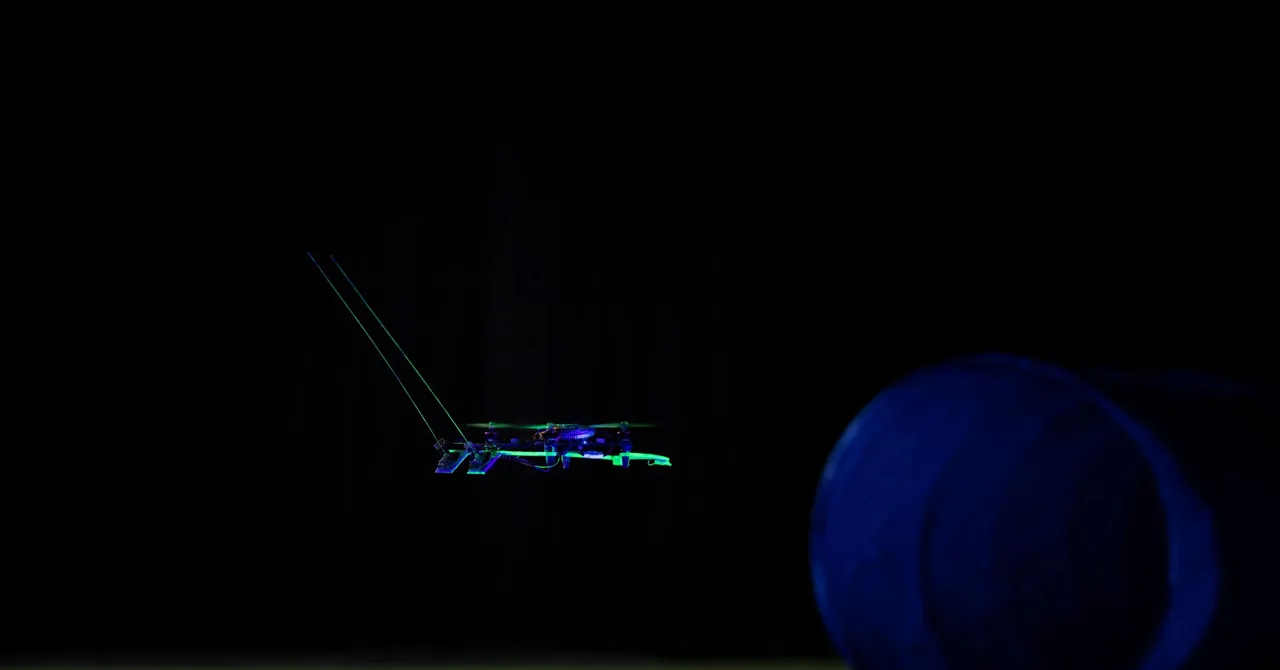
The “hairs” Hamaza and her group crafted for the drone consist of delicate wires constructed from nickel-titanium, each measuring 0. 4 millimeters in size– regarding the thickness of four sheets of paper. The antennae, nevertheless, were longer than the drone itself. To a palm-sized drone, the scientists connected 2 hairs, each virtually 8 inches long with three little stress sensors at the base. These can evaluate the flexing of the cables, where the drone estimates its range from and placement in relation to nearby barriers. All calculations needed for this navigation are refined by a microcontroller onboard the drone, without counting on an external computer system
It might not sound as well challenging, however also determining the angle at which to place the cords was an obstacle. Pets that navigate using whisker typically do not fly Having a long outcropping, also if very light and delicate, can make the drone unsteady. When moving along a wall, the researchers saw that resistance from the whisker can create the drone to revolve and crash.
The researchers contrasted a total amount of 72 flights, examining six different angles at three different speeds. The drone flew without significant incident when the hairs were mounted at 30 levels, 45 degrees, and 60 levels. Of these, the 45 -degree angle was embraced due to the fact that it led to the least deviation in the drone’s orientation. They likewise took into account the fact that a 60 -level angle minimizes the forward sensing range.
The researchers additionally ran into a number of obstacles in refining the info absorbed by the hairs. One was comparing actual get in touch with signals and disruptions triggered by the drone itself, such as vibrations from the propellers. Also when filtering this noise out, regarding 38 percent of the drone’s discoveries were false positives.
The issue seemed to be drift, a phenomenon where sensing unit readings gradually change with time. The research group, consequently, developed a modification formula that constantly approximates the pattern of drifts over time– based on sensing unit readings when the drone is not touching anything– while in trip. When combined with the filter, false positives reportedly went down to 0 percent.