Support CleanTechnica’s overcome a Substack subscription , on Patreon , or on Stripe Aid us generate every one of the high-grade, original material we publish week after week regardless of the difficulties of content-scraping AI, antisocial media, rising cost of living, and various other hurdles.
People love to grumble about how China gives large state subsidies to its residential manufacturers, as if the US, the EU, and Japan do not. Whether is it a zillion tax breaks for companies or forgiveness of neighborhood property taxes, the last thing any company in the west desires is an equal opportunity. In the United States, if your organization is big sufficient and uses a great deal of individuals, the federal government will shovel truck tons of public funds your method if your service will fail.
What many people easily neglect is that, while China may offer a huge helping of government assistance to assist entrepreneurs obtained brand-new companies off the ground, it slowly and meticulously minimizes those benefits over time. Ultimately, China is far more carefully straightened with the principles of commercialism than many so-called “first globe” countries. It’s almost like it is the adult in the area, while federal governments of allegedly capitalist nations run around making plans as if their hair was on fire.
VAT Exception Reduced
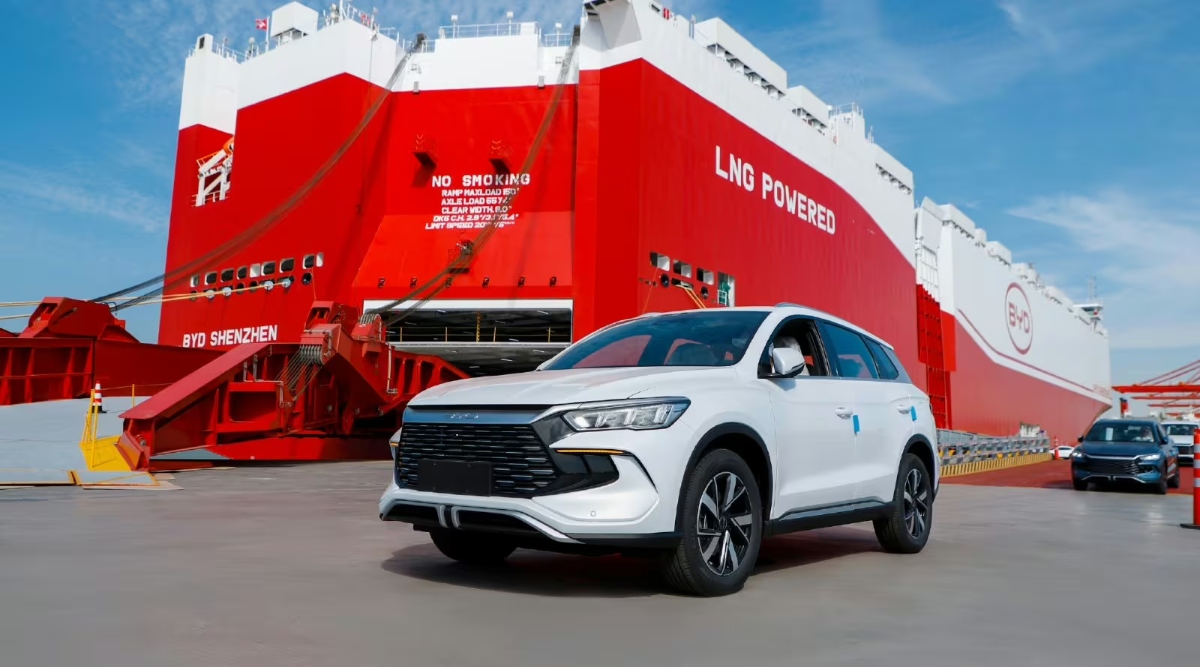
According to cnevpost , the Chinese federal government today introduced it will certainly lower the barrel tax obligation discount on exported electric and plug-in crossbreed automobiles, buses, and vehicles from 13 percent to 9 percent beginning on April 1, 2027 As of now, Chinese manufacturers of those cars are not needed to pay the full value included tax on the cars they create for export. Things are tough in China’s residential new cars and truck market, with sales down dramatically this year, so reducing the tax burden on exports was a way of motivating automakers to send out several of the automobiles, buses, and trucks they generate to international markets.
Can there be a connection between this news and the see by a European profession delegation previously this month that safeguarded a contract by China to reduce exports of plug-in hybrid cars by 50 percent We leave it to our readers to answer that question for themselves.
Cnevpost declares that economists connect the change to the increased worldwide competitiveness of the Chinese car sector. It is intended “to suppress aggressive rate competition in international markets and encourage manufacturers to contend more on the basis of innovation, brand top quality, and service as opposed to state subsidized discount rates.”
The present 13 percent discount formerly covered all normal barrel payments sustained on bought goods during automobile production, a plan that stayed clear of double taxation on elements imported from outside China that would certainly have paid VAT when they went into the country. The VAT exemption on exported automobiles permitted them to be sold much more cheaply in international markets.
Eliminating State Subsidies
Electrive says the reduction in tax refunds “is another step by China to progressively eliminate state aids for vital future-oriented industries when they reach a specific degree of market maturation. As an example, barrel discounts for the export of solar modules were already gotten rid of on 1 April 2026, while the refund rate for batteries is being progressively minimized and is readied to be completely eliminated by early 2027”
Experts at Deutsche Financial institution approximate the net revenue of sector leader BYD will certainly lower by about 5, 000 yuan (EUR 670 euros) per exported automobile beginning in the 2nd quarter of 2027 BYD marketed over 1 34 million lorries abroad in the initial 3 quarters of 2026 which amounted to nearly 43 percent of its total sales. Other prominent producers such as Chery, Geely, SAIC, Great Wall Surface, Changan, Leapmotor, GAC, and Xpeng will need to take in the new economic burden via increased effectiveness, rate modifications, or lower margins.
For Chinese car manufacturers, the cut in tax rebates comes with a time when they require to compensate for weakness in the domestic market. According to information from the industry association CAAM, exports of battery and plug-in hybrid lorries increased by 130 percent to greater than four million systems in the first 9 months of 2026, while domestic sales were off by 9 4 percent in September.
Ayn Rand And Federal Government Assistance
Notice that China is taxing manufacturers to end up being lucrative; it does not maintain funding the weak. Companies either develop a course to success or go out of business, which is commercialism in its purest type. Ayn Rand would certainly approve. Over the past couple of years, China got rid of government incentives on hybrids and changed them to battery electrical and plug-in crossbreeds. After that is started reducing those incentives also.
The message is that firms in China can only feed at the general public trough for as long before they need to base on their own 2 feet. In the US, subsidies for oil, coal, methane and for automotive production go on for generations. The result is that the procedure of “creative destruction,” which belongs to the bedrock of capitalist concept, is suppressed, which distorts the procedure and incentives those that are least competitive rather than those that are market leaders.
Just how fascinating that the Chinese are better at capitalism than a lot of “western” nations. A great deal of the bellyaching concerning Chinese federal government subsidies is simply sour grapes by those that tout their idea in rugged individuality, while anticipating their government to spoil them every which way forever.
China may aggressively promote its residential sectors, but at the very least it is not hypocritical about it. America’s leading automakers would likely perish away if the federal government ratcheted down its support for the sector– something to consider the following time you hear somebody slam China for its industrial policies.
Enroll in CleanTechnica’s Weekly Substack for Zach and Scott’s in-depth analyses and high degree summaries , register for our day-to-day e-newsletter , and follow us on Google Information
Have an idea for CleanTechnica? Intend to advertise? Intend to recommend a visitor for our CleanTech Talk podcast? Contact us right here
Sign up for our day-to-day e-newsletter for 10– 15 new cleantech stories a day Or register for our regular one ahead stories of the week if daily is too constant.
CleanTechnica utilizes affiliate web links. See our policy here