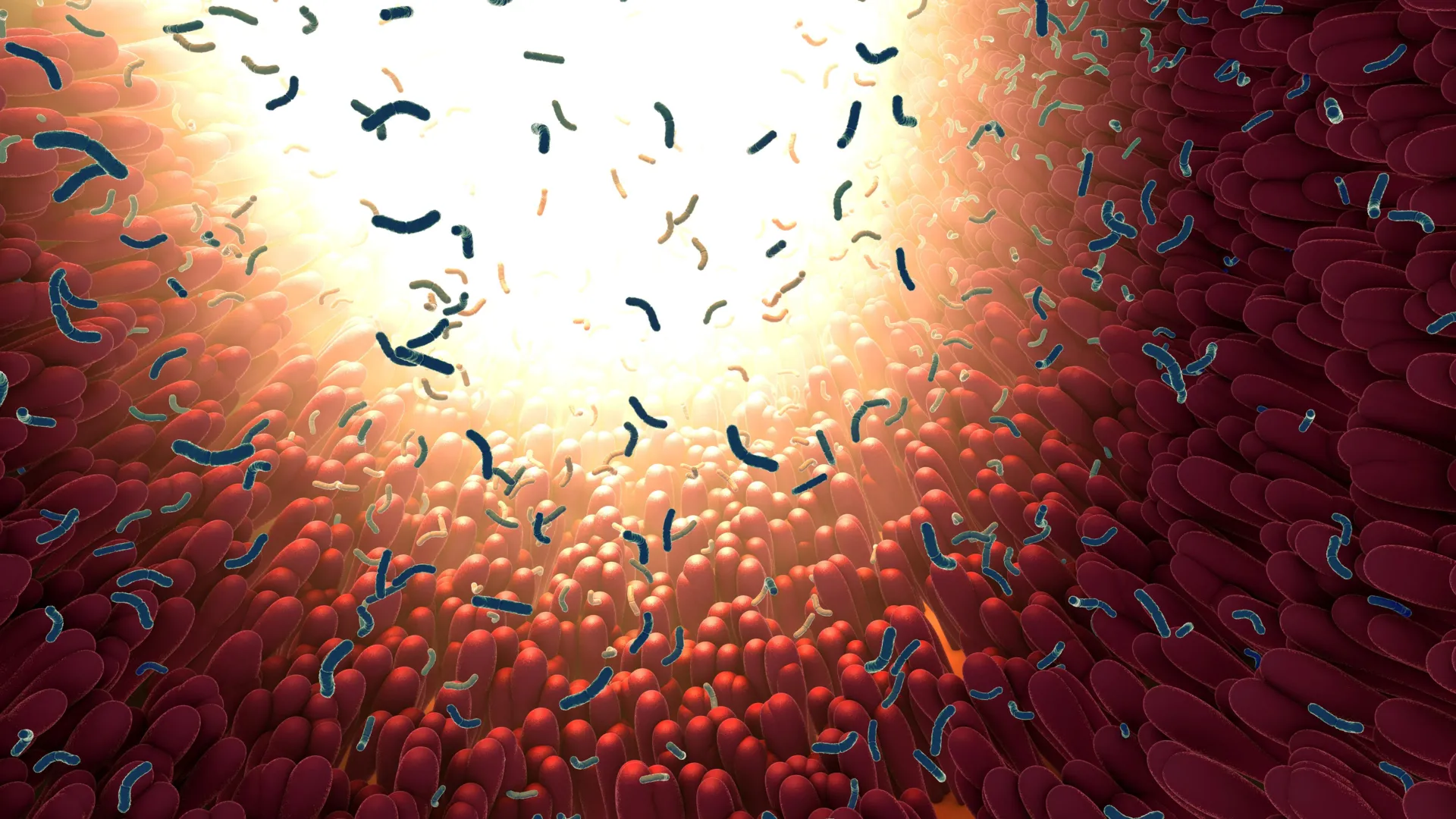
The calorie matter published on a food plan may look like an uncomplicated step of just how much power you will receive from eating it. However the number on the label does not necessarily match the calories your body really soaks up. One reason is that food digestion entails more than simply damaging down food. It likewise depends upon trillions of microbes living inside your digestive system.
Researchers at Arizona State University have developed a mathematical design that explores this often ignored part of food digestion. Referred to as DAMM, short for digestion, absorption and microbial metabolic process, the model tracks just how food moves through the digestion tract, how much energy the body absorbs straight, and just how intestine germs procedure whatever remains. It additionally estimates which items of digestion are absorbed and which leave the body as waste.
By representing the relationship in between diet plan, human digestion, and intestine bacteria, the researchers intend to boost our understanding of obesity, diabetes, and various other metabolic conditions. With further advancement, the approach might ultimately help health care professionals produce diet regimens customized to individual people.
“Food digestion is not just a human process– it is a partnership in between our bodies and trillions of microorganisms living in the digestive tract,” claimed Teacher Rosa Krajmalnik-Brown. “DAMM offers us a powerful new means to quantify exactly how those microbial partners add to human health and wellness and power balance, and likewise factor at the significance of effectively feeding our digestive tract microorganisms.”
Krajmalnik-Brown is supervisor of ASU’s Biodesign Center for Health And Wellness Via Microbiomes and a professor in the university’s Institution of Sustainable Engineering and the Built Atmosphere.
The study group also included ASU Professor Bruce Rittmann, director of the Biodesign Swette Center for Environmental Biotechnology and a Regents Teacher of ecological design, along with very first writer Taylor Davis, an ASU graduate research study assistant. Scientists at the AdventHealth Translational Research Study Institute in Orlando, Florida, collaborated on the job.
The findings were published in PLOS One
Why Traditional Calorie Counts Miss Part of the Image
For more than 100 years, researchers have utilized a system based on Atwater criteria to approximate just how much power people can get from food. This technique assigns ordinary calorie values to each gram of fat, carbs, and healthy protein, after that utilizes those values to calculate the overall readily available power.
Although this approach is sensible and widely used, it can not completely explain what occurs during digestion. Particularly, it does not account for exactly how various foods nurture gut bacteria or exactly how those bacteria change undigested material into materials the body can use for energy.
One vital example includes short-chain fatty acids. These compounds are generated when microbes in the colon break down fiber and various other food components that travel through the top digestive tract without being soaked up. Several of these fats can enter the bloodstream and offer added calories.
To much better understand these communications, the researchers built on an earlier controlled diet research study checking out exactly how the intestine microbiome affects human energy balance. The digestive tract microbiome consists of the huge area of microorganisms and various other bacteria that live in the digestion system.
A High-Fiber Diet Led to 116 Fewer Calories Soaked Up Daily
In the professional research study, healthy and balanced grownups followed either thoroughly created eating plans. The very first was a microbiome-enhancer diet plan consisting of considerable amounts of fiber and immune starch (less refined foods and foods with larger fragment dimension). Resistant starch is a kind of carbohydrate that escapes a lot of the typical food digestion in the small intestine, allowing it to reach the colon, where germs can break it down.
The second consuming plan looked like a normal Western diet plan, with lower quantities of fiber and resistant starch (more processed foods and smaller sized particle size).
Despite both diet regimens being created for the study, individuals taken in significantly different quantities of power. Those consuming the Western diet plan taken in around 116 extra calories each day than those consuming the fiber-rich diet regimen.
Probably just as fascinating, individuals following the higher-fiber consuming plan did not report really feeling hungrier.
The searchings for recommend that the amount of energy individuals obtain from food depends partially on its composition and how it moves with the digestive system. Distinctions in food handling, fiber content, and microbial task can all influence the last end result.
“What is absolutely special about the DAMM design is that it quantitatively links human metabolic process to the metabolic rate of the microorganisms in the colon in such a way that matches the arise from the clinical study and gives basic understanding into how the microbial area works in partnership with the human host,” Rittmann stated.
Digestive Tract Germs Can Supply About 140 Calories a Day
The DAMM version provides a much more detailed way to follow the energy had in food from the moment it goes into the digestion system.
Initially, it examines the healthy protein, carbohydrate, and fat web content of a person’s diet regimen and estimates how much functional energy is absorbed in the top stomach system.
It after that tracks the staying material as it relocates right into the colon. Below, intestine germs break down nutrients that escaped earlier digestion, generating compounds such as short-chain fats. The body can take in several of these compounds with the colon and utilize them as an additional source of energy.
The version additionally consists of methane production by specific bacteria called methanogens, which generate methane as part of their metabolic process.
According to the scientists’ calculations, short-chain fatty acids taken in from the colon provided an average of roughly 140 calories each day. That stands for regarding 7 4 % of the total useful energy obtained from food.
Extra extensively, the design approximated that approximately 85 % of usable energy originated from the top intestinal tract, while about 15 % came from the reduced stomach tract, where germs are specifically essential.
These findings highlight why typical calorie estimations can not completely describe human digestion. A purposeful share of the energy readily available to the body is affected by microbial processes that traditional food-label computations do not explicitly determine.
When the group compared DAMM’s predictions with actual measurements from the controlled diet plan research study, the model produced estimates that were closer to the observed calorie absorption than those produced using the traditional Atwater technique.
The older method generally ignored the number of calories individuals absorbed. By including microbial metabolic rate, DAMM provided a more accurate quote of the power acquired from the different diet regimens.
Exactly How Fiber Modifications the Calorie Equation
One of the version’s most revealing functions is its capacity to represent differences between diets.
The microbiome-enhancer diet provided a lot more fiber and other fermentable product to the colon. This provided gut germs additional compounds to break down, boosting their production of short-chain fatty acids.
DAMM forecasted this boost, regular with the pattern observed in the controlled scientific test. Individuals consuming the microbiome-enhancer diet had greater levels of short-chain fatty acids in measurements drawn from their blood lotion and feces.
These compounds are essential due to the fact that they highlight exactly how very closely microbial activity and human metabolism are linked. Intestine microorganisms can change food parts that would certainly or else go through the digestive system right into particles that the body can take in and utilize for energy.
However, producing even more of these compounds does not always imply absorbing more calories generally.
In fact, participants complying with the microbiome-enhancer diet plan absorbed less web calories than those consuming the Western diet regimen, even though the higher-fiber diet plan sustained better microbial task and increased short-chain fatty acid production.
This evident opposition becomes less complicated to comprehend when the different phases of digestion are examined separately. Although gut microbes can produce additional usable power, the amount taken in straight from food in the top digestion system also matters.
DAMM aids scientists distinguish between these contributions. It estimates how much power the body removes before food reaches the colon, just how much energy microbes generate from the continuing to be material, and just how much ultimately obtains absorbed or gotten rid of.
Towards Even More Personalized Diets and Better Nourishment
By bringing human food digestion and microbial metabolic rate into a solitary mathematical framework, the researchers have produced a tool that might aid discuss why different diets produce various results on the body’s power balance.
The approach may ultimately improve researchers’ understanding of just how diet plan influences obesity, diabetes mellitus, and other metabolic conditions. It additionally elevates the possibility of designing nutrition plans that take into consideration not just the nutrients in food yet likewise how those nutrients connect with the microorganisms living inside everyone’s digestive tract.
For now, the model gives a research framework as opposed to a ready-to-use approach for prescribing personalized diet regimens. Further studies will certainly be needed to identify exactly how well it carries out across different populations, consuming patterns, and microbiome compositions.
The researchers also expect the version to become much more innovative as scientists reveal extra information regarding just how bacteria and the human body exchange nutrients and energy.
“The DAMM design is greater than simply a device for defining diet,” Davis said. “It’s a structure developed to progress. As we uncover more on how diet regimen, metabolic rate and the microorganisms connect, the new insights can be integrated right into the model, enabling it to expand with us as we discover.”