Learning new eating habits isn’t simple. Our preexisting feelings around food—whether it’s a distaste for olives or a love of pastries—could make it harder to learn new eating habits, according to new research from Yale School of Medicine.
Changing how we eat can have a big impact on health, both for managing conditions like diabetes and for maintaining overall well-being. But people often struggle to switch up their diet. Now, a new study published Oct. 9 in Communications Psychology suggests that how we feel about food going in may play a role.
In an experiment designed to challenge their opinions about food, participants struggled to unlearn their food preferences. However, participants who had their sentiments challenged early in the experiment had an easier time changing their minds compared to those whose preferences were first reinforced and only then challenged.
This suggests that “our preexisting preferences for food are very strong and hard to change,” says Ifat Levy, Ph.D., Elizabeth Mears and House Jameson Professor of Comparative Medicine at Yale School of Medicine. “But there might be slight manipulations that could make a big difference.”
Challenging feelings about food
Emotion plays a big role in how we learn. For instance, disgust helps people learn what to avoid, while joy pushes us toward chasing similar experiences. Feelings about food often form early in childhood and can be difficult to change.
This matters because “we’re not usually learning new rules about something we don’t already have feelings about,” explains Alex Rich, Ph.D., a former graduate student in the Levy Lab, now at the Massachusetts Institute of Technology.
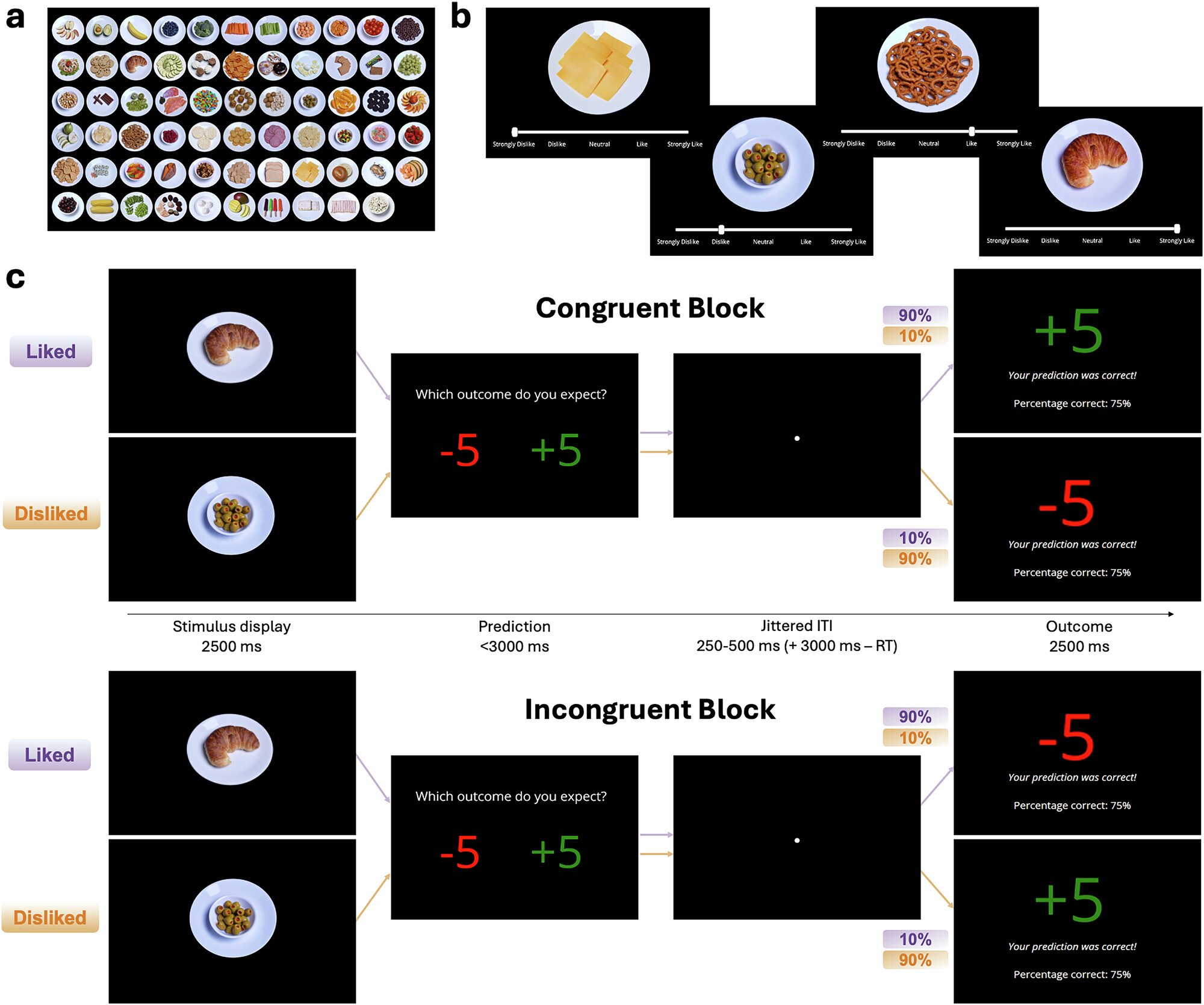
Rich, who has previously worked with people with eating disorders, wanted to understand how intervening in people’s food preferences might affect learning and decision-making in real-world settings. To do this, Rich and Levy recruited around 280 people and had them identify four snacks they had strong feelings about—two they liked and two they disliked.
The participants were then asked to predict whether a computer program would assign positive or negative points to these snacks. The associations between food items and points changed repeatedly during the experiment. In some trials, the test reinforced participants’ instincts by assigning positive points to snacks they liked and negative points to snacks they disliked. In other trials, participants were required to do the opposite: assign negative points to foods they liked and positive points to foods they disliked. Some participants started the experiment in the former trial mode, while others started in the latter.
In prior research, participants asked to do a similar experiment with objects they had no preexisting feelings about—say, a triangle or a rectangle—could easily switch between assigning negative and positive points depending on where they were in the test. Here, “everyone” struggled to go against their feelings and assign negative points to what they liked and positive points to what they didn’t, says Levy.
However, people who started the experiment with the condition that reinforced their feelings had more difficulty switching their predictions between positive and negative points.
This effect was “completely unexpected, and quite strong,” says Rich. The finding suggests that priming—where our introduction to a concept or object shapes how we feel about it later—might play a role in how we learn about food. For people looking to adopt new eating habits, this might mean that challenging your feelings about food from the get-go could make the transition easier, says Levy.
Participants also had an easier time assigning new values to food they didn’t like than to food they did. While it’s still unclear what this means, these results reinforce anecdotal evidence suggesting it’s easier to add things to your diet than to remove them.
“Say, broccoli isn’t your favorite thing. Maybe we can integrate it more easily than to stop eating ice cream,” says Rich.
People who binge eat don’t do as well in dietary interventions for obesity as those who do not binge eat.
“Eating disorder research tends to be a decade behind depression, anxiety, and everything else,” says Rich. However, these results hint that food-based learning inherent in dietary interventions “can be manipulated with a priming effect,” she says. “I think that’s a cool thing to see.”
Publication details
Alexandra Rich et al., Prior preferences interfere with the associative learning of food values, Communications Psychology (2026). DOI: 10.1038/s44271-026-00533-5
Journal information:
Communications Psychology
Key medical concepts


Citation:
Strong food preferences may help explain why changing eating habits is hard (2026, October 16)
retrieved 16 October 2026
from https://medicalxpress.com/news/2026-10-strong-food-habits-hard.html
This document is subject to copyright. Apart from any fair dealing for the purpose of private study or research, no
part may be reproduced without the written permission. The content is provided for information purposes only.