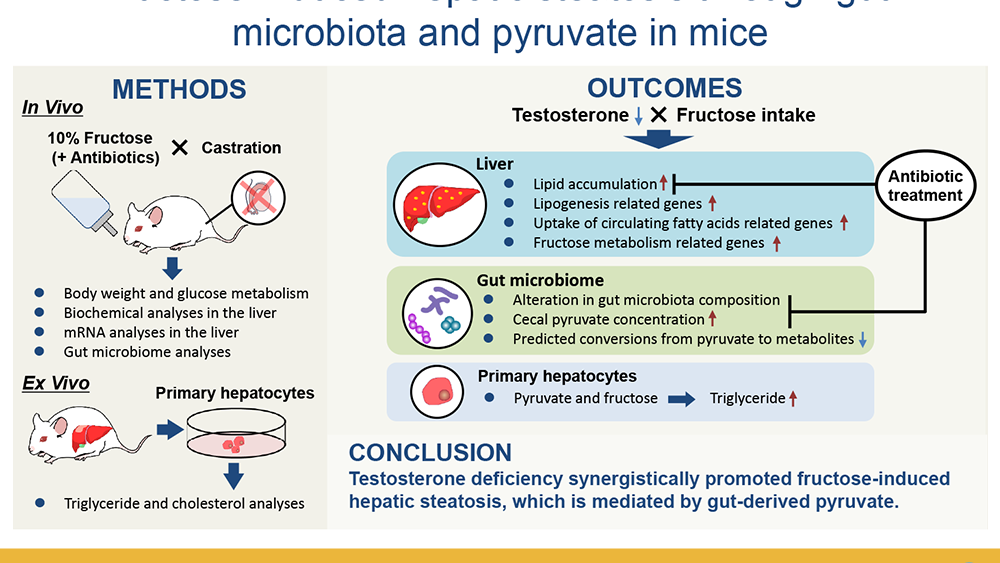
New research suggests low testosterone may make the liver more susceptible to the effects of sugar. In mice, scientists found that low testosterone combined with a high-fructose diet made fatty liver worse, and changes in gut bacteria may be involved in the process.
Researchers at Osaka Metropolitan University have shed new light on how hormones, diet, and gut health might interact to affect liver health, according to a study. But the results have not yet been confirmed in humans.
Low Testosterone and Fructose May Worsen Fatty Liver
Too much fat building up in the liver is called fatty liver. It’s an early sign of metabolic dysfunction-associated steatotic liver disease (MASLD), a condition associated with factors such as obesity, type 2 diabetes and low testosterone.
Researchers examined the impact of testosterone and fructose on the liver of 8-week-old male mice. Some were castrated to lower their testosterone levels; others were given a sham operation. The animals were divided into groups depending on their diet and whether they were given antibiotics.
The results found that mice with lower testosterone had more fat accumulation in the liver when they consumed fructose. The combined effect was greater than that of either factor alone, suggesting low testosterone may augment the liver’s response to a high-fructose diet.
Researchers also observed changes in the gut microbiome of the mice exposed to both low testosterone and fructose. These changes were linked to increased levels of pyruvate in the gut, a compound that plays a role in the body’s energy metabolism.
In other experiments, scientists studied how pyruvate interacts with fructose using liver cells from mice. They found that the two compounds worked synergistically to encourage the accumulation of neutral fats inside the cells. Antibiotics also seemed to reduce some of the effects seen in the mice, supporting the possibility that gut bacteria play a role in the process.
What This Could Mean for Men’s Liver Health
The findings could help scientists better understand how hormonal changes and dietary habits might combine to impact liver health. Specifically, the part played by gut pyruvate could open up a new area for research into possible therapies and dietary strategies.
Now researchers hope to provide insight into how pyruvate promotes fat accumulation in liver cells. Eventually, scientists might use this understanding to develop new ways to prevent or treat fatty liver disease.
But the study was carried out in mice and in isolated liver cells from mice. More research is needed to determine whether the same mechanism occurs in humans, and whether targeting gut bacteria or pyruvate could help prevent liver damage.