John Carpenter’s Halloween made a simple premise into one of horror’s most enduring nightmares. The 1978 movie is about a masked killer, Michael Myers, who returns to his hometown and starts stalking babysitter Laurie Strode, played by Jamie Lee Curtis. It’s a Halloween-season staple nearly five decades later, and Entertainment Weekly ranked it No. 1 on its list of the greatest slasher movies of all time.
What’s remarkable about the accomplishment is that it doesn’t rely on elaborate effects or graphic violence. Carpenter builds up the tension through the quiet suburban streets, lingering camera shots, and a chilling musical theme. Michael Myers barely moves, but his presence makes the ordinary deeply disturbing. It’s a formula that helped define the slasher movies that followed.
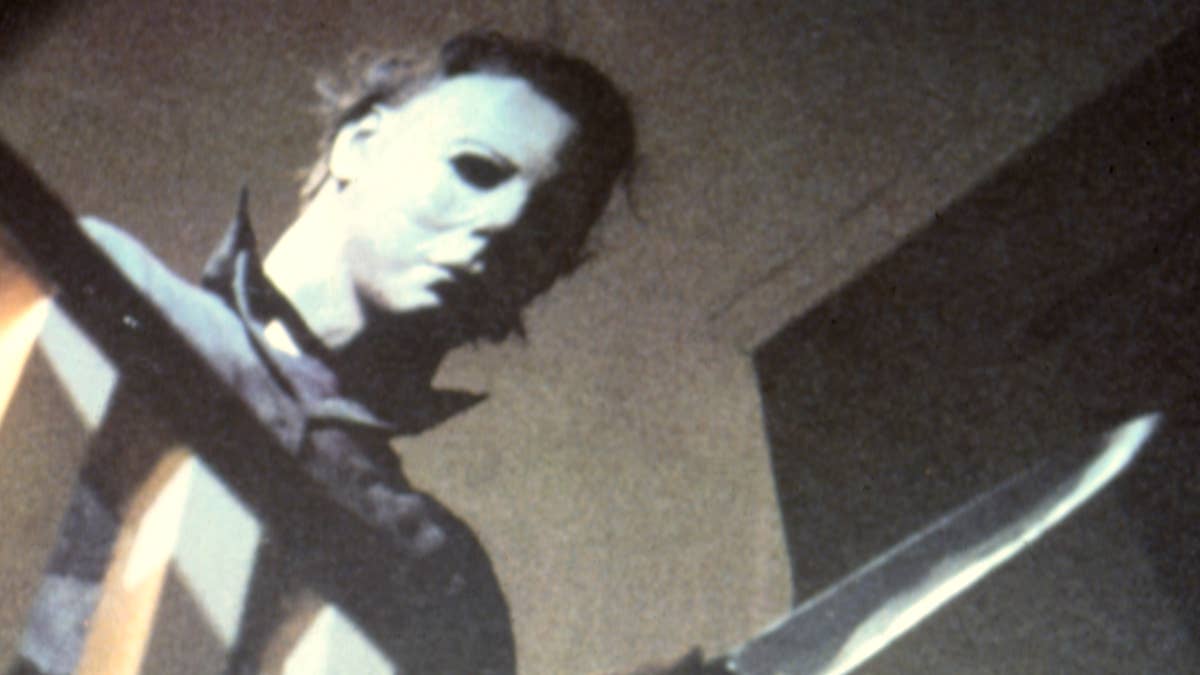
How Michael Myers Changed Horror Movies
Halloween wasn’t the first film to feature a masked murderer stalking unsuspecting victims. Alfred Hitchcock’s Psycho had already helped to cement a number of things associated with the slasher genre when Bob Clark’s Black Christmas arrived on the scene in 1974. But Carpenter shaped those ideas into a lean, suspenseful film that was hugely influential.
It starts in 1963, when six-year-old Michael kills his teenage sister on Halloween night. He escapes fifteen years later from a psychiatric hospital and returns to Haddonfield, Illinois. As Laurie and her friends go about their day, Michael watches from afar, turning an otherwise normal evening into a fight for survival.
Another reason the film has stood the test of time is Curtis’ performance. Laurie is not a superhero or a trained fighter. “She’s a teen who has to think on her feet when the danger gets too real to ignore.” Her struggle helped create the resourceful final girl as a familiar presence in slasher films, while Donald Pleasence’s performance as Dr. Sam Loomis gave the film a character who understood the threat that Michael posed.
Carpenter also knew that what people didn’t see could be scarier than what they did. Even a quiet moment feels threatening, thanks to the sparse score, written by Carpenter himself. The restrained approach to violence also served to differentiate it from the increasingly graphic horror films that would come into vogue in the next decade.
The film eventually spawned a sprawling franchise with sequels, reboots, and a variety of attempts to bring Michael Myers back to the screen. But the original is the benchmark. Its impact has been felt in countless masked-killer movies, and its central concept remains a good one: sometimes the scariest thing is the feeling that someone is watching you. If you’re looking for a horror classic for Halloween, Carpenter’s original is still a good place to start.