“Ashes to ashes. Mulch to mulch.” That could serve as the motto for the latest trend in funeral services: human composting.
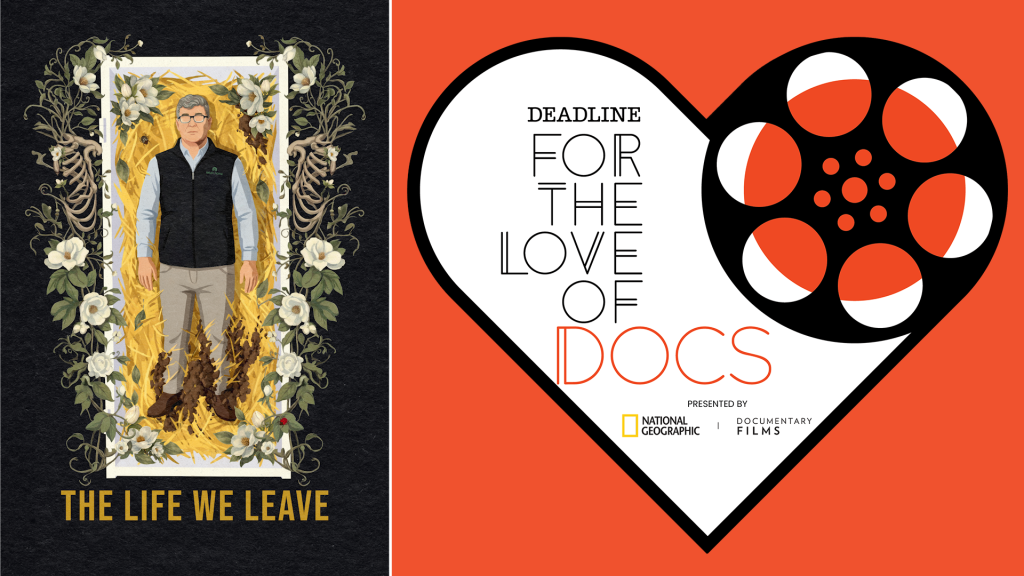
Yes, you read that right. Human composting, also referred to as natural organic reduction or terramation, has emerged as an alternative to traditional burial or cremation that “returns loved ones to the earth as nutrient-rich soil,” as the company Return Home puts it. The idea, considered ghoulish by some but growing in acceptance, is explored in the documentary The Life We Leave, which focuses on Return Home’s founder and CEO Micah Truman and key staff members.
The film by J.J. Gerber screened Tuesday night as part of Deadline’s For the Love of Docs virtual event series. The director explained he got interested in the subject after the passing of his mom in 2018.
“We had this transactional experience with the funeral home that took care of her at that time,” Gerber recalled. “And we effectively got a box of ashes, and they offered to have us buy some merch. And it felt very cold… I wondered if that’s how it was for everyone or for lots of people. And it was in the middle of the pandemic when everybody was grieving and there was a lot of death happening all around.”
The birth of his son around that time made Gerber mindful of “the circularity” of life, he said. “In the middle of feeding my kid at 3 a.m. one night, I saw an article with Micah… He was talking about opening the space and all of the opportunities that could come with human composting. And I was just fascinated and I reached out to him the next day and he invited me down to Return Home to view the space. It was just an empty warehouse. And so, Micah kind of invited me to use my imagination of what this process could be and what the warehouse could look like in the future.”

‘The Life We Leave’
Movement Content/Fishbowl Films
What began for Truman as an opportunity to bring attention to his startup evolved into something far more complex. The Life We Leave follows the ups and downs of launching a capital-intensive and technically rigorous enterprise, the toll that took on Truman’s marriage, and his emotional trajectory as he became more cognizant of the human dimension to his work.
“It turned out that turning a human body into soil… was by no means the totality of it,” Truman affirmed, crediting Return Home’s director of family care, Brienna “Brie” Smith, with opening his eyes to deeper considerations of a business built around end-of-life choices. “I was introduced to a world of funeral service, of people who’ve died and more importantly or just as importantly, the families that are alive and standing next to them. And really that’s who we are serving. Yes, we are transforming a body into soil, it’s true. But Brie doesn’t spend her day mostly with that. She spends her day making sure that the families are cared for and that the needs they have are met. And I didn’t understand what those needs were, nor did I understand the demands that are placed on Brie and me and our staff, and they are extraordinary. And that was the journey I think that ultimately led from that opening of the business and it was pretty profound.”
Smith came to Return Home with vast experience in the funeral industry and an open mind about human composting.
“I love science and biology, and the breakdown of the human body fascinates me,” Smith noted. “And also, I love gardening and nature, and I love being out in it and breathing it in. So, it just struck me that this is this beautiful life-giving opportunity that doesn’t exist elsewhere. I had seen everything else and I had embalmed many, many people and I had cremated many, many people. And it just transformed something in me — no pun intended — and really, I can credit the science and the end product to really transforming me in that moment.”
The Life We Leave won Best Documentary at the New Hampshire Film Festival, Jackson Doc Fest in Tennessee, and the Local Sightings Film Festival in Seattle. It won the Golden Space Needle Award for Best Documentary at the Seattle International Film Festival, in the Pacific Northwest city where Gerber is based. As the film explores, after the terramation process is completed, a loved one’s remains are returned to the family as approximately .5 to 1.5 cubic yards, or 200 to 400 pounds of nutrient-rich compost.
“It is as natural as you can get,” Gerber said. “I live in a city, and so our options in a city have been cremation, really… There’s no more room in the cemeteries here in Seattle and they’re not building any more cemeteries in Seattle, so they’re building them on the outskirts of the city… What you want in death becomes legacy and memorialization. If those things are important to you, it becomes more and more difficult. So, having a soil that you can use to give life to a tree, continue this circularity of life, becomes a way you can memorialize someone here in the city.”
Watch the full conversation in the video above.
For The Love of Docs is produced with the long-time support of National Geographic Documentary Films. Films are presented free of charge to the audience and to the filmmakers. The series continues with weekly screenings, followed by conversations with filmmakers through December 1. Join us next week for Ask E. Jean, directed by Ivy Meeropol, the story of the woman who sued Donald Trump for defamation and sexual abuse and beat him in court – twice. To RSVP for the screening, click here.