Indices and scales are inevitably examined for mental health and psychological impacts of disasters. A recent effort looks at secondary school students in Indonesia.
A paper by four Indonesian researchers titled “Development and validation of the Student Social Resilience Scale for Disasters (SSRD) among adolescents in disaster-prone areas” was published in the journal BMC Psychology.
Detailing the research
The study’s sample comprised 800 randomly selected secondary school students aged 15 to 18, balanced by gender across Indonesia. They were given the Student Social Resilience Scale for Disasters comprising 28 statements which they had to rank on a Likert scale from 1 to 5.
The statements were adapted to be relevant for this study’s context and were translated into Indonesian, the official language of Indonesia. An example (in English) is the scale’s original statement of “My friends stand by me during difficult times” which became “My friends are always ready to help and be with me in emergencies”. Another example is altering “Spiritual beliefs are a source of strength for me” to “My spiritual beliefs are a source of strength in my daily life and give me the strength to face emergencies”.
The study sought to validate this particular scale, the Student Social Resilience Scale for Disasters, and it states that it did so. Of particular importance was adapting the original scale for disasters, demonstrating that such changes could and should be made to ensure that the scale becomes relevant for a particular topic. An additional aspect was confirming that no resilience in disaster situations is about the individual alone or only the social situation around the individual. Instead, personal, community, and contextual factors influence students’ disaster resilience in tandem.
Thinking beyond the study
One question is why the study focuses on “disaster-prone areas,” as stated in the title, the abstract, and throughout the paper. The paper’s location of Indonesia certainly has numerous disasters. This situation reflects the world: Everywhere is disaster-prone and disasters happen everywhere.
In fact, the paper uses the term natural disasters without critique, even though Indonesian disaster researchers have been world leaders in adopting the axiom from disaster science that disasters are not natural. Any school and any student in the world could be affected by the environment, whether it is a volcanic eruption grounding commercial flights across a continent as occurred for Europe in 2010, a drought leading to water restrictions across a city, or a vegetation fire making it difficult to breathe through the smoke and particles hundreds of kilometres away.
Plus, every school in the world was significantly affected by the COVID-19 pandemic from 2020-2023 and the measures to deal with this pandemic. Examples included the closure of schools and facilities, as well as students and staff isolating for days when they became ill. A study published last year in the journal Current Psychiatry Reports by two American authors detailed the mental health impacts of US students returning to the classroom after COVID-19-related closures.
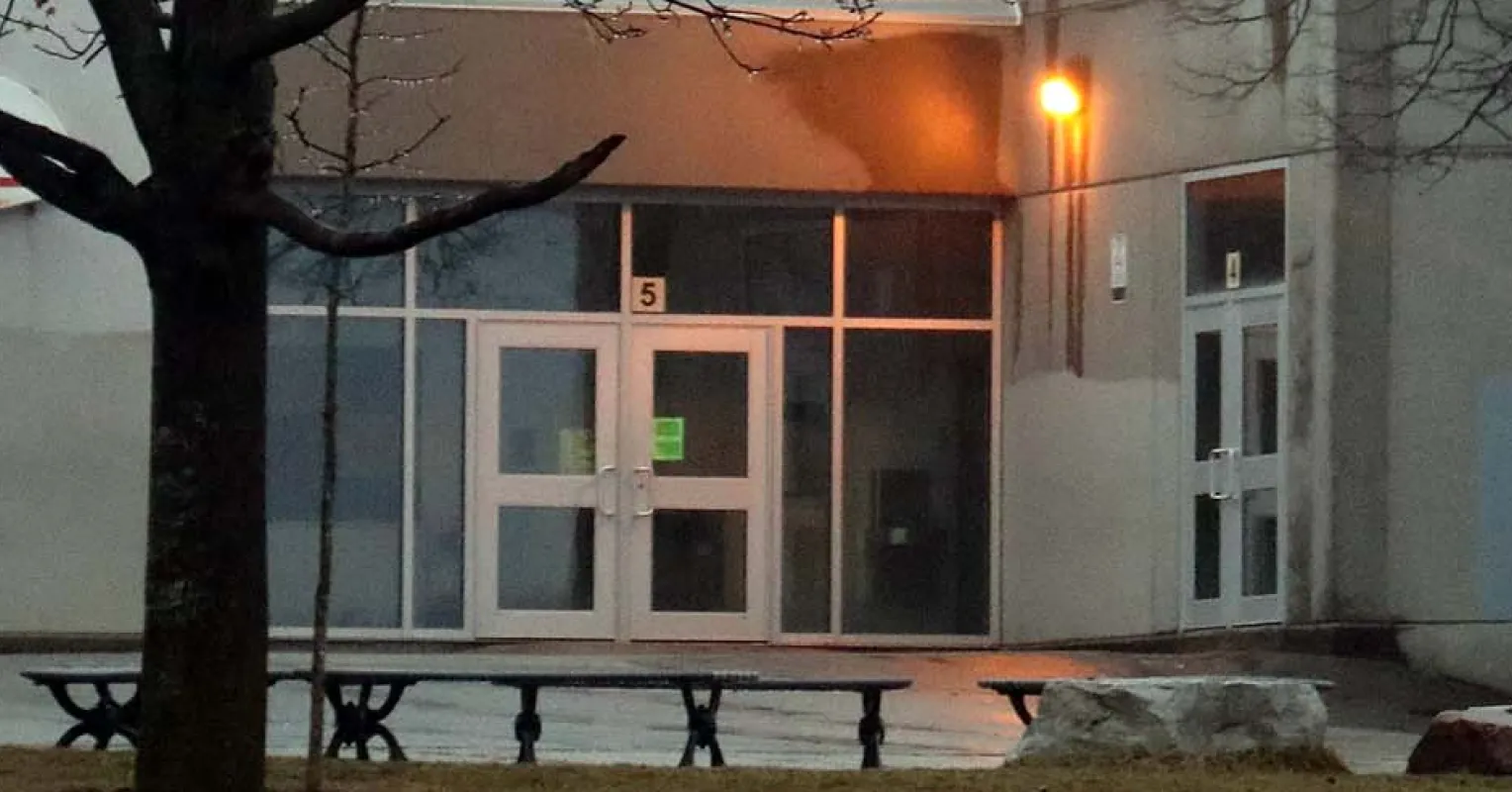
The disaster-proneness of all schools is terribly demonstrated by shootings. 2026 has seen massacres in schools in the rural town of Tumbler Ridge, British Columbia, Canada, and in the capital city of Thailand, Bangkok. No place seems to be immune from this form of disaster.
Additionally, Likert scales have their place, but the known limitations must be acknowledged and overcome. Examples of long-documented difficulties with Likert scales include reliability and consistency of respondents alongside limitations of many statistical procedures to deal with the data.
Cultural biases can intrude. An implicit construction in a Likert scale is that the distance is the same between each choice of the scale. Different people and different cultures might view the distances between each number as different, depending on how the central option (often presumed to be neutral) is considered in comparison to less central numbers such as 1 and 5.
Lessons from the study
Yet no single study can cover all aspects, and this one provides important lessons to be applied elsewhere. The study is not just about the data, but is also about the process of collecting the data.
First, the authors make an excellent point that much other work examines only individual or only community aspects of resilience, no matter how “resilience” is defined. The power of the scale used here is that it brings them together and contextualises them. Second, the detail and specificity of the 28 statements ensure that respondents start considering the issues mentioned. Whether or not respondents tick the boxes consistently or robustly, asking them to think about statements such as “I am always open with my family or caregivers about my feelings and concerns” means that they might look at ways to better communicate “feelings and concerns” with their “family or caregivers”. They might then become more open.
Resilience Essential Reads
Resilience is not merely a number determined by completing a survey. It is a process bringing together people, those around them, and their social and environmental contexts—exactly as the research here presents.