This post is Part 2 of a series.
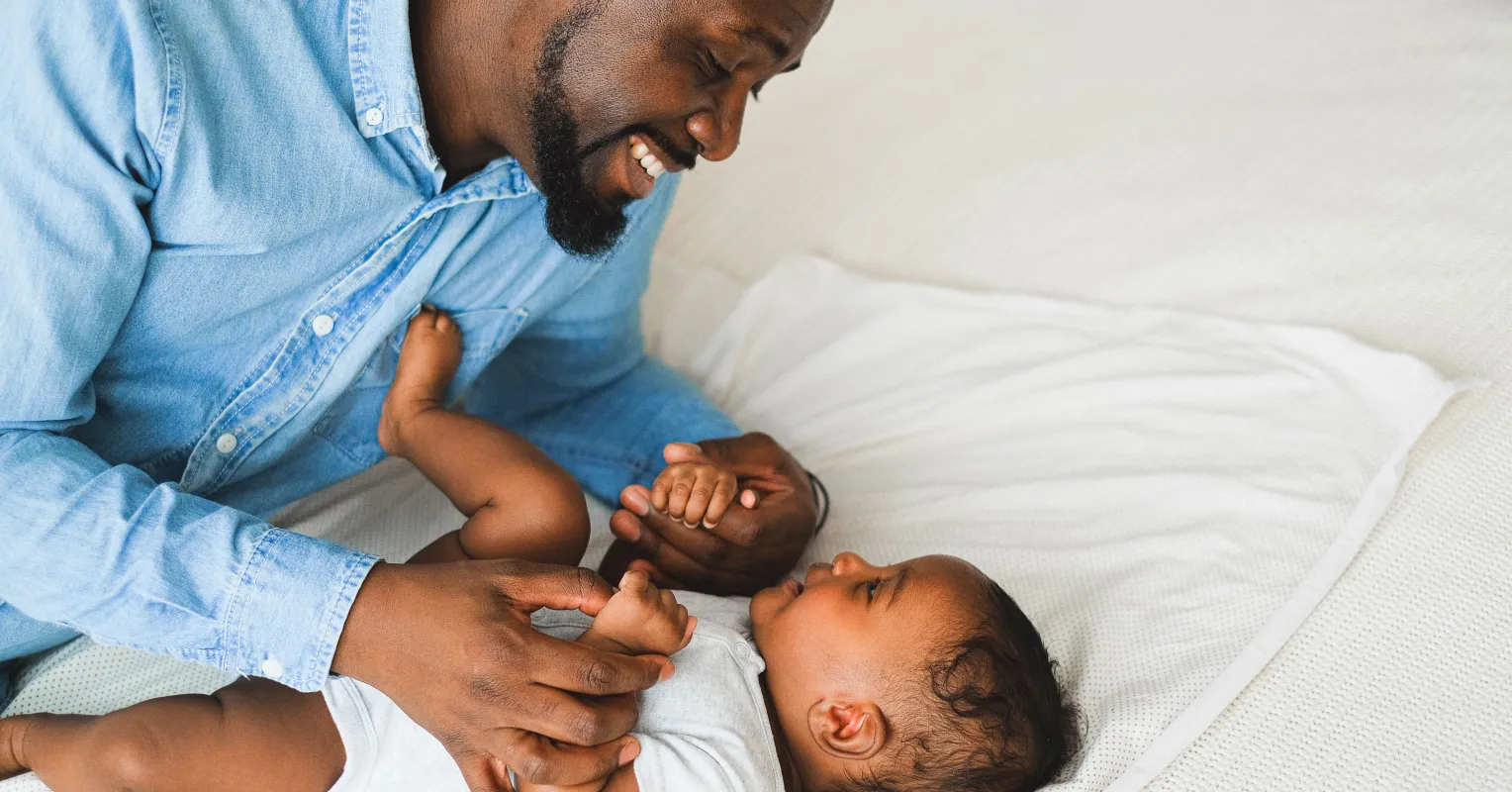
My toddler son still comes to me when he is upset and says, “Tell me a story.” In Part 1, I wrote about how reward, touch, and a familiar sentence draw me into this ritual. Here I write about the staying, and about what fatherhood may be doing to a father’s brain over time.
I stay with him
Comforting my son also means managing my own response while trying to understand his. I feel mostly tenderness; I let that set the pace. My voice slows and stays low, even when the crying does not. Sometimes the story is not enough, and the approach is then simpler. I just keep holding him until he is ready.
Animal research shows how the brain supports parental care, and how it can be rebuilt for it. One key region is the medial preoptic area, found deep in the hypothalamus. In California mice, for example, damage to this area reduced pup licking and made it far less likely that mice would retrieve pups, in both males and females.[1] Mothers and fathers in this species share some of the neural machinery for tending to their young.
In a 2022 study of laboratory mice, Kengo Inada and colleagues[2] found stronger connections from the lateral hypothalamus onto oxytocin-producing neurons in fathers than in sexually inexperienced males. Activating that brain pathway in inexperienced males reduced their aggression toward pups, and activating the oxytocin neurons themselves promoted caregiving. This is a far more specific view of adaptation than a brain scan can offer. Alas, it does not show how my own connections have changed. It does, however, show that fatherhood can reorganize the circuitry involved in a male’s response to offspring.[2]
Human imaging points us in the same direction. Daneshnia and colleagues[3] followed 25 fathers through their infants’ first six months and observed changes in brain structure, namely reductions in gray-matter volume, most evident in the first six to nine weeks, with localized increases later. The affected regions included areas involved in understanding others and regulating behavior, and the researchers suggested that reorganization might contribute to adaptation.[3] Brain volume alone cannot tell us how well a father cares for his child, and a decrease does not by itself mean diminished ability.[4]
Imaging studies of fathers are still few and recent, which says something about the need for greater understanding of fathers’ biology.
What I can say from my own experience is that I did not arrive with a story for every time he becomes upset. I learned what works for him, and that learning has to continue as his needs and interests develop.
In almost every story I tell him, someone helps the little boy, be it the animals, mama, dada, grandma, or abuela. He is never left to manage alone.
Making room
I would be giving an incomplete account if I made all of this sound effortless. There is still the sleep deprivation. Becoming a better storyteller has done nothing to eliminate the need for sleep, and the joy of being a father does not make every demand easier. We are equal partners in raising him, and his mother is his rock star. I see how much motherhood asks of her, and I am deeply grateful for the love and care she gives him. So yes, loving him deeply and finding parenthood difficult can coexist. I can yearn for time with him and still wish I had slept more.
Adaptation also involves deciding where our time and energy go. Caring for a child means making room for another person’s needs in the organization of daily life, including all the care that is needed whether or not a particular moment feels rewarding. For me, that means baths, changing him in the morning and again before bed, and putting him to bed at night, alongside the walks and the many, many books.
Testosterone research offers insight into how biology may take part in that shift. Lee Gettler and colleagues[5] followed men in the Philippines for four and a half years. Men with higher testosterone at the outset of the study were more likely to become partnered fathers. Those who did become partnered fathers then experienced larger decreases in testosterone than men who remained single nonfathers.
Parenting Essential Reads
The authors interpret this pattern in terms of the balance between mating and parenting; time and energy spent finding mates can compete with raising offspring, and declining testosterone may help support a shift toward parental care. Among fathers, those reporting at least three hours of daily childcare also had lower testosterone than fathers reporting no involvement in care.[5] This raises the possibility that caring for a child contributes to hormonal changes and, in turn, the possibility that hormones influence caregiving itself.
For me, the shift in priorities is easy to recognize. His comfort has become something I take pleasure in providing, and making room for that care is part of how I want to spend my time.
Once upon a time
Unfortunately, the research does not yet tell us what these changes mean for how much or how well a father cares. What it does suggest is that a father’s biology is not fixed; it shifts with the experience of caring and, perhaps, in turn, helps support that caring.
This brief dive into the biology of fatherhood has made me more attentive to these small encounters. In them, my son is learning what he can expect from me, and I am learning how to be there for him. Lately, as the stories wind down, he sometimes says, “I’m good now.” There is real joy in being one of the two people he comes to for comfort.
If someone asked what we did tonight, I could say, “I told my son a story,” but that hardly captures it.
He asks for a story. I pick him up, settle him on my lap, and begin: “Once upon a time, there was a smart, kind, happy little boy…”