Men’s Journal aims to feature only the best products and services. If you buy something via one of our links, we may earn a commission. Prices are accurate and items in stock at time of publishing.
Crafting cafe-quality espresso at home is more accessible than ever with options for every budget. To help you navigate the crowded market, we put today’s top espresso machines through rigorous real-world testing—drawn from over a decade of hands-on coffee-making experience—evaluating each machine on shot-to-shot consistency, grinder performance, milk frothing quality, and real-world usability.
Below, you’ll find our top picks for 2026—including the budget-friendly Breville Bambino Plus, the versatile Ninja Luxe Café Pro, the manual prosumer Lelit Bianca, the automated flagship Breville Oracle Dual Boiler, and the luxurious Jura Z10 Gen 2—alongside honorable mentions and essential accessory investments to elevate every shot you pull. And if you prefer to watch instead of read, we have you covered:
The Top 5 Espresso Machines
This guide is designed for anyone ready to take control of their morning coffee ritual—whether you’re a daily café regular curious about reducing your $7 lattes by making espresso at home, or an exacting prosumer prepared to invest thousands in high-end equipment. We’ve crafted this guide for both practical beginners seeking a reliable, single-button solution and obsessive hobbyists who meticulously analyze extraction flow rates and pre-infusion pressure profiles.
Above all, if you’re the type of coffee enthusiast who insists on conducting a water-hardness test before filling your machine’s reservoir for the first time, you’re our target audience. Regardless of your espresso preferences, this guide will help you navigate the espresso landscape and find the perfect machine for your kitchen, routine, and budget.
Best Budget Espresso Machine: Breville Bambino Plus
Testing the Bambino
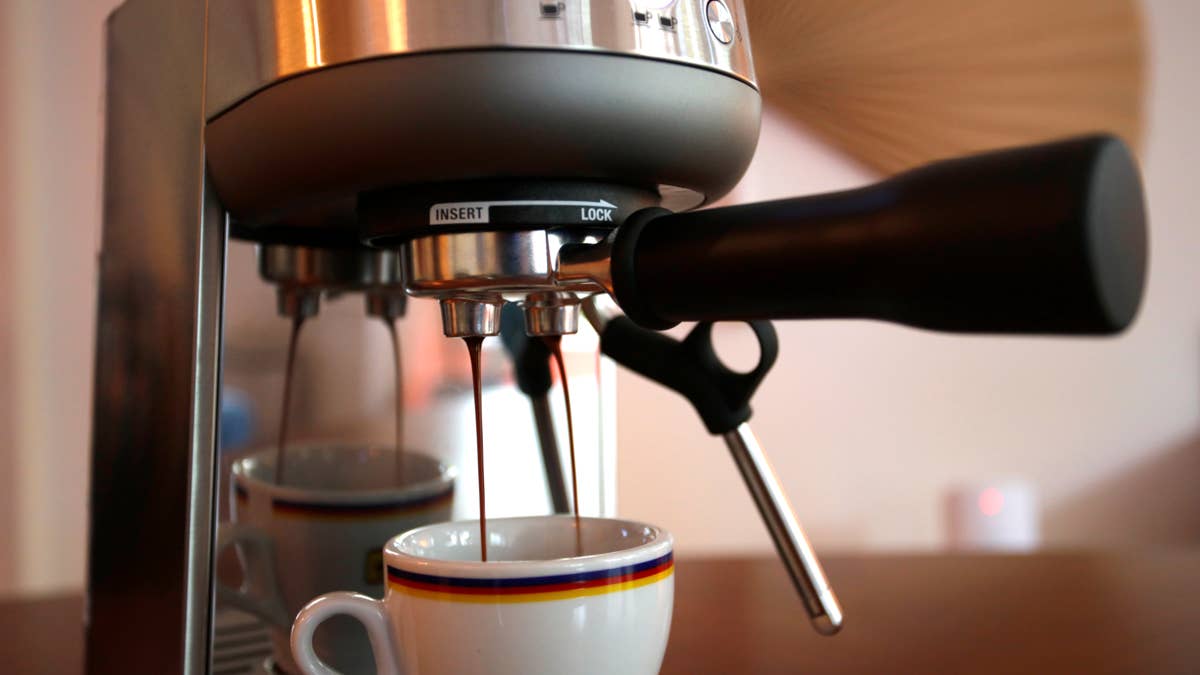
Bambino
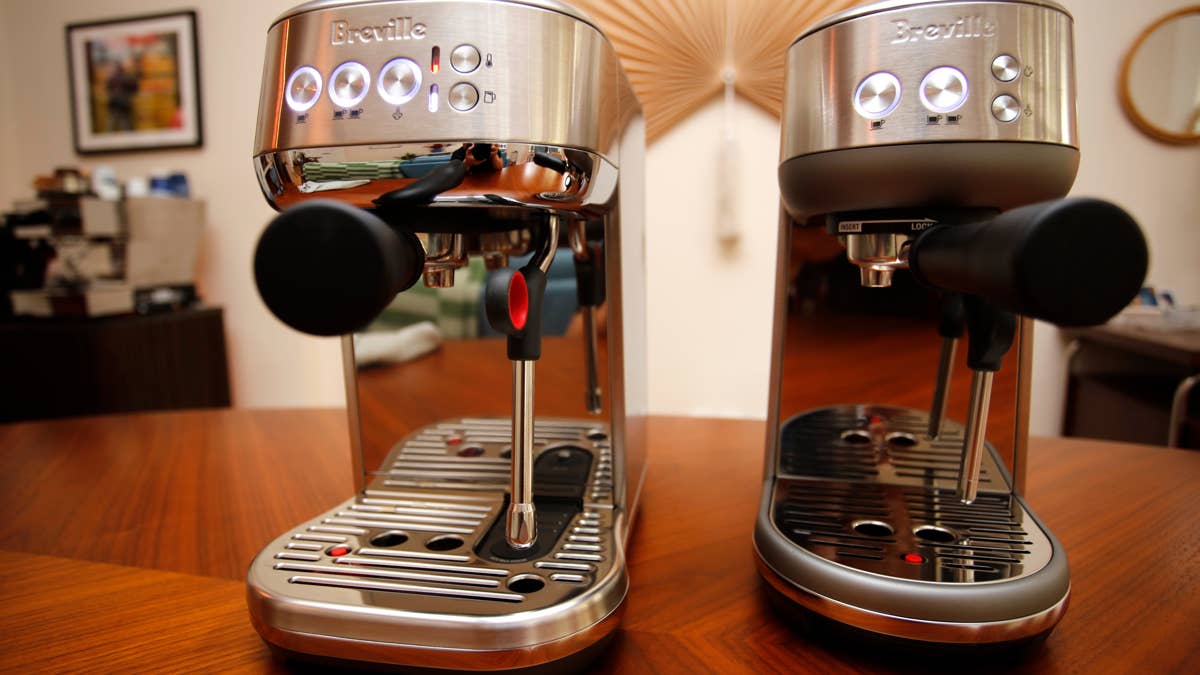
Bambino Plus (left), Bambino (right)
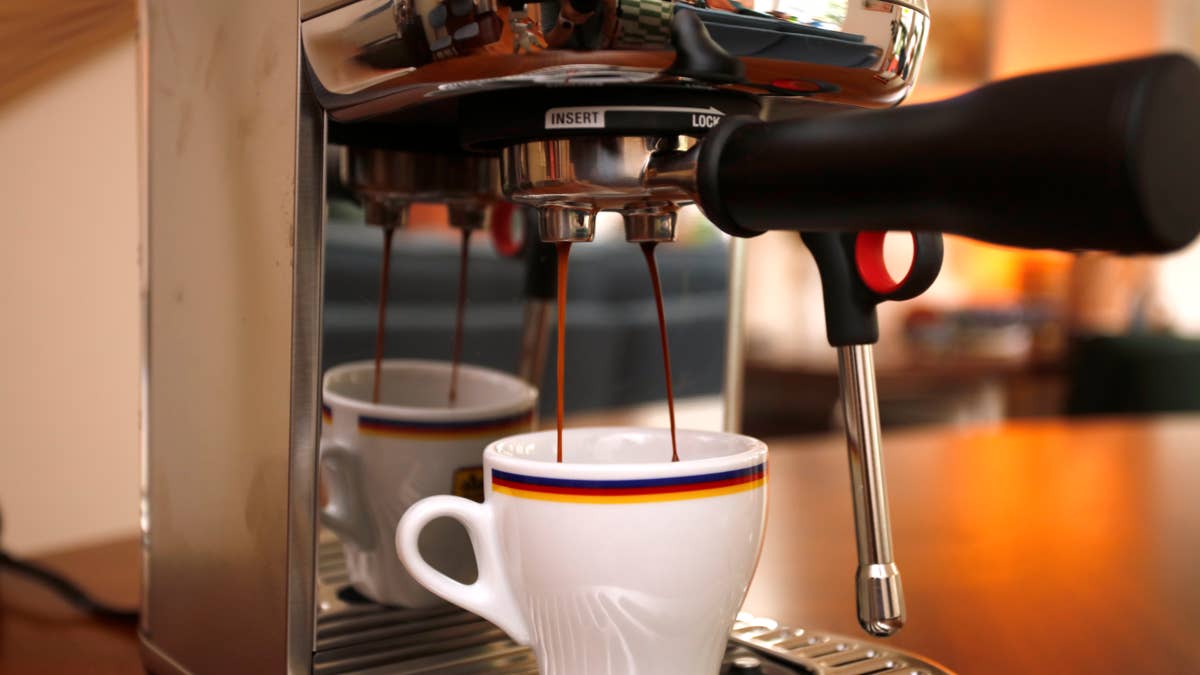
Bambino Plus
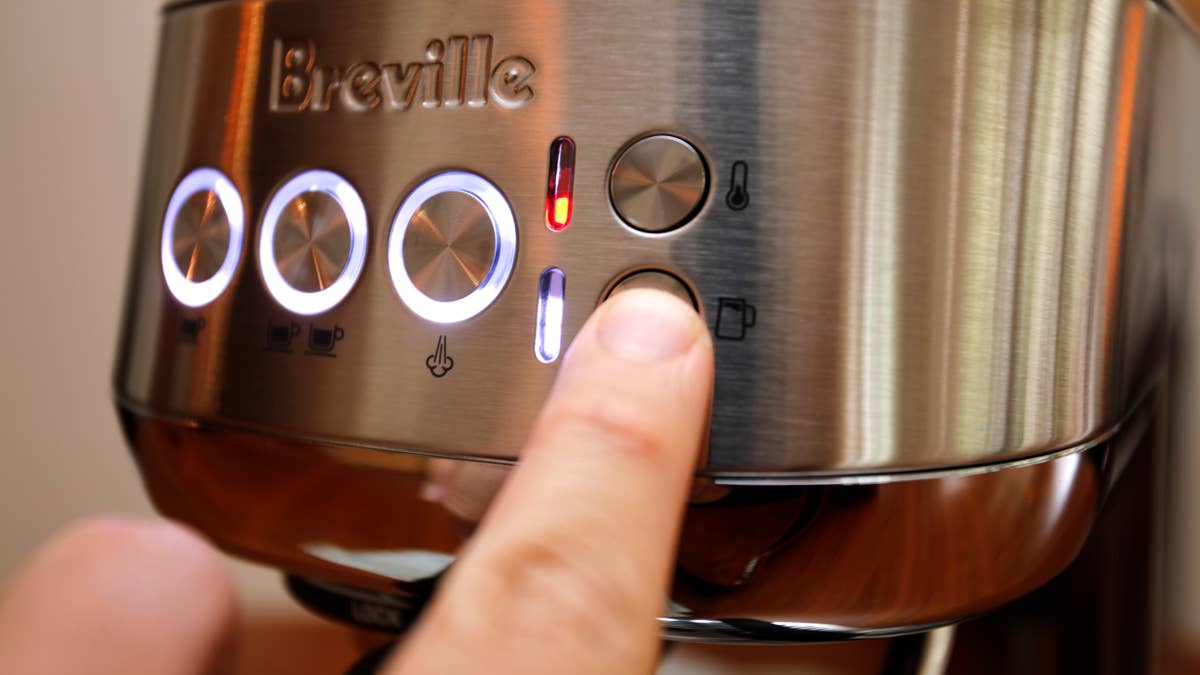
Bambino Plus
Bambino Plus
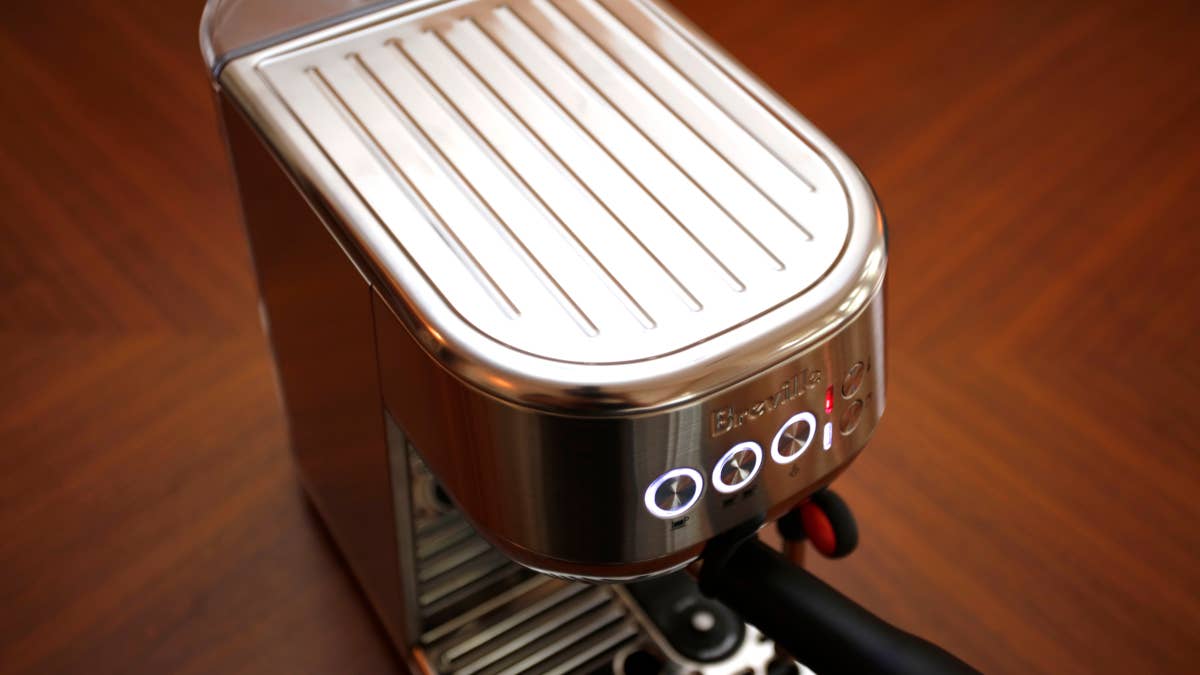
If you’re a coffee lover at home and want to try making espresso without breaking the bank, the Breville Bambino lineup is a great place to start. The Bambino Plus is a bit pricier, costing $200 more than the regular Bambino, but we’ve tested both, and they offer many of the same features. They have the same internal pump, heating system, and a set 200°F brew temperature.
The Bambino Plus really shines when it comes to convenience. It has an automated milk frothing system that makes smooth microfoam for lattes and cortados without you needing to use a wand. Plus, it has a bigger water tank (64 fluid ounces) and feels a bit heavier than the standard model.
However, both models are still light enough to slide on the counter when you’re installing the portafilter. And here’s a fun fact: the Plus doesn’t have a dedicated hot water spout, which is something the regular Bambino does. So, if you’re into making lattes and cortados, the Plus is a good choice.
Pros:
- The automated milk frothing system makes smooth microfoam super easy.
- It heats up quickly and keeps the temperature steady, which is great for medium-to-dark roasts.
- It has a big water tank (64 ounces) compared to other entry-level machines.
- The included 3-way solenoid valve makes it easy to release the puck pressure after you’ve brewed.
Cons:
- The lightweight chassis can slide on the counter when you’re locking in the portafilter.
- The stock accessories aren’t the best, like the lightweight plastic tamper.
- It doesn’t have a dedicated hot water dispenser (unlike the regular Bambino).
Best Entry-Level Espresso Machine: Ninja Luxe Cafe Pro
Testing the Ninja Luxe
Ninja Luxe™ Café Pro Espresso Machine
Stinson Carter
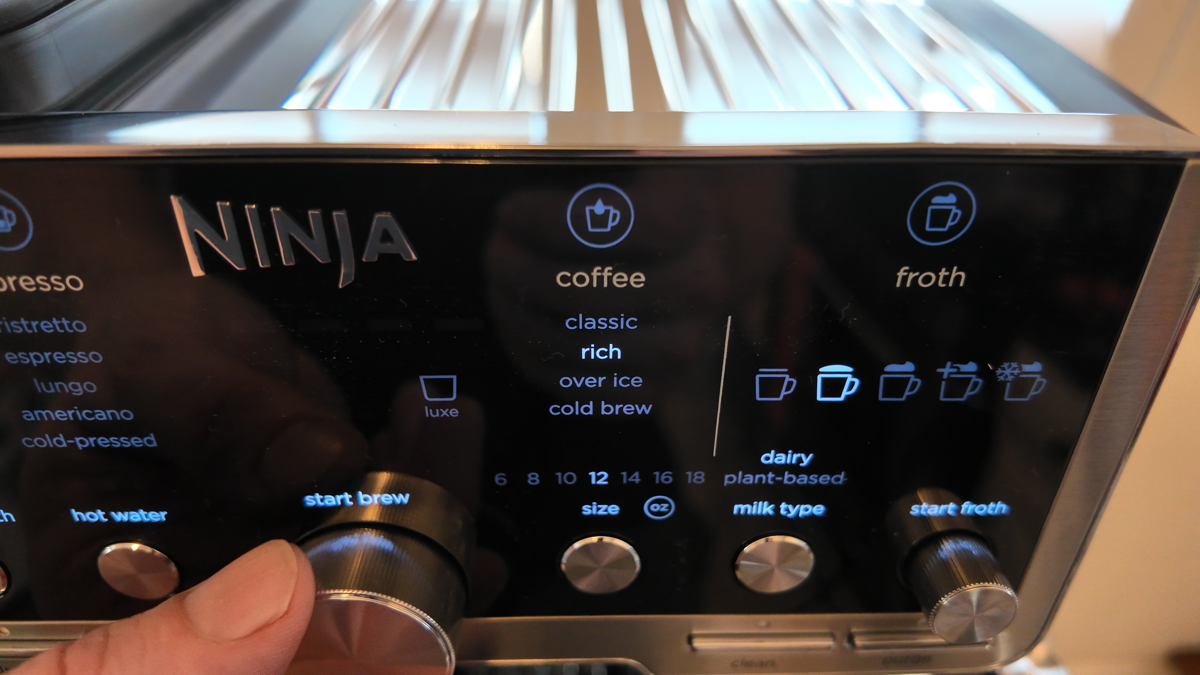
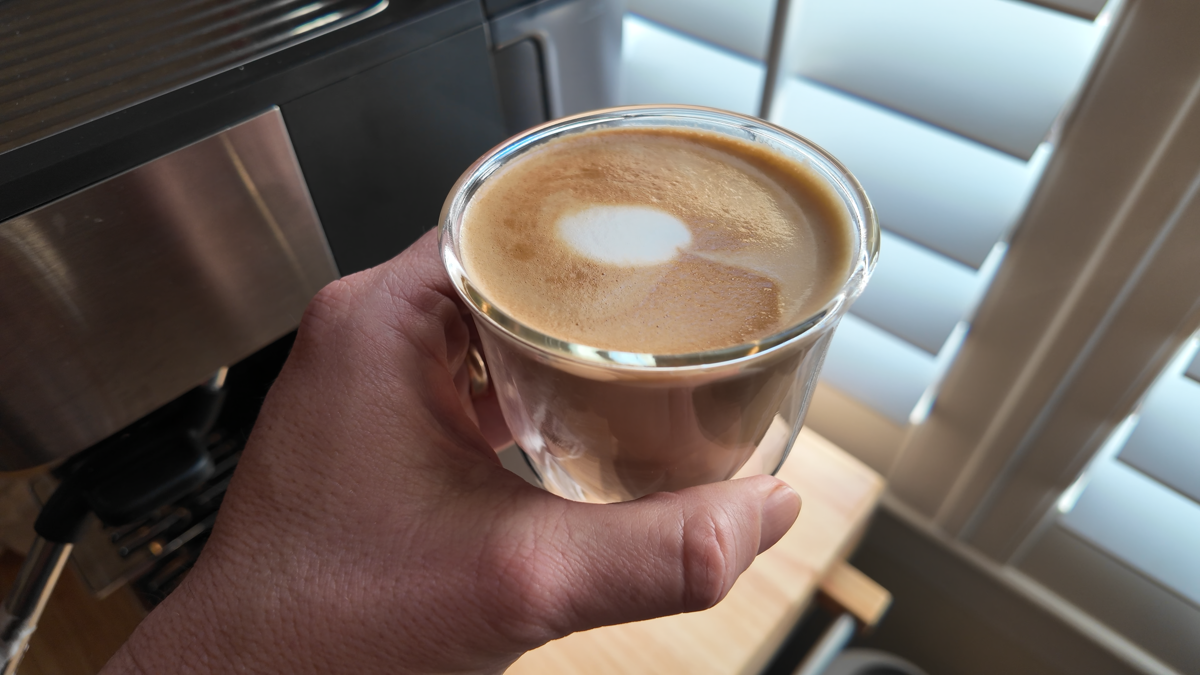
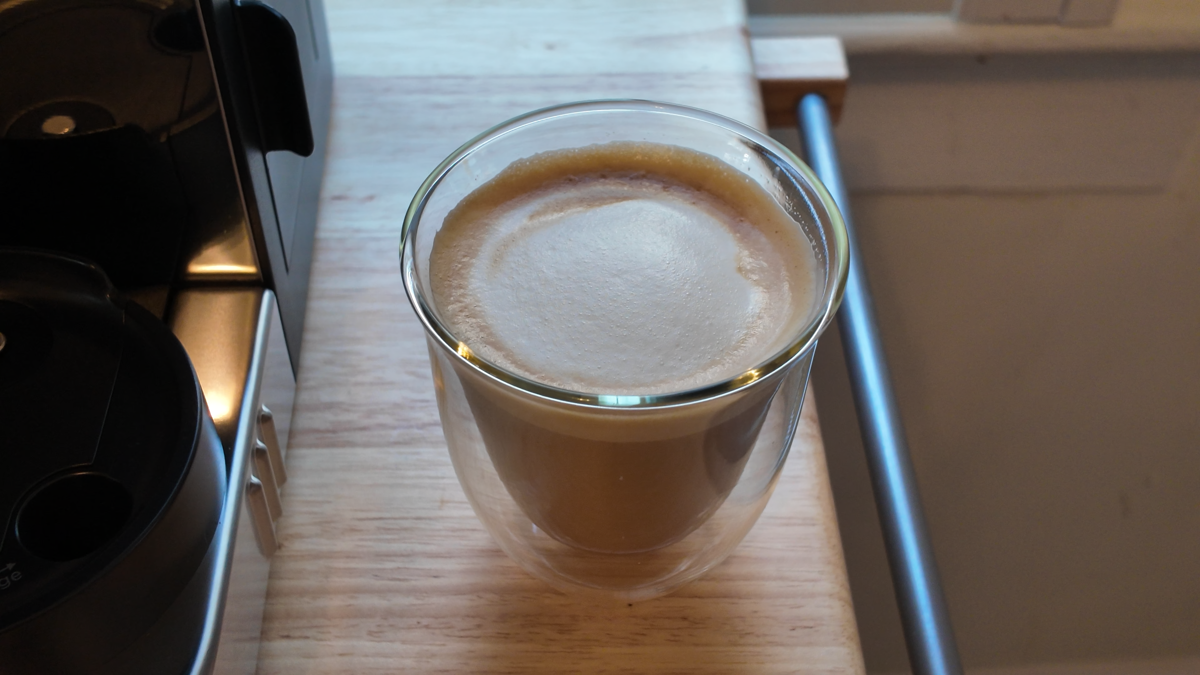
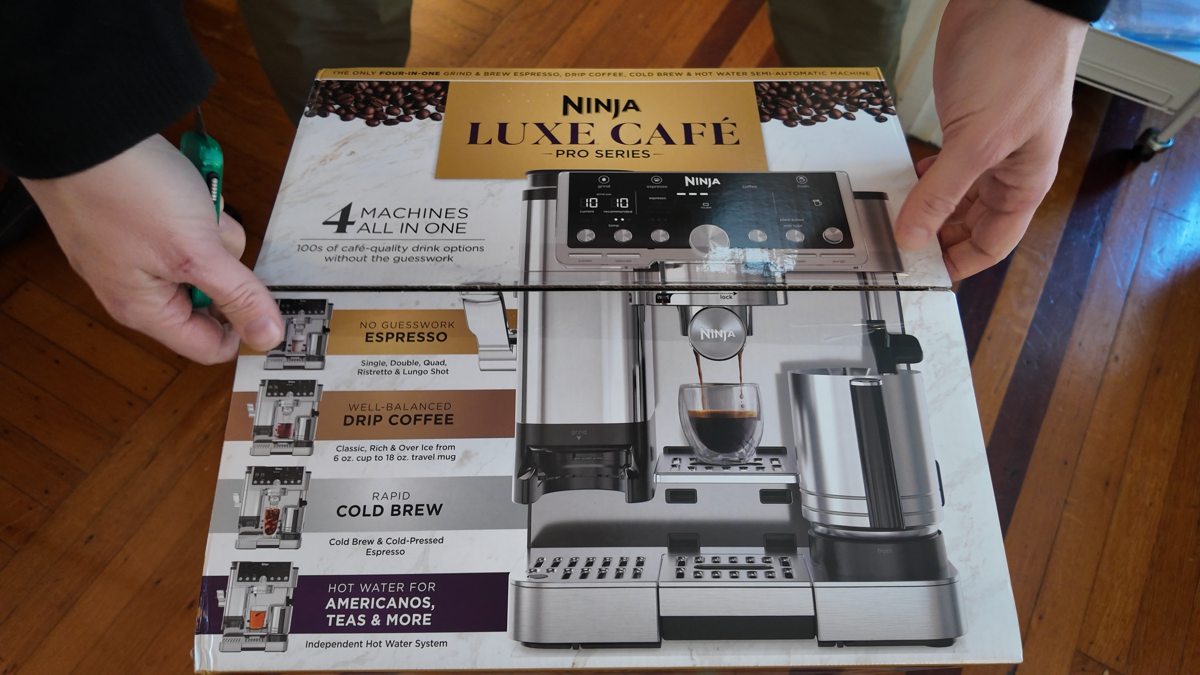
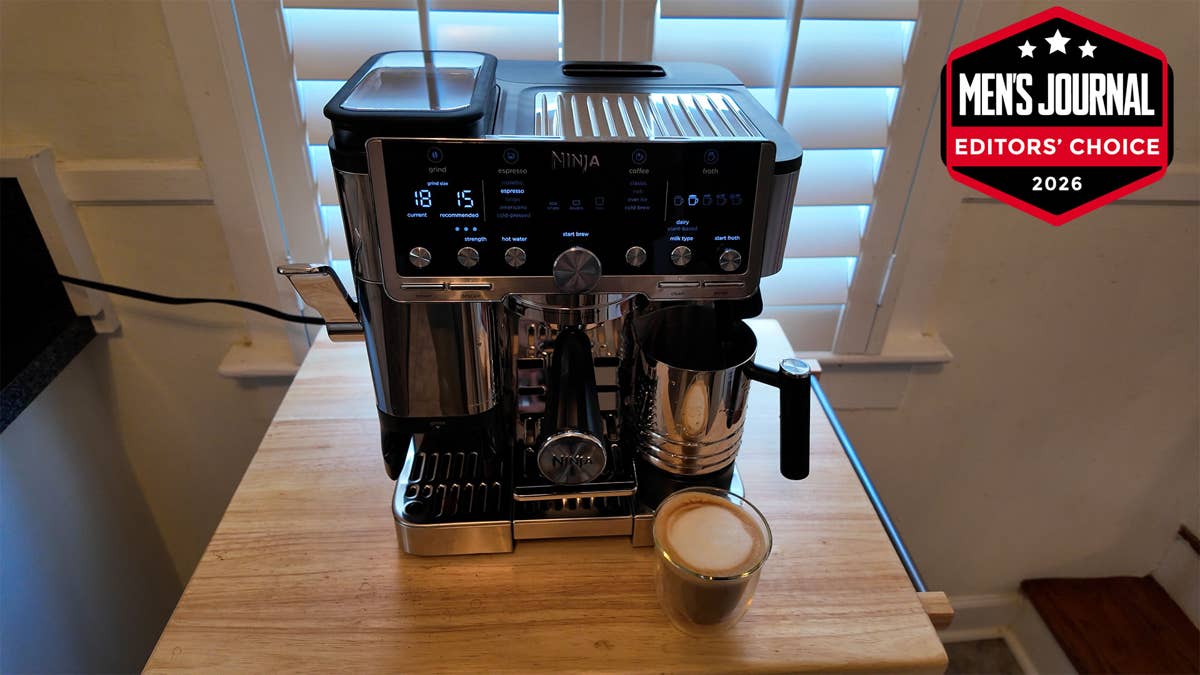
The Ninja Luxe Café Pro is a fantastic choice for beginners who want to make café-quality coffee without the hassle of complicated setups. It’s a 4-in-1 hybrid machine that costs about $750 and combines a 40mm conical burr grinder, a built-in dosing scale, an assisted tamping lever and an automated frothing system. It even guides you with dial-in recommendations and lets you froth milk hands-free for both hot and cold drinks.
What really sets it apart is how versatile it is. With its big “Luxe Basket” and adjustable cup space, you can easily switch between double espresso shots, cold-pressed espresso, cold brew, and drip coffee without needing a separate machine. While the industrial look and plastic parts might not be everyone’s cup of tea, its convenience, large milk jug, and easy-to-use design make it a great option for families who want lots of different drinks without any guesswork. It’s as close to a super automatic experience as you’re going to get for much, much less.
Pros:
- It’s pretty affordable, especially considering all the features it has for $750.
- The Luxe Basket is the secret to its versatility, letting you make quadruple espresso, drip coffee, or cold press espresso.
- The Dual-Froth System makes amazing hands-free froth with any kind of milk.
- The big frothing cup makes enough milk for 2 to 3 drinks without spilling.
Cons:
- The all-in-one design will force you to reinvest in a whole new system if you ever want to upgrade.
- The size and shape of the Luxe Basket might limit where you can get aftermarket portafilters.
- The shiny stainless areas get fingerprints easily.
- The assisted dial-in might not always match the best grind recommendations.
Best Semi-Automatic: Lelit Bianca
Testing the Lelit Bianca
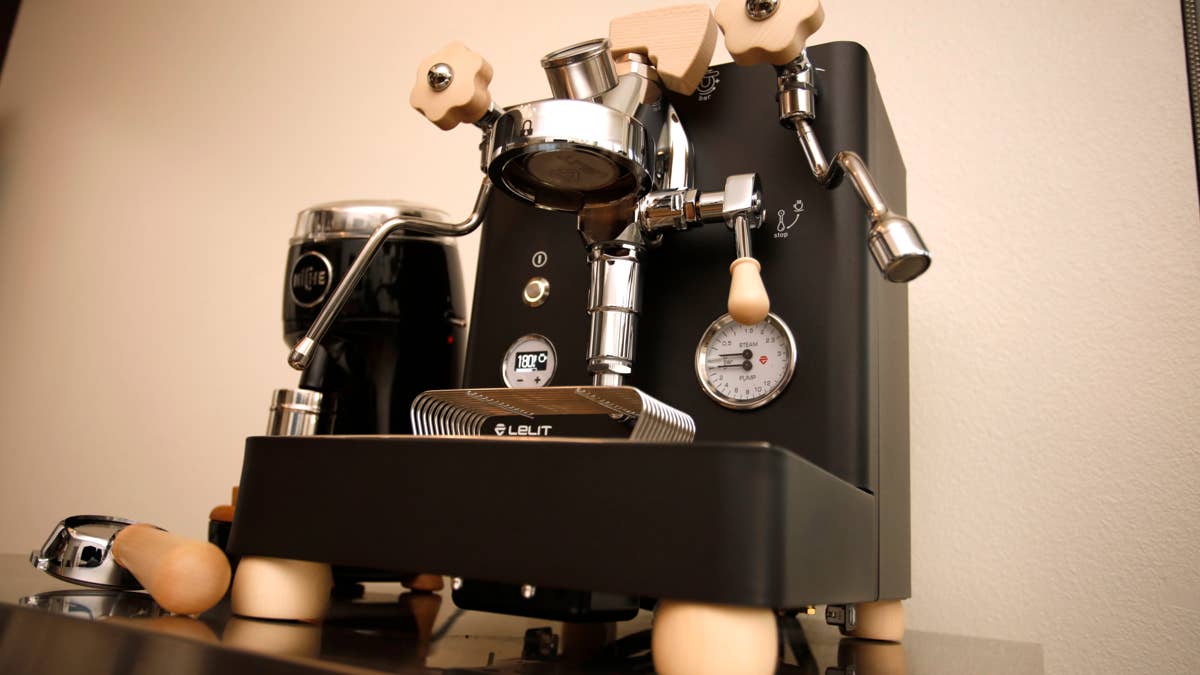
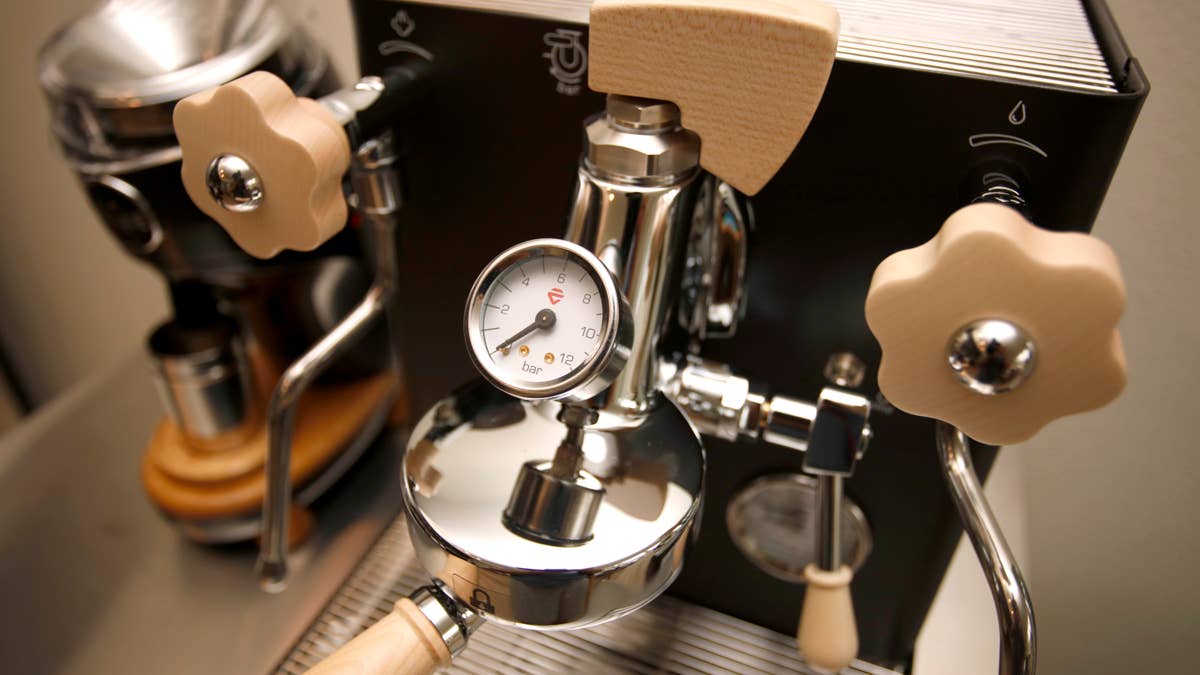
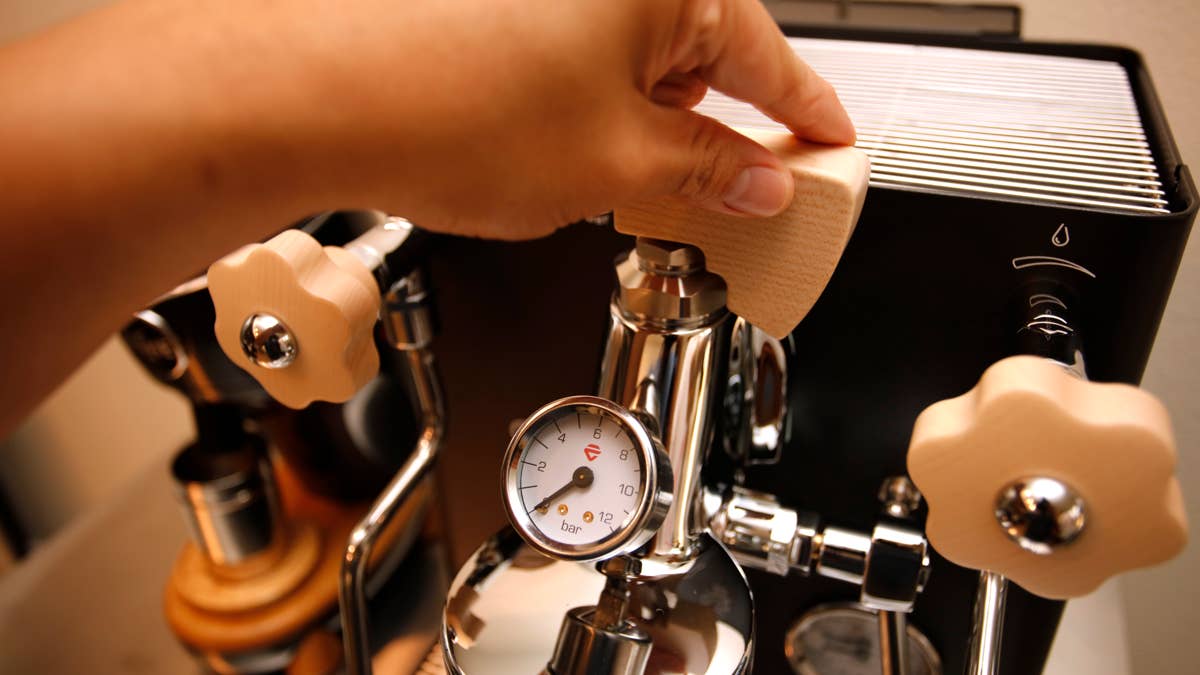
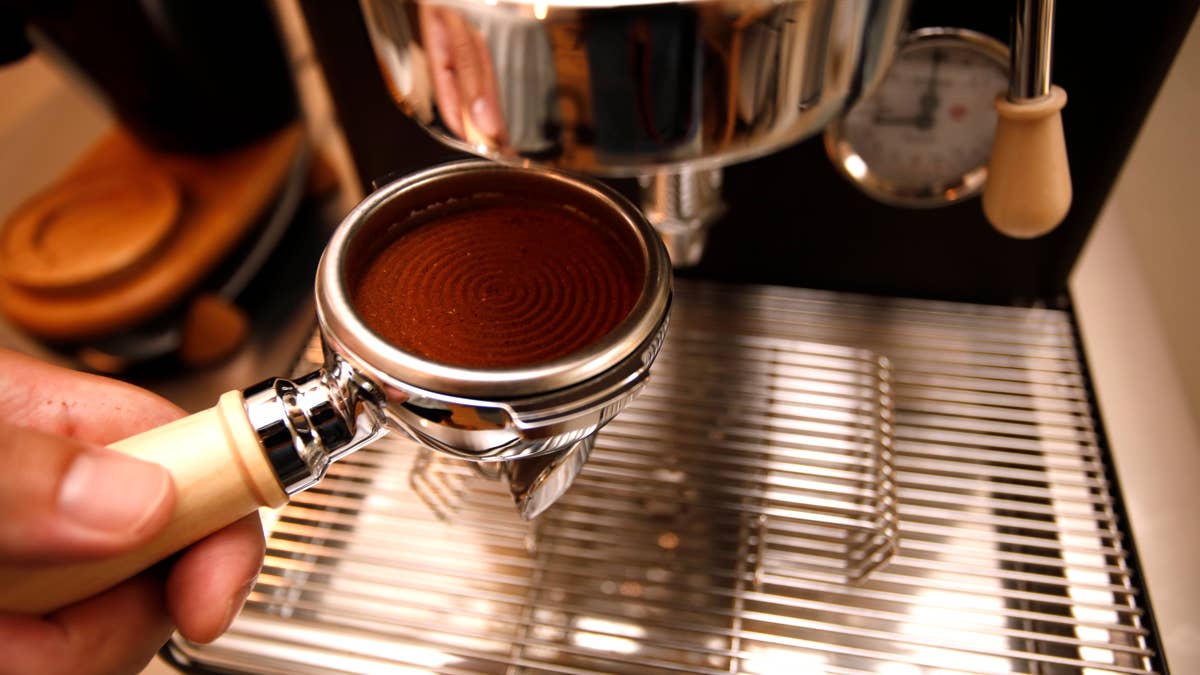
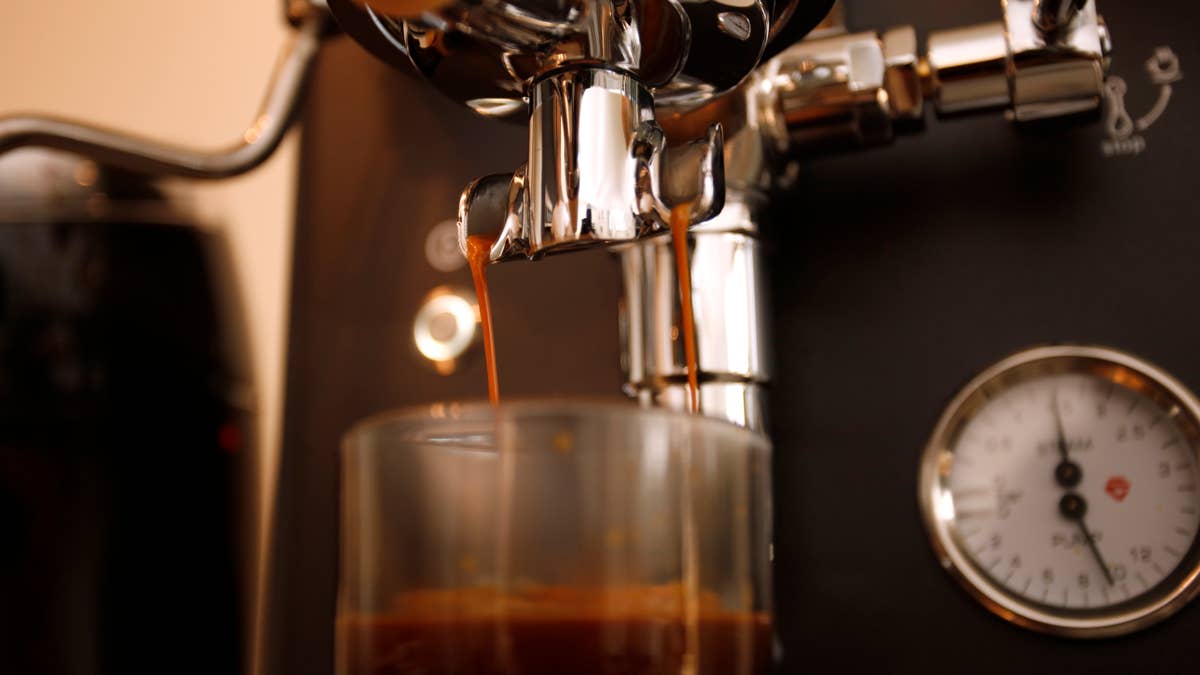
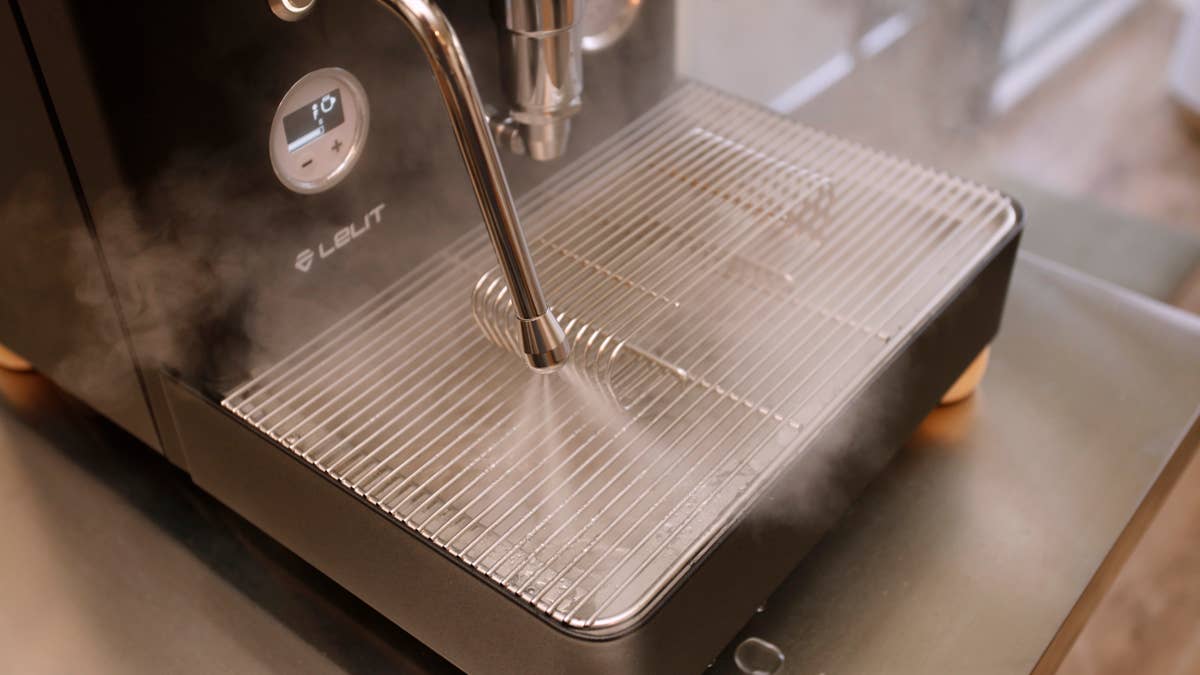
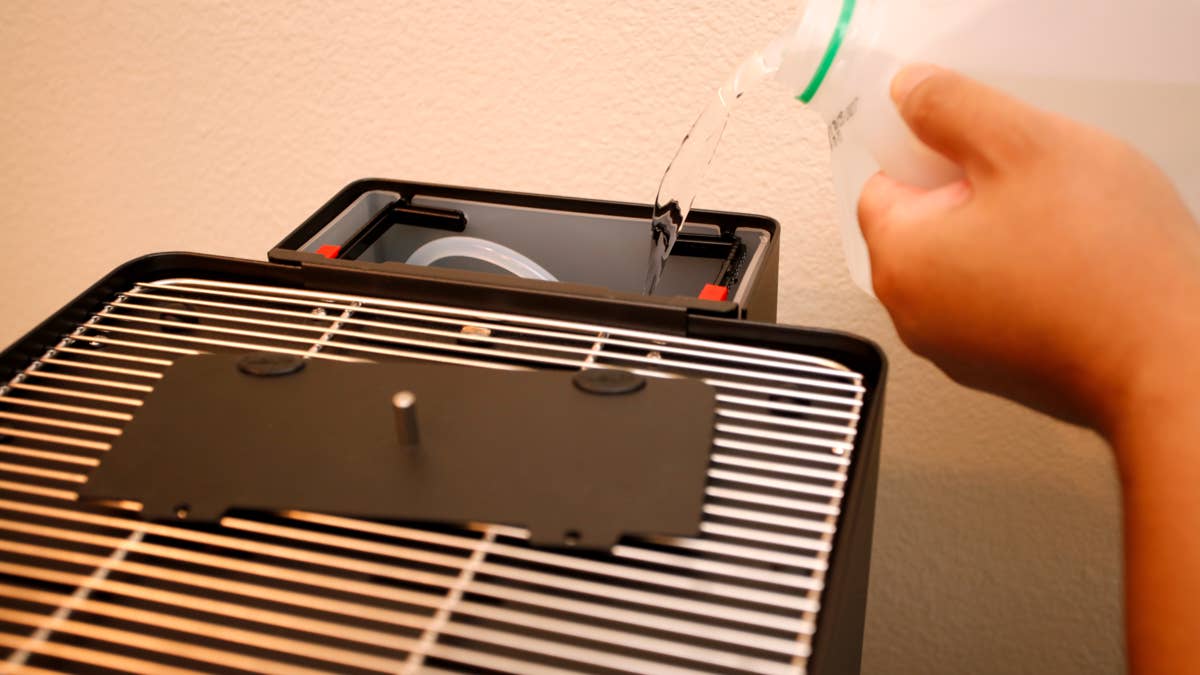
The Lelit Bianca is like the ultimate prosumer semi-automatic espresso machine, bringing all the commercial-grade parts and the feel of manual control right to your kitchen. It’s built with two stainless steel boilers and a classic group head, but what really sets it apart is the wooden paddle mechanism. This lets baristas tweak the water flow and pressure as they brew, unlocking those subtle flavors in light, single-origin roasts that regular machines just can’t get.
At about $3,000, it comes with dual PID temperature controllers, cool-touch steam and hot water wands that move, two fancy wooden portafilters, and a water tank that you can put on the left, right, or back of the machine to fit your kitchen. It’s super stable when you’re making shots back-to-back, and the steam is really strong for milk drinks. It’s a big investment, takes a while to heat up, and you’ll need to get the hang of using the pressure paddle. But if you’re into Italian craftsmanship and control, the Bianca is hard to beat.
Pros:
- The wooden paddle lets you control the pressure perfectly.
- The two boilers keep the temperature steady and make great steam.
- The water tank is flexible and can be moved around.
- It’s made in Italy with real wood and cool-touch wands.
Cons:
- It’s expensive, so it’s a big investment for home baristas.
- Some components peek out in the under carriage.
- The steamer takes longer to get ready than the brew group.
- It doesn’t come with a milk frothing pitcher.
Best All-in-One Espresso Machine: Breville Oracle Dual Boiler
Testing the Oracle Dual Boiler
Stinson Carter
Stinson Carter
Stinson Carter
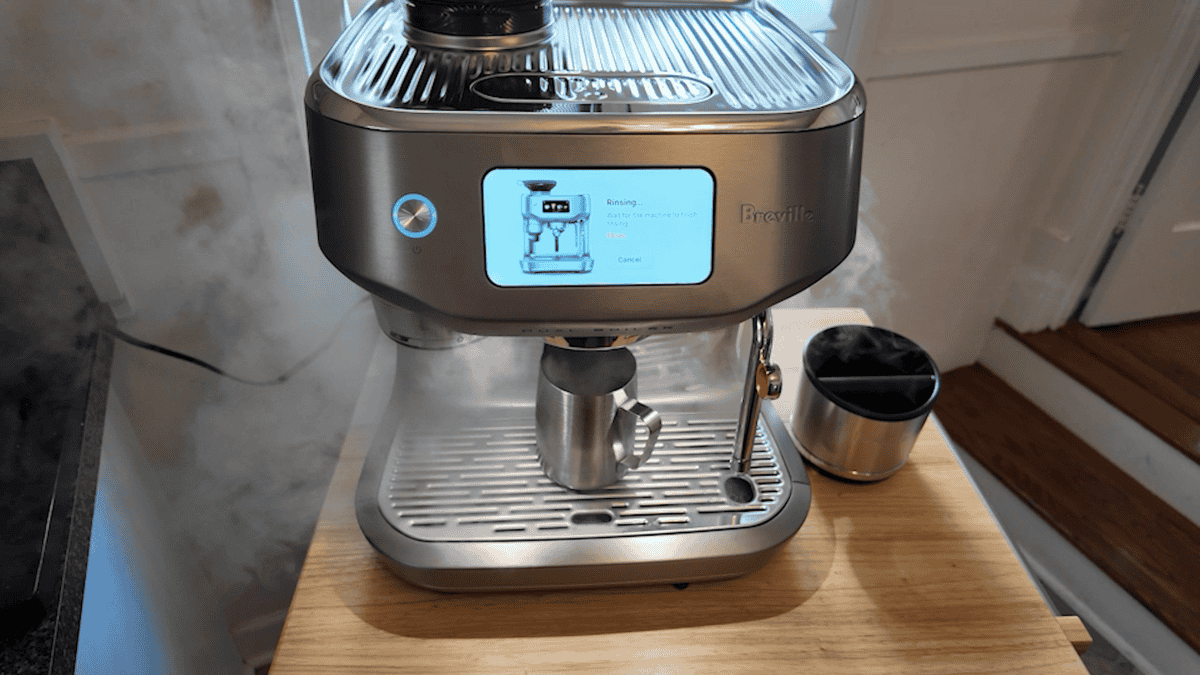
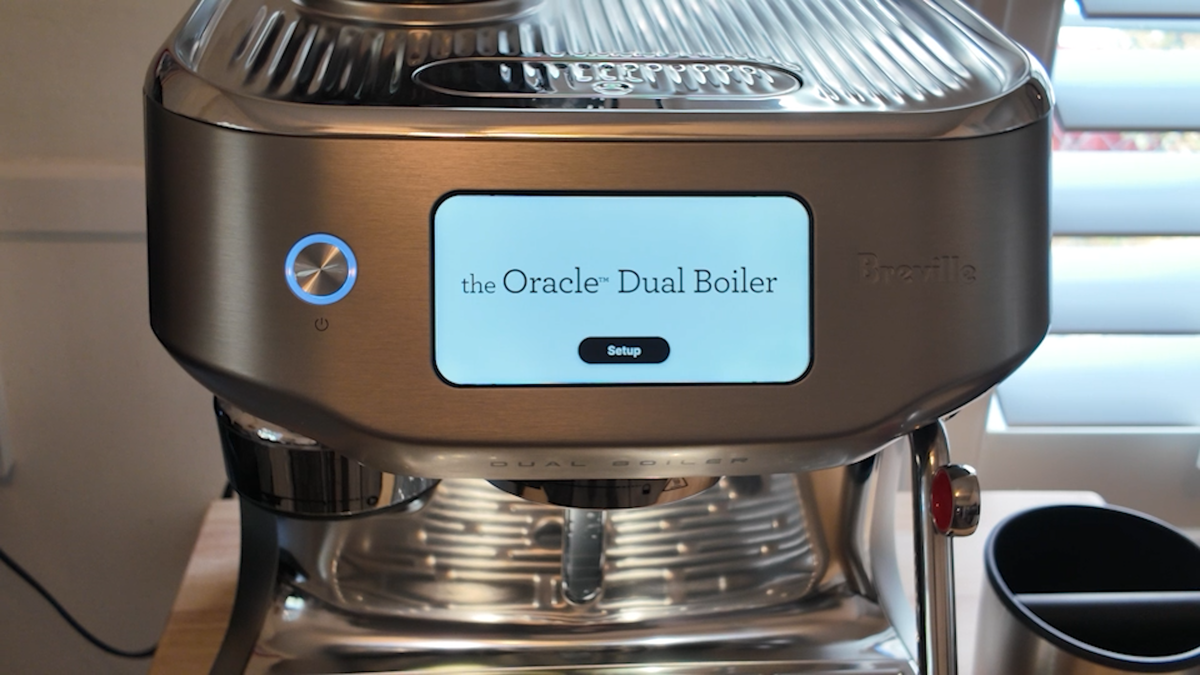
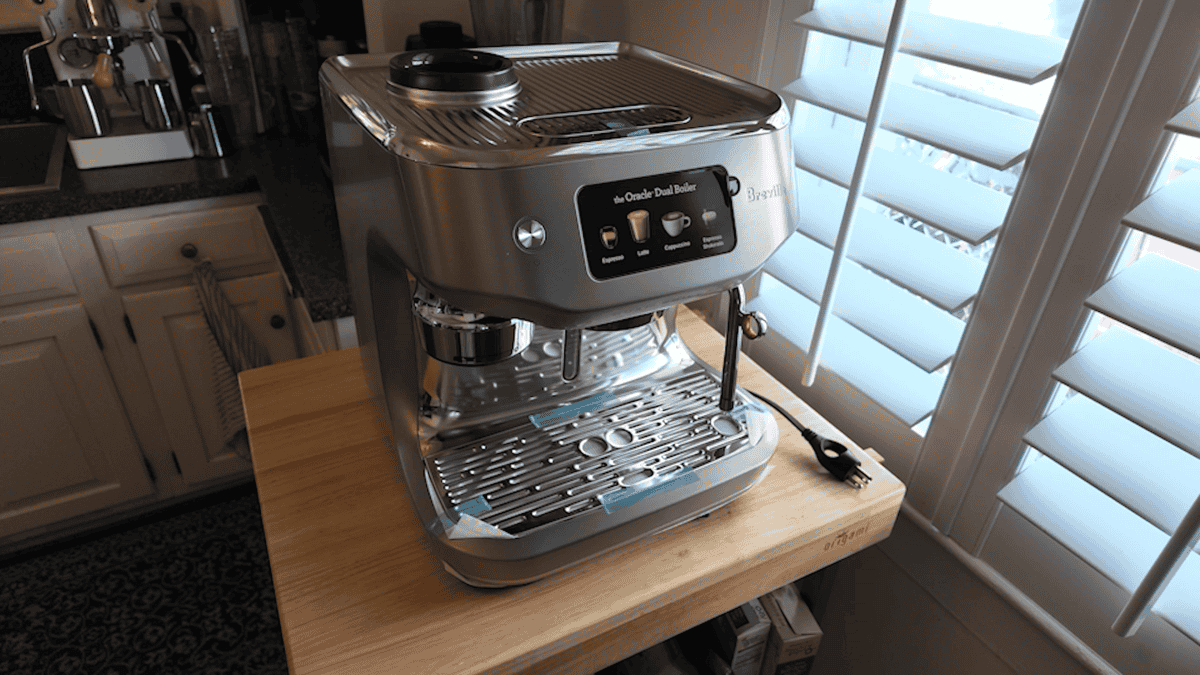
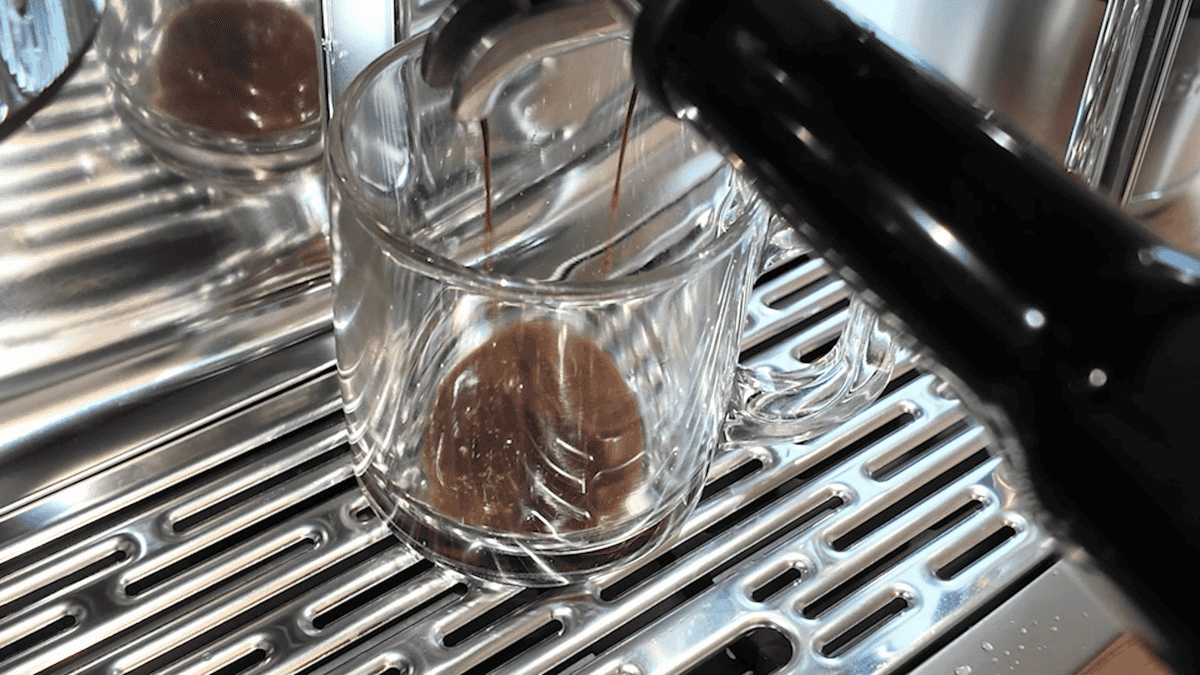
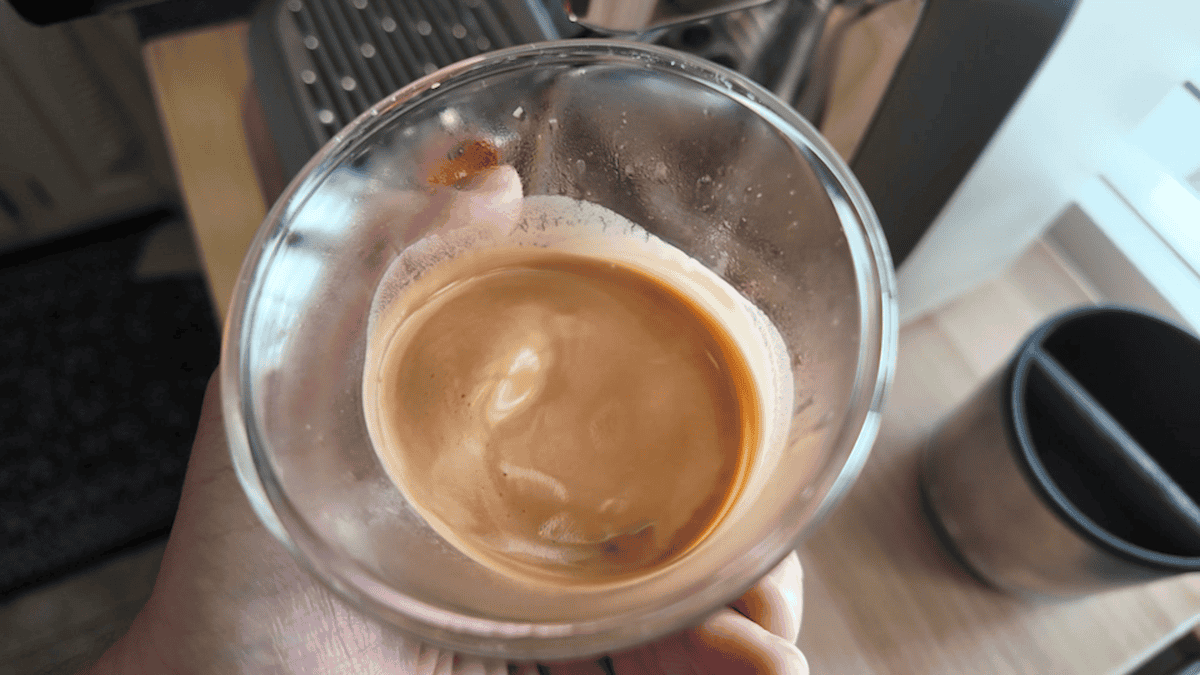
The Breville Oracle Dual Boiler is the result of over a decade of coffee innovation, combining top-notch commercial extraction equipment with smart workflow automation. It’s perfect for espresso enthusiasts who want high-end dual-boiler performance without the hassle of manual dosing and tamping.
The Oracle automatically grinds, doses, and tampers coffee directly into its 58mm portafilter. It has dedicated boilers for extraction and steaming, an easy-to-use color touchscreen interface, and smart connectivity.
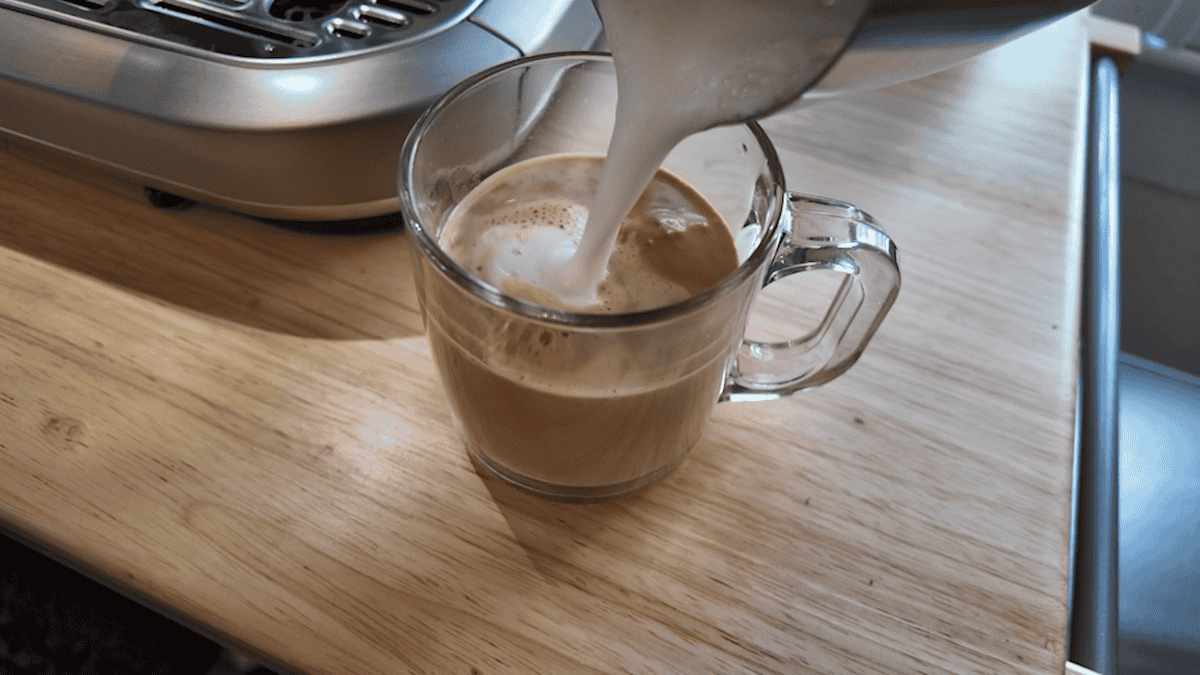
The automated steam wand automatically creates silky microfoam that’s perfect for flat whites, cappuccinos, or lattes, all at your chosen temperature. Plus, you can still tweak extraction settings, brew temperatures, and pre-infusion times if you’re a coffee purist. The thoughtful design, like the retractable roller-wheel system for easy counter movement, makes daily use a pleasure. While it’s a premium machine with a flagship price and requires Breville-compatible portafilters, it’s still the ultimate hands-off yet high-performance espresso system.
Pros:
- Smart automation that still gives you precise control if you want to tweak things.
- The automated grinding, grind-adjustment, and tamping work wonderfully.
- The milk foam is perfect, whether it’s microfoam for a flat white or frothy foam for a cappuccino. It might be the best automated frother you’ve ever used.
- It’s visually stunning and the prettiest Breville ever.
Cons:
- Extracting pucks from the portafilter can be a bit tough.
- Third-party portafilters won’t work unless they’re designed to work with Breville.
- It’s a flagship machine with a flagship price.
Best Super Automatic Espresso Machine: Jura Z10 Gen 2
Testing the Z10
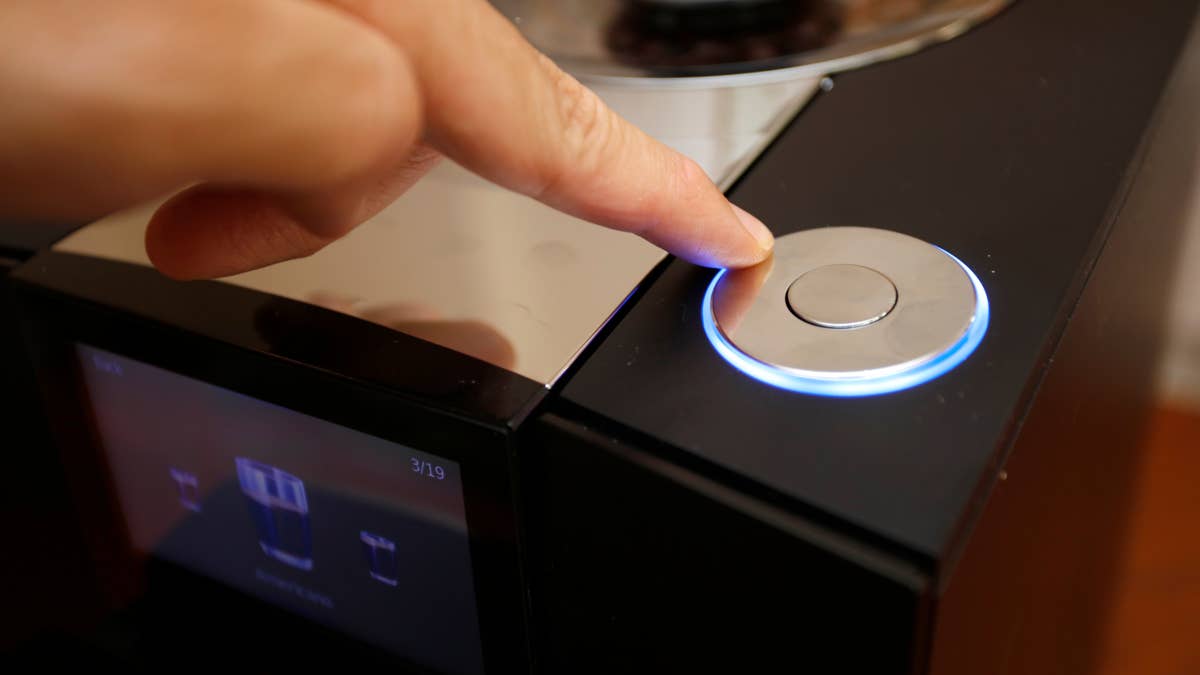
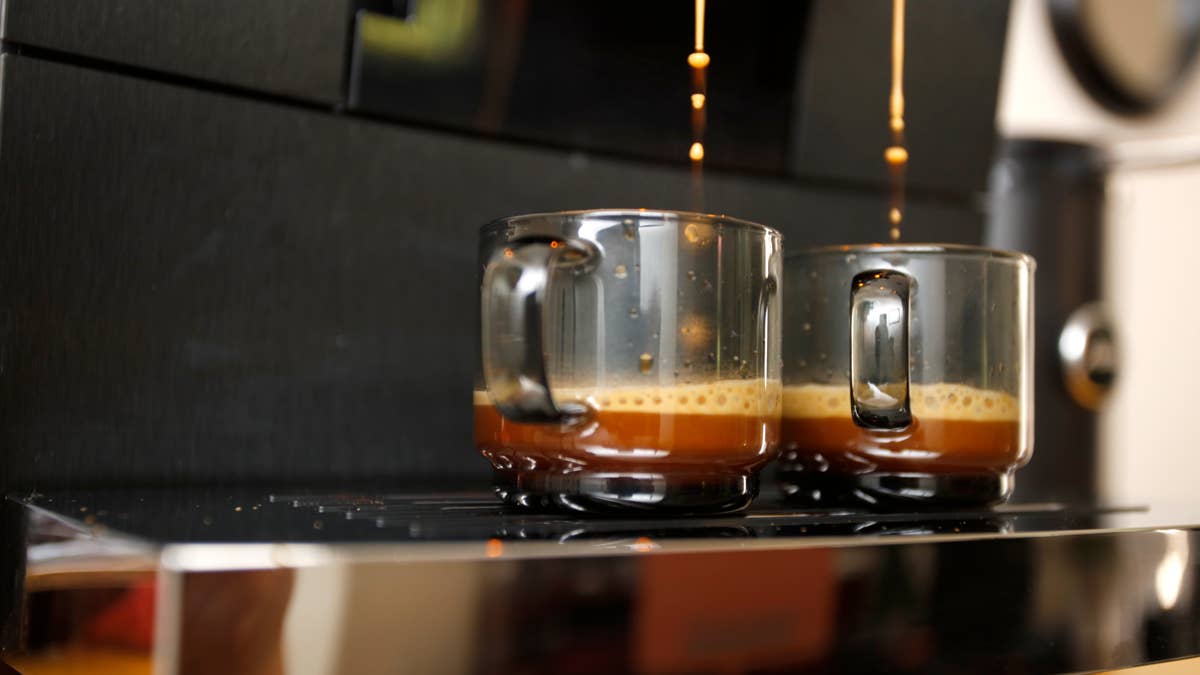
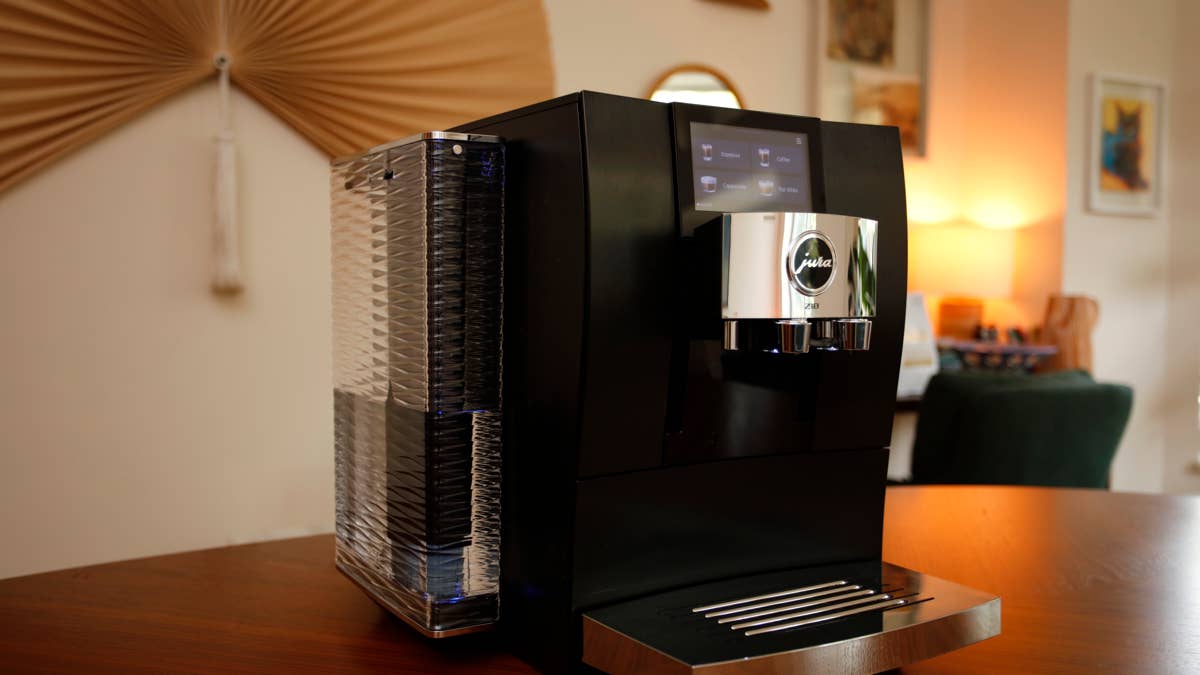
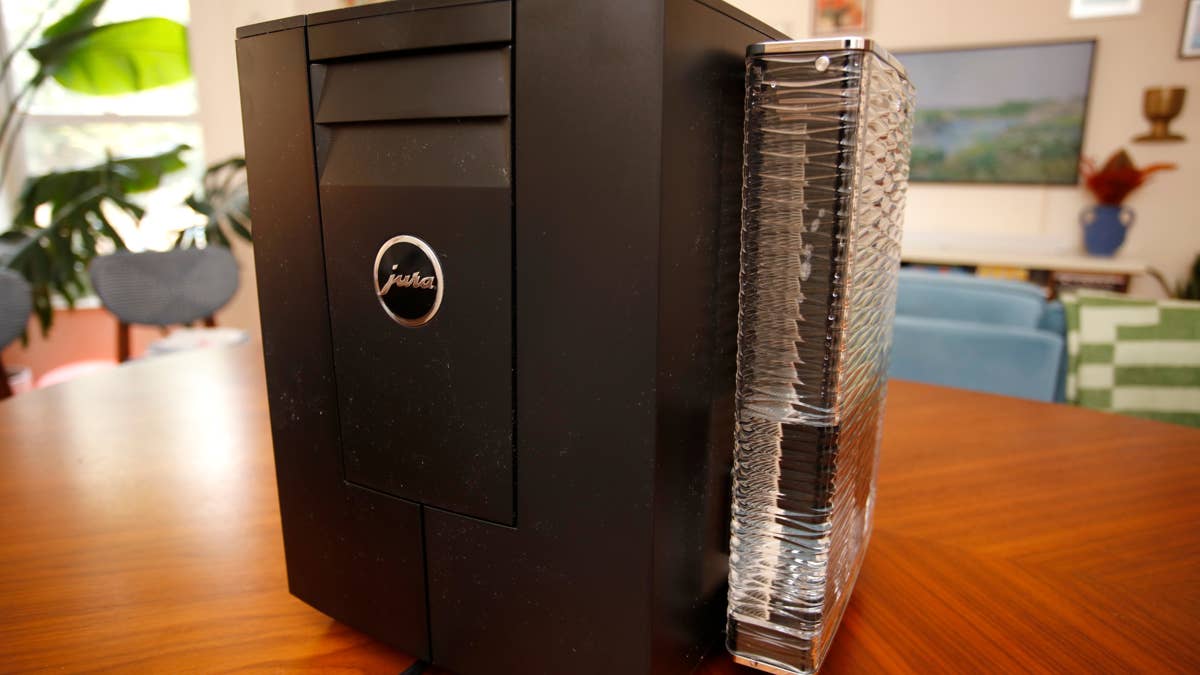
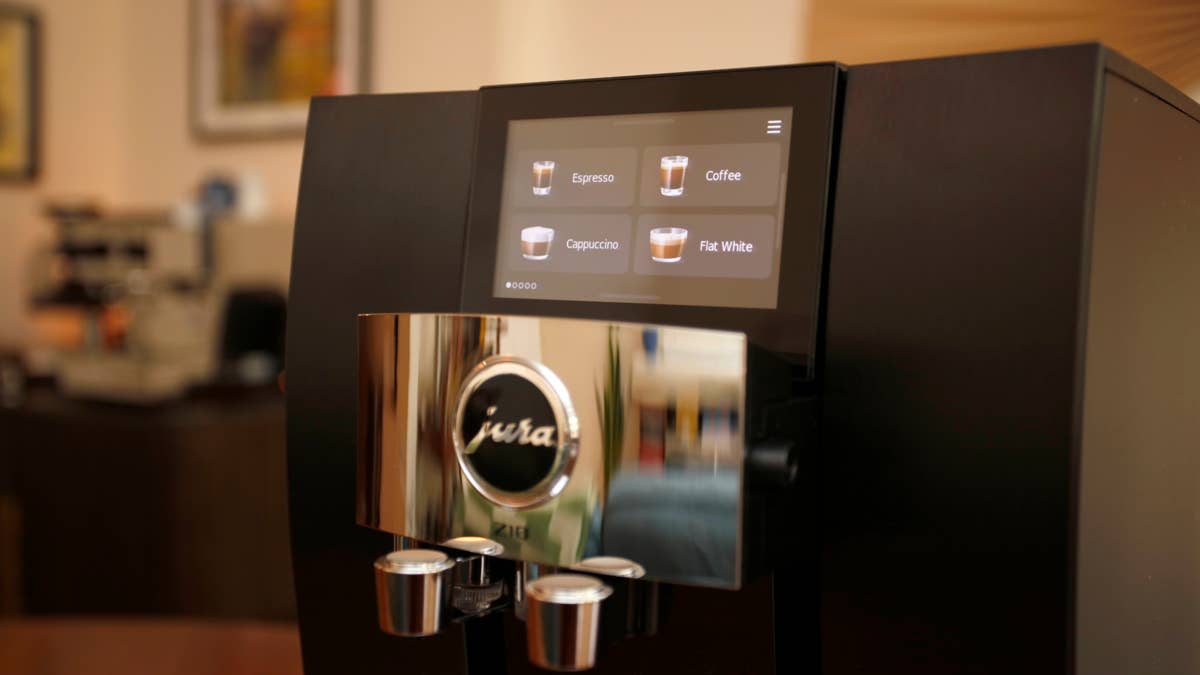
If you’re a coffee lover who wants espresso without any of the work, the Jura Z10 Gen 2 is your ticket to cafe-quality hot and cold drinks with just a button press. It features a 4-inch high-resolution color touchscreen and a simple rotary dial, making it super easy to navigate. Plus, it has a huge menu with 51 different coffee recipes.
What really sets this machine apart is its cold brew feature. It uses high-pressure cold water to make crisp iced lattes and cold espresso drinks in less than a minute. You can also tweak the drink settings to your liking, adjusting the coffee strength, water amount, and milk foam to suit your taste. The only downside is that it’s a bit pricey at $4,500, and the single bean hopper means you have to pick a roast that works for both espresso and long coffee. But if you want a super easy way to switch between different drinks and make them perfectly, this is definitely the best super-automatic out there.
Pros:
- It’s super easy to use with just one button for 51 different hot and cold drinks.
- It makes cold brew drinks super fast, in under a minute!
- The grinder automatically changes the grind size based on what you’re making.
- The touchscreen is easy to use and makes it simple to customize your drinks.
Cons:
- It’s really expensive at $4,500.
- You have to choose a roast that works for both espresso and long coffee.
- It takes up a lot of counter space because it’s so big.
- The drip tray can be a bit tricky to clean and might spill sometimes.
Other Espresso Machines We Tested and Liked
- La Marzocco Linea Micra: The La Marzocco Linea Micra brings the best of commercial coffee machines into a smaller kitchen space, offering top-notch build quality and super-fast heating. Its dual-boiler system gives you the steam power you need for professional shots, plus it keeps the temperature steady so you can make great coffee in a row. But, with a price tag of $4,500, it’s a big investment, and it doesn’t have all the fancy controls or features you might want. Plus, the narrow space under the group head might make it tricky to use with bigger digital scales. Overall, it’s a great choice for baristas who really value a classic look and dependability.
- Lelit MaraX3: The Lelit MaraX3’s game-changing “Pagaia” dial that lets you adjust the pressure by hand. It has great temperature control in a small stainless-steel case that fits well in smaller kitchens. The only downside is that the drip tray and grate feel a bit fragile, and fingerprints can easily ruin the shiny finish. For about $2,000, if you’re not planning to use the manual pressure feature, you might find a simpler heat-exchanger machine is a better deal. Still, it’s a fantastic tool for coffee lovers who want to get the hang of making coffee with different strengths.
- Rocket Appartamento TCA: The Rocket Appartamento TCA is a true work of art, boasting its eye-catching angled chrome group head and robust commercial portafilters. It’s all about that classic heirloom look and dependable performance. The new TCA model brings a digital Temperature Control Adjustment (TCA) feature, which is a smart lever sequence that lets you tweak the temperature for better extraction, especially for those modern light roasts. But, getting the hang of those temperature settings might take a bit of time, and you’ll need to be disciplined with your workflow, especially when using a high-end grinder. Plus, it needs a 20-minute warm-up and doesn’t have the instant readiness of some newer thermoblock systems. For those who love the old-school vibe, though, its raw mechanical feel and amazing steam power are unbeatable.
- Meraki Espresso Machine: The Meraki Espresso Machine makes home brewing super easy by combining a conical burr grinder, dual scales, and a commercial rotary pump into one compact unit. Its easy-to-use touchscreen and automated instructions make it accessible, while still delivering great shot consistency. However, its big size takes up a lot of counter space, and the small bean hopper needs to be refilled often when you’re making a lot. Some people might not like its modern look, especially compared to traditional chrome espresso machines. But, it’s a fantastic learning tool that helps everyday brewers get the precision they need.
Which Coffee Making Accessories Should You Invest In?
1. Grinder
Investing in a high-end burr grinder is arguably as important as the espresso machine itself, as consistent particle size directly dictates extraction quality and flavor clarity. A quality grinder ensures uniform grounds that prevent water channeling, allowing you to dial in your shots with precision and extract the absolute best notes from your beans. Cheap blade grinders produce uneven particle distributions that lead to bitter, over-extracted fines paired with sour, under-extracted boulders. Ultimately, upgrading your grinder is the single most impactful investment you can make to elevate your daily espresso.
Look for a low retention grinder with, preferably, a flat burr grinder. Unlike conical burrs, flat burrs create more uniform grounds which leads to better extraction for espresso. Consider some of our favorites, including the Mazzer Philos and the Baratza Encore ESP.
2. Tools
Tools such as a weighted metal tamper, a WDT (Weiss Distribution Technique) needle tool (like the Subminimal Flick,) and a digital scale—assist in removing variables that cause erratic shot flows. Using a scale to measure your input dose and liquid yield transforms guesswork into repeatable results. Meanwhile, distribution and puck prep tools eliminate channeling to guarantee smooth, balanced extractions with rich, tiger-striped crema. Small upfront accessory investments pay massive dividends in daily shot-to-shot consistency.
While some espresso machines often come with tampers, we’d encourage purchasing them separately. Oftentimes, included tampers are low-quality and are made with cheap materials.
3. Coffee
Even a top-of-the-line, multi-thousand-dollar espresso machine cannot rescue stale, poorly sourced, or improperly roasted coffee beans. Freshly roasted specialty coffee packed with vibrant origin characteristics provides the essential oils, crema, and dynamic flavor profiles that make home brewing rewarding. Sourcing high-grade beans from reputable roasters ensures you are feeding your equipment the quality ingredients it was engineered to process. Matching premium hardware with exceptional coffee turns an ordinary morning routine into an artisanal experience.
4. Water
Because espresso is mostly water, the mineral composition of what goes into your machine’s reservoir profoundly impacts taste and equipment longevity. Using filtered water with balanced mineral content prevents unappealing off-flavors and protects delicate internal boilers from stubborn scale buildup. Hard, unfiltered tap water corrodes internal components over time and dulls the delicate acidity and sweetness of specialty coffee. Treating your water is an inexpensive habit that safeguards your equipment investment while dramatically improving cup clarity.
Depending on your machine, manufacturers may suggest using distilled water over filtered. Regardless, the type of water you use will invariably have an effect on the flavor of the cup.
5. Maintenance
Routine cleaning supplies, backflush detergents, group head brushes, and descaling solutions are essential to preserving the mechanical health and hygiene of your espresso machine. Leftover coffee oils and milk residue turn rancid quickly, ruining the flavor of fresh shots and clogging sensitive valves and steam wands. Proactive maintenance prevents costly commercial repairs, ensures consistent thermal stability, and extends the lifespan of your machine for years of reliable service — so please, do not treat this as an afterthought. Treating your equipment with proper care guarantees that your favorite morning ritual remains uninterrupted.
Methodology
To find the best espresso machines for 2026, we’ve combined over a decade of experience in testing coffee equipment at home and in cafes. We’ve made thousands of shots, from simple models to high-tech dual-boiler machines, to really see how each one works in a real kitchen. We always check if the manufacturer’s claims match up with what we see in practice.
We checked how easy it was to use and how good it was to own. We looked at how easy it was to set up, how easy it was to use the controls, how much space it took up, how loud it was, and how easy it was to take care of it, like flushing the machine, emptying the drip tray, and descaling. Only machines that lived up to their promises and gave you a smooth, consistent coffee experience every day made the cut.
Each machine went through a multi-week test with lots of different checks. We measured how consistent the shots were and how well the machine recovered heat. We did this by making shots back-to-back with fresh beans, looking at how much coffee we got, the temperature, how long it took to extract, and, of course, the taste.
If the machine had a built-in grinder, we carefully tested how well it worked. We checked how accurate the dose weight was, the consistency of the grounds, and how easy it was to adjust the grind setting, as well as maintenance. We wanted to make sure each grinder could make a fluffy, lump-free grind.
We also tested how well the machine froths milk, using both manual steam wands and automatic systems. We looked at how quickly it got to temperature and how good the microfoam was, using both regular milk and plant-based options like oat and almond.
Why you should trust us
Every product featured in this round-up was independently selected, tested, and evaluated by our editorial team. Recommendations are based solely on our hands-on experience, rigorous testing methodology, and strict performance standards. We do not accept paid placements, sponsored reviews, or manufacturer approval for inclusion in our guides.
While Men’s Journal may earn a commission on purchases made through links on our site, this never influences our editorial coverage or product rankings—our commitment is always to provide honest, unbiased advice to help you find the best gear for home coffee bars.
Stinson Carter: I got a head start in my love for serious espresso just by growing up in Seattle. Since then, espresso has become a serious daily ritual, and a world to explore as a journalist. In my pursuit of coffee knowledge, I have interviewed global coffee gurus, baristas, pro coffee gear makers, and bean roasters and producers. On my own, I have tested dozens of machines, and countless coffee tools and beans from a range of roasters and regions.
Tercius Bufete: My family obsesses about coffee. It doesn’t matter if it’s espresso, cold brew, or pour-over, my brothers talk about our shots and experiments regarding coffee daily. I’ve been lucky enough to have owned and tested dozens of espresso machines over the course of five years. I’ve used everything from manual, lever-style tools to prosumer-grade units.