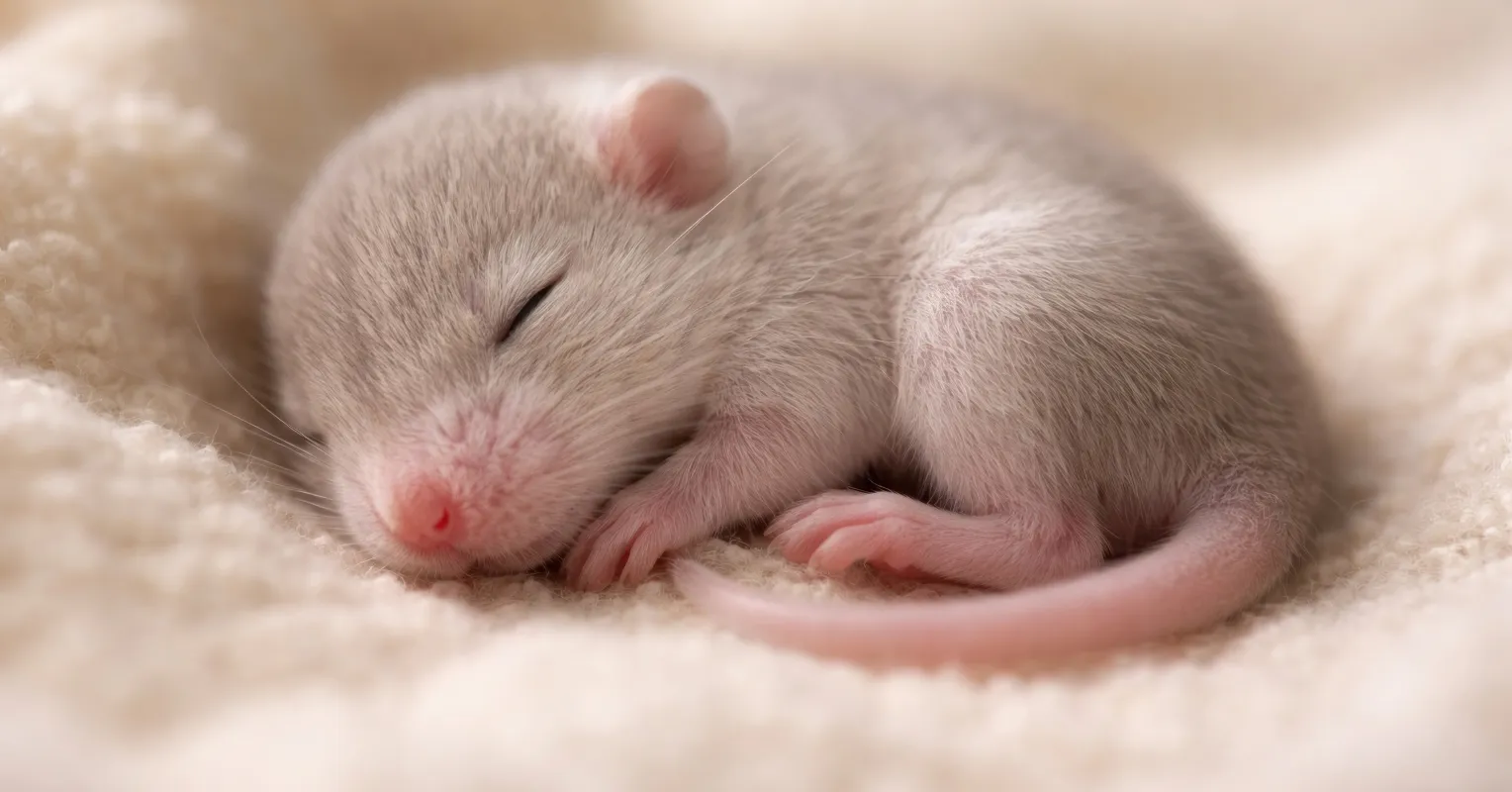
You can postpone sleep, but only for so long. After a late night, the eyelids grow heavy, attention slips, and eventually staying awake begins to feel impossible. The longer we resist, the stronger the need for sleep becomes.
Where does this accumulating pressure come from? Does the brain simply become exhausted? Does some chemical gradually accumulate? Or is there a system inside the brain that actively keeps track of how long we have been awake?
A new study published in Nature offers striking evidence for the last possibility. By examining the brains of sleep-deprived mice, the study identifies particular groups of neurons that become increasingly active during wakefulness. These cells may be counting down the hours until bedtime.
Finding the Brain’s Sleep Meter
Mice normally sleep during much of the day and become more active at night. To see what changes as sleep pressure rises, the mice were kept awake for six hours during the period when they would ordinarily rest.
Some mice were kept occupied by grooming-related stimulation, while others were given unfamiliar objects to explore. Afterward, the study mapped activity throughout the brain. Three broad patterns appeared. Some areas responded strongly at the beginning of sleep deprivation, probably because the animals were encountering new stimulation. Other areas became active during recovery sleep. But a third set behaved differently: Activity rose or remained elevated as the mice stayed awake, then declined once they were finally allowed to sleep.
One brain region activated in this process, called the median raphe, lies deep in the brainstem. Another sits farther forward in a part of the brain involved in sleep regulation and body maintenance, called the anterior medial preoptic area.
Their activity did not increase only during forced sleep deprivation. It also followed the animals’ ordinary daily pattern. The cells became more active during periods when mice naturally spent more time awake and less active during periods dominated by sleep. That made them compelling candidates for something more fundamental than a response to an experiment. Their activity seemed to follow sleep need itself.
Turning Up the Sleep Pressure
These sleep-deprivation-responsive cells were marked and later reactivated when the mice were well rested. Activating these cells in either of the two brain regions caused the mice to spend roughly two to three times more time asleep. Their sleep also became deeper, based on the large, slow brain waves associated with intense non-rapid eye movement sleep. The animals were behaving as though they had accumulated a substantial sleep debt, even though they had not.
Suppressing the same cells produced essentially the opposite result. Mice slept less during ordinary conditions and could remain awake for unusually long stretches. During another six-hour period of sleep deprivation, they made fewer attempts to fall asleep. In some cases, suppressing cells in the median raphe eliminated these attempts almost entirely. Even when the animals were finally given the opportunity to recover, they slept less than normal.
Many things can keep an animal awake. Stimulants, stress, or activation of the brain’s arousal systems can all delay sleep. But the lost sleep usually has to be paid back later. Sleep pressure continues building beneath the temporary wakefulness. However, suppressing these particular neurons appeared to reduce the pressure itself.
Two populations emerged as especially important for promoting sleep. One uses serotonin, a chemical messenger involved in a wide range of brain functions. The other is an inhibitory population, meaning that its normal role involves restraining the activity of other neurons. Activating either population increased deep sleep. Activating both at the same time produced a much stronger effect that lasted longer than stimulating either one alone. As wakefulness continues, these neurons themselves may become easier to activate. Eventually, the system increasingly favors sleep.
When the Sleep Dial Was Turned Down
When the sleep-controlling neurons were suppressed for weeks rather than hours, the surviving mice slept nearly 70% less than control animals. They spent more than six additional hours awake each day and could remain awake for much longer stretches at a time.
Ordinarily, losing that much sleep should create enormous sleep pressure. Yet the expected signs were greatly reduced. The mice showed less of the deep, slow brain activity normally associated with accumulated sleep need. After deliberate sleep deprivation, they did not show the usual surge of recovery sleep.
They also remained remarkably active. Their movement actually increased, and they continued exploring and interacting with objects. Memory was somewhat weaker one day after learning, but the animals still formed lasting memories, and by two weeks their performance was comparable with that of control mice.
About 17% of the mice subjected to the long-term intervention died, possibly because sleep had been reduced even further in those animals. The surviving mice were also genetically and neurologically manipulated in a highly specific way.
Why We Get Sleepy May Be as Important as Why We Sleep
Sleep is often described as something the brain needs to perform maintenance, consolidate memories, regulate metabolism, or restore normal function. Those ideas address an important question: Why sleep at all?
This study approaches a different question: Why does the need for sleep become so difficult to resist? The answer may involve a set of neurons that spend our waking hours moving the brain progressively closer to sleep. Cells in the median raphe appear capable of influencing other parts of the brain that control whether we remain awake or fall asleep. Some of their connections activate sleep-promoting regions while suppressing areas involved in wakefulness.
The urge to sleep may not simply be a symptom of a tired brain. It may be a biological drive built by specialized neural circuits, much like the systems that make hunger grow when we have not eaten or thirst intensify when we need water.
Every hour we remain awake, something inside the brain may be keeping score. And when that score tips over a certain threshold, sleep is no longer a matter of choice.