The arrest of a man with intellectual disabilities for allegedly jaywalking in Utah has developed into a significant legal dispute over police authority, unlawful detention, and the constitutional limits of an officer’s power to demand identification.
More than two years after the encounter, a federal judge has allowed the civil-rights claims against the officer to proceed, raising questions about whether the arrest was legally justified in the first place.
A Walk Home Turns Into a Police Confrontation
At approximately 3 a.m. on July 25, 2024, Karl Shawn Nicholas, a longtime Special Olympics medalist with intellectual disabilities, was walking home from the Summit Lounge in the Clearfield-Layton area of Davis County, Utah. Nicholas regularly attended karaoke at the establishment and, according to accounts of the incident, did not consume alcohol.
Clearfield Police Officer Zachary Fratto noticed Nicholas walking through the Legend Hills shopping center and decided to investigate. The officer followed him in his patrol vehicle, apparently considering his presence in the area unusual at that hour.
According to the federal court’s subsequent account, Nicholas initially continued walking and began running when Fratto approached him on foot. The officer returned to his vehicle, pulled alongside Nicholas and began questioning him.
The encounter escalated when Fratto accused Nicholas of jaywalking and demanded identification. Nicholas questioned why he was being stopped, insisted he had done nothing wrong and explained that he was simply going home.
Body-camera footage subsequently published by civil-rights attorney John H. Bryan, known online as The Civil Rights Lawyer, captured the confrontation. It showed Nicholas expressing confusion and telling the officer, “leave me alone” and “I didn’t do nothing.”
Fratto eventually ordered him to put his hands behind his back. When Nicholas did not immediately comply, the officer performed a takedown, bringing him to the ground and handcuffing him. Nicholas sustained a scrape to his elbow, which medical personnel assessed at the scene.
He was detained for approximately 48 minutes, cited for interference with a peace officer, and released. Significantly, no jaywalking citation was issued.
The incident attracted widespread attention after Bryan published his analysis and the footage in November 2024. Nicholas subsequently described the emotional consequences, including fear of walking home alone and nightmares.
Utah Law’s Position On Jaywalking and Police Identification
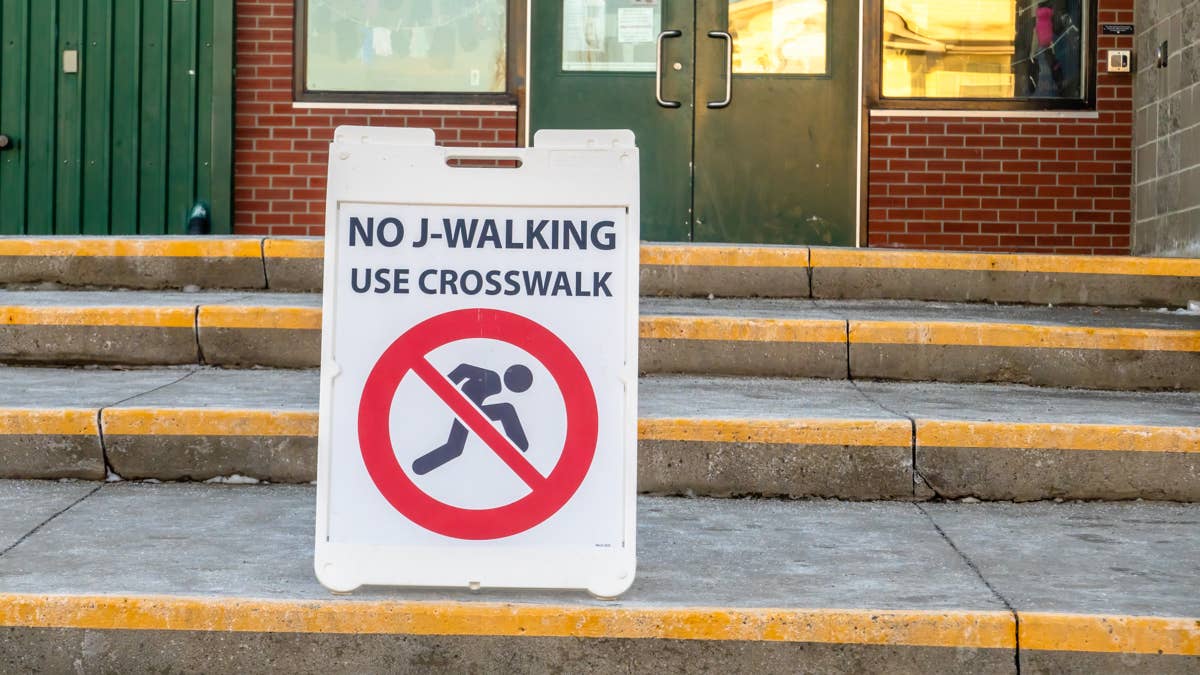
The legal issue becomes particularly important when examining Utah Code § 41-6a-1003, which governs pedestrian crossings. Contrary to the broad interpretation Fratto apparently applied, the statute does not prohibit pedestrians from crossing every road outside a designated crosswalk.
Under subsection (1), pedestrians crossing outside marked or unmarked crosswalks must yield the right-of-way to vehicles. The specific prohibition in subsection (3) applies when crossing between adjacent intersections where traffic-control signals are operating. A violation is classified as an infraction, not a serious criminal offence.
There is another important distinction concerning identification. Utah Code § 76-8-301.5 permits officers to demand a person’s name and date of birth during a lawful investigative stop. It does not automatically require someone to produce a physical identification card simply because an officer demands one.
Judge Dale A. Kimball addressed this distinction directly in his March 11, 2026, ruling. He observed that Fratto had requested Nicholas’s identification, not his name, and concluded that refusing to produce identification did not violate the statute. Consequently, the officer lacked probable cause to arrest Nicholas on that basis.
Importantly, the judge did not conclude that the initial encounter was unlawful. Applying the Fourth Amendment principles established in Terry v. Ohio, he found that the late hour, Nicholas’s presence in a closed shopping center, his running, and his responses to the officer provided reasonable suspicion for an initial investigative stop.
However, reasonable suspicion to investigate is not unlimited authority to arrest.
Utah’s interference statute, § 76-8-305, also requires the underlying arrest or detention to be lawful. As Judge Kimball explained, an officer cannot manufacture probable cause by initiating an unlawful arrest and subsequently treating the person’s resistance as justification for that arrest.
The judge also examined the force under Graham v. Connor (1989), which requires consideration of the seriousness of the suspected offence, immediate threats to safety, and active resistance or attempted flight.
He concluded that Nicholas was unarmed, posed no immediate threat and offered only minor resistance. Citing the Tenth Circuit’s 2022 decision in Surat v. Klamser, he found that the leg-sweep takedown constituted excessive force under the circumstances.
Federal Lawsuit Puts Officer’s Qualified Immunity to the Test
Nicholas filed Nicholas v. Fratto et al., Case No. 1:25-cv-00078, on June 5, 2025, seeking damages under 42 U.S.C. § 1983.
Judge Kimball rejected Fratto’s qualified-immunity defense at the dismissal stage, finding that existing Tenth Circuit precedent gave reasonable officers sufficient notice that the force used was unconstitutional.
However, Clearfield City successfully obtained dismissal of the municipal liability claims because Nicholas had not sufficiently demonstrated deliberate indifference in its training or supervision.
Fratto subsequently appealed. The Tenth Circuit docket, Case No. 26-4027, recorded further briefing extensions, including one extending his deadline to October 9, 2026.
Meanwhile, Clearfield Police Chief Kelly Bennett acknowledged that Fratto had “mistakenly applied the Utah ‘jaywalking’ statute” and failed to recognize Nicholas’s disability. The department maintained that the force was justified, describing Nicholas as having actively resisted arrest. Fratto received additional remedial training, according to Bennett’s November 2024 statement reported by KSL.
The takeaway is that police may investigate suspicious circumstances, but constitutional authority does not expand simply because somebody refuses to cooperate or provide a physical ID card. Nicholas’s case demonstrates how an initially permissible investigation can cross into unlawful arrest and excessive force.
Note: The March 2026 ruling addressed whether the claims could proceed, not a final trial verdict or damages award. The appellate proceedings remain a separate development.