Drivers have another reason to be extra careful on the roads after the clocks turn back this weekend: The change to standard time could put more commuters behind the wheel during the hours when deer are most likely to be crossing.
Daylight Saving Time ends at 2 a.m. Sunday, Nov. 1, sending clocks back one hour. The annual change also shifts many evening commutes into the earlier hours of darkness, and that could be a problem for drivers during one of the busiest times of year for deer activity.
A recent report published by Wausau Pilot & Review highlighted research showing that the fall clock change can increase deer-vehicle collisions during evening commuting hours. The research comes from Tom Langen, a biology professor at Clarkson University, and his colleagues, who analyzed more than 86,000 deer-vehicle collisions in New York.
The Time Change Can Put More Cars on the Road at Dusk
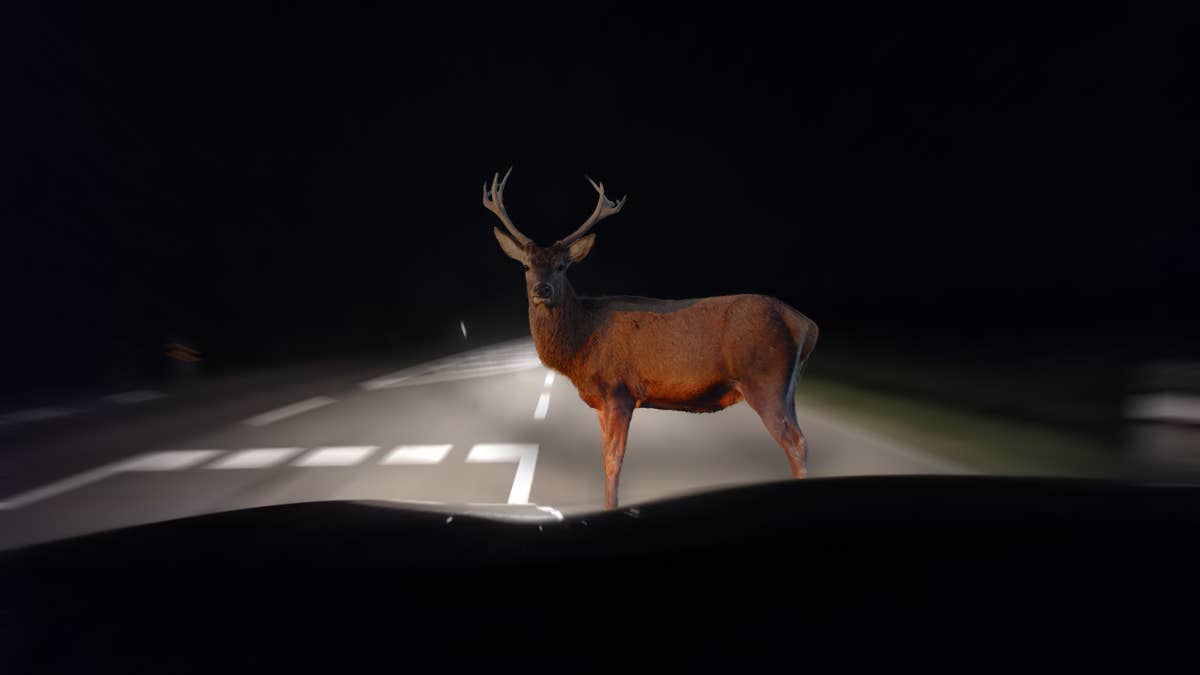
Deer-vehicle collisions are already most common around dawn and dusk, when deer are active and visibility is lower (making the experience as inconvenient as humanly possible).
Langen’s research found that deer crashes occur eight times more frequently per hour during dusk than during daylight and four times more frequently at dusk than after nightfall. Only about 20% of the collisions examined happened during daylight hours.
Fall is already the most dangerous time of year for deer-vehicle collisions, with the peak occurring around the rut.
According to the research highlighted by Wausau Pilot & Review, New York sees its highest number of deer-vehicle collisions during the last week of October and the first weeks of November. There are more than four times as many collisions during that period as there are in spring.
The fall time change can make that overlap even more significant.
The research found that the shift to standard time was associated with a 72% increase in deer-vehicle accidents during evening commuter hours, while morning commuter-hour crashes decreased by 37%. Overall, collisions during commuter hours increased 19% during the week following the fall time change in the New York data.
That doesn’t mean every driver will suddenly be more likely to hit a deer. But it does mean more vehicles can be traveling during the same twilight period when deer are particularly active.
What Drivers Should Know
Deer can cross roads at any time of day or night, but drivers should be especially alert around dawn and dusk and in areas where deer are common. The risk is also elevated during the fall rut, when bucks are actively searching for does and may move more frequently.
If a deer appears in the road, drivers should avoid swerving into another lane. Sudden lane changes can create a second collision with another vehicle, while hard braking may result in a rear-end crash.
The simplest approach is to slow down, stay alert and keep an eye on the roadside, particularly during the evening commute.
The clock change itself doesn’t make deer more active. Instead, it changes when people are driving, potentially putting more vehicles on the road during the same twilight hours when deer are naturally on the move.
And with the rut underway, that’s a combination drivers should take seriously.