If you’ve heard of taurine, it’s probably because you saw it listed under the ingredients on the back of an energy drink. But taurine isn’t a stimulant. In fact, its effects on the brain are almost the opposite.
Taurine is one of the most abundant amino acids in the brain. But unlike most amino acids, it isn’t used to build proteins. Instead, it helps cells balance salt and water, protects them from oxidative stress, and supports mitochondria, which are the energy factories inside our cells. In 2023, researchers reported in Science that blood taurine levels fall with age in humans, and that taurine supplements extended the healthy lifespan of animals. That study triggered a wave of public interest and raised the question: Can taurine help the brain?
The Brain’s Brake Pedal
Our brains run on a balance between excitatory “go” signals and inhibitory “stop” signals. Glutamate is the primary accelerator, while GABA and glycine are the main brakes. Taurine is shaped much like GABA and can activate GABA-A and glycine receptors, thereby reducing the firing of nerve cells.
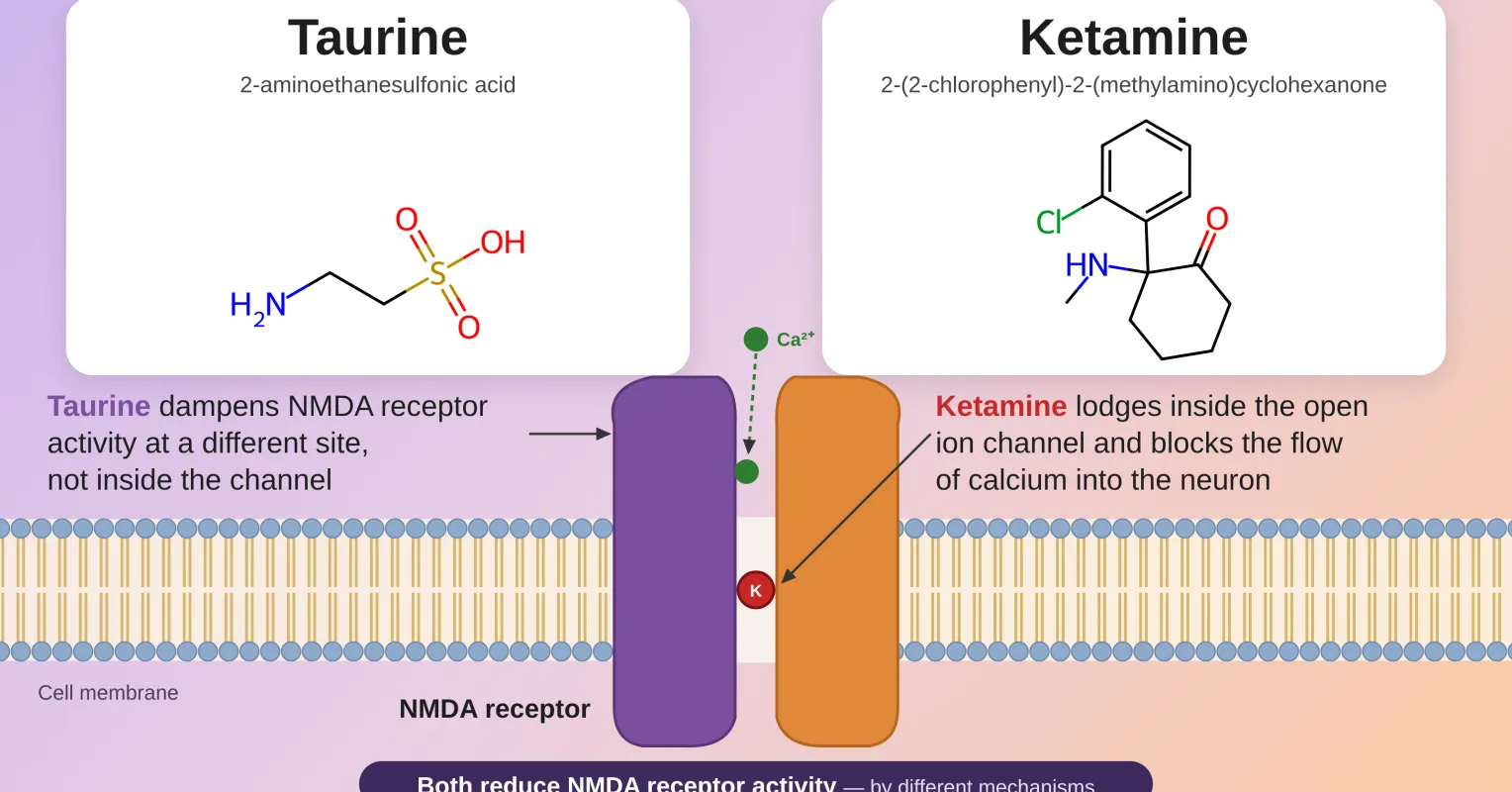
Taurine also blocks NMDA receptors, which are the same glutamate receptors that are blocked by ketamine. This is an interesting and important finding that suggests taurine might function like ketamine in terms of helping with depression.
Many psychiatric conditions involve an imbalance between the glutamate and GABA/glycine systems. This has led researchers to wonder if taurine could help with these conditions.
Psychosis: The Strongest Human Evidence
The best human evidence comes from a double-blind, placebo-controlled trial in young people experiencing their first episode of psychosis. Researchers in Australia randomly assigned patients aged 18 to 25 who were taking low-dose antipsychotic medication to receive either 4 grams of taurine or a placebo daily for 12 weeks. Among the 86 people analyzed, taurine significantly reduced overall psychiatric symptoms as well as psychotic symptoms. Depressive symptoms and everyday functioning also improved. Taurine was well tolerated.
Curiously, blood taurine levels are higher in people who are experiencing their first episode of psychosis and have not been treated with antipsychotic medications. Their taurine levels return to normal after they are treated with antipsychotic medication. This may reflect the body’s attempt to calm overactive brain circuits. These studies suggest taurine may improve symptoms of psychosis.
Depression
Most of the research exploring the effects of taurine on depression has been performed in animals, not humans. For example, in rats exposed to weeks of mild stress (which is a common laboratory model of depression), taurine prevented the loss of interest in sugar water (a sign of anhedonia or the inability to feel pleasure), protected memory, and promoted the growth of new neurons in the hippocampus, a brain region that shrinks when we are depressed. Another study involved feeding rats a high-taurine diet for four weeks. These rats exhibited antidepressant-like behavior.
In humans, the picture is more complex. People with untreated major depression have been found to have higher blood taurine levels than non-depressed controls. A recent systematic review of human studies found inconsistent effects of taurine on mood.
Anxiety
Because taurine activates calming receptors, it would appear logical that it might reduce anxiety. In mice, a single oral dose of taurine reduced anxiety-like behavior without causing impairment in memory or muscle function. The researchers attributed taurine’s anti-anxiety effects to activation of glycine receptors. A similar effect occurred when taurine was administered to mice intranasally.
But here’s a twist. A different mouse study found that whereas a single injection of taurine reduced anxiety, drinking taurine in water chronically increased anxiety. It’s possible that the brain adapts to chronic taurine exposure in a way that is different from administering a single dose. Also, injecting taurine may produce different results than drinking it.
ADHD
The evidence for ADHD is still in a preliminary stage. Spontaneously hypertensive rats are a commonly used animal model of ADHD. In these animals, dietary taurine lowered inflammatory markers, changed brain activity on functional MRI, and improved working memory. High-dose taurine also changed how the brain handled dopamine, the chemical messenger that is targeted by stimulant medications such as methylphenidate. Low-dose taurine had the opposite effect on dopamine, suggesting that the dose matters. No human ADHD trials have been published so far.
Is Taurine Safe?
Taurine has a good safety record. A review of human studies found that 3 grams per day is a safe level for healthy adults, although higher amounts, such as the 4-gram dose in the psychosis trial mentioned above, have been used in research without serious problems. The FDA has accepted taurine as generally recognized as safe (GRAS) as a food ingredient, and diets that include meat and seafood provide about 400 milligrams a day. Side effects are uncommon but can include an upset stomach.
One important caution – energy drinks are not a good way to get taurine. Their caffeine and sugar can worsen anxiety and disrupt sleep.
The Bottom Line
Taurine is a promising, inexpensive, and generally safe supplement that acts on the brain’s calming systems. The best human evidence supports it as an add-on treatment for early psychosis. For depression, anxiety, and ADHD, most of the evidence comes from animals. If you’re interested in trying taurine, discuss it with your doctor first, especially if you take psychiatric medications. Taurine should complement, not replace, proven treatments.