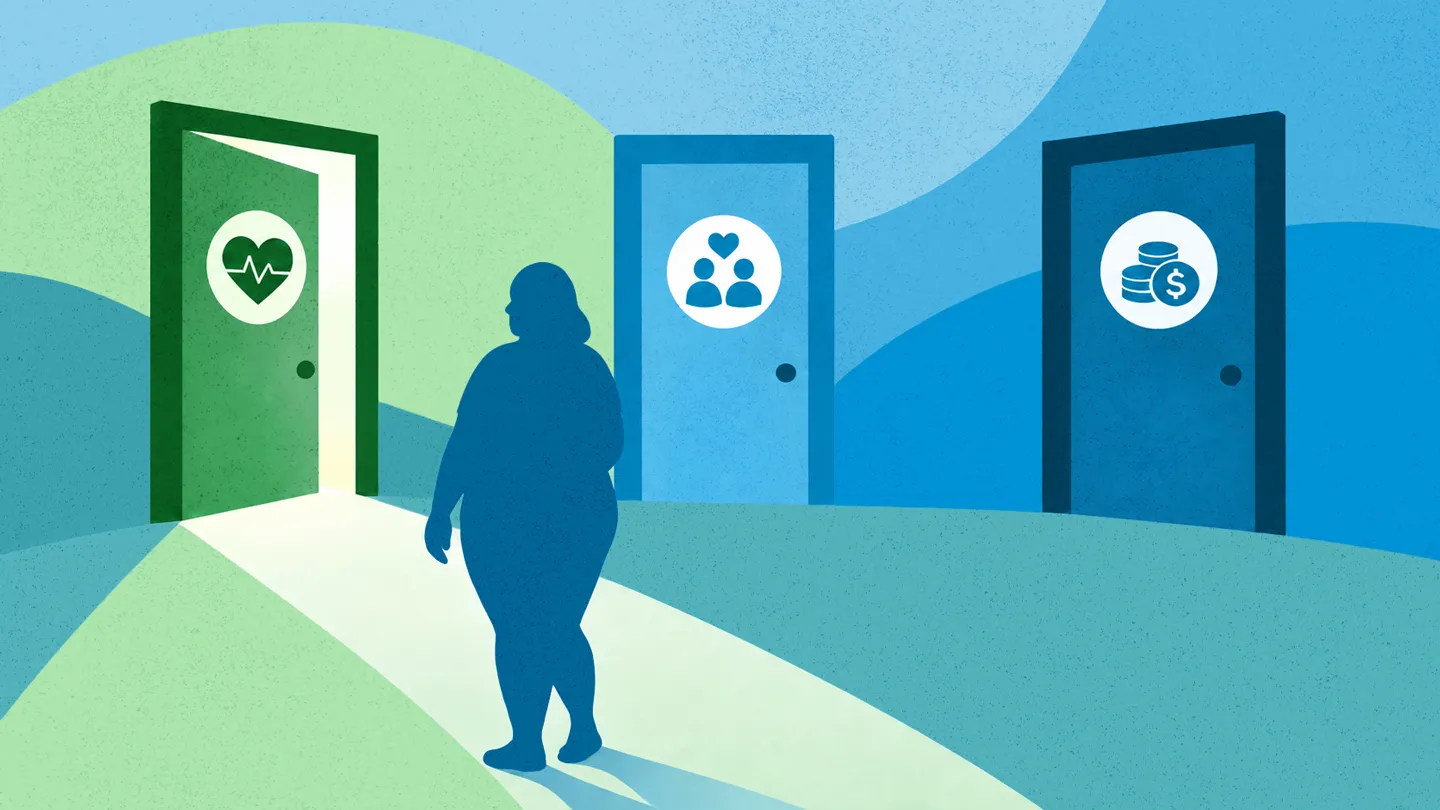
The results weren’t surprising to healthcare professionals who work with people seeking weight loss.
“It impacts everything when patients are overweight, especially if they are significantly overweight,” says Mir Ali, MD, the medical director of MemorialCare Surgical Weight Loss Center at Orange Coast Medical Center in Fountain Valley, California. “It’s not just about health.”
Because weight can have such a large impact on multiple areas of life, Angela Fitch, MD, an obesity medicine physician and the co-founder and chief medical officer of Knownwell, says it “makes sense” that people would prioritize a solution over what many think of as life’s biggest stressors, like debt. “The survey is really capturing how heavy the day-to-day burden of this disease is,” Dr. Fitch says. “And it is even more burdensome because it has not been treated for centuries with adequate therapy.”
While effective treatments like GLP-1 medications are now available to patients, they’re not always covered by health insurance. “That makes a marginalized, untreated group of people desperate for help,” Fitch says.
Fitch is not shocked that people would choose the ability to wake up at an ideal weight over being debt-free. “Debt is stressful, but it’s often something people feel they have some control over or a plan to manage,” she says. “Carrying excess weight, by contrast, can feel like a problem that won’t respond to willpower or effort alone, and that lack of control is exhausting.”
Fitch regularly hears patients say that they’d “trade almost anything” for their weight to not define their health, wardrobe, stamina, or the world’s perception of them. “It’s also worth noting that obesity is tied to real, tangible health risks — cardiometabolic disease, joint problems, sleep apnea — so the desire for ideal weight isn’t vanity; it’s patients equating it with getting their health and their future back,” Fitch says.