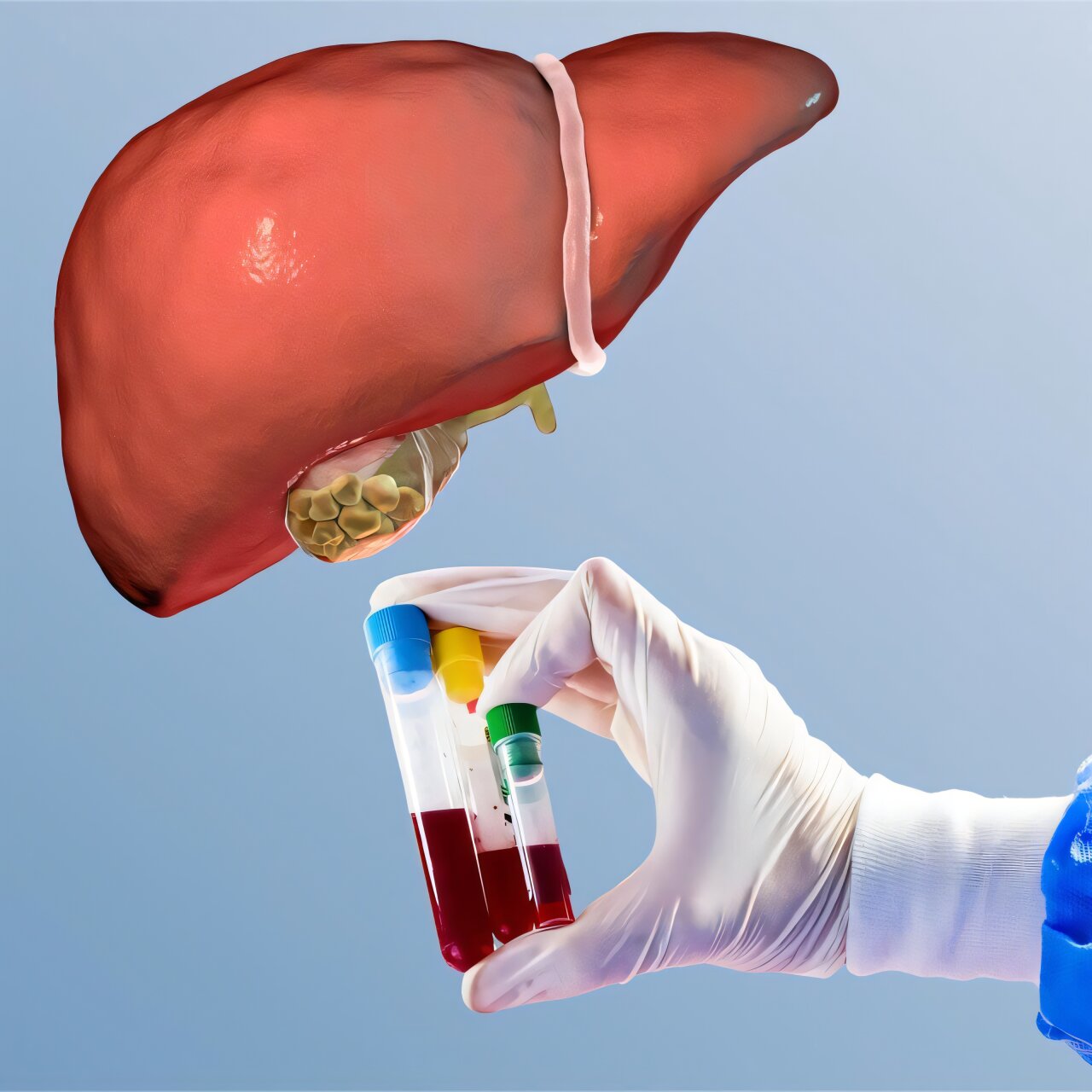
The reliable assessment of metabolic dysfunction-associated steatotic liver disease (MASLD) is crucial for determining the stage of the disease, initiating appropriate treatments and monitoring the course of therapy. To date, a liver biopsy has often been necessary for this purpose. In this invasive procedure, a tissue sample is taken and examined.
Newly developed blood tests have the potential to offer an alternative way to assess liver health, both noninvasively and inexpensively, in the general population in the future.
The LITMUS (Liver Investigation: Testing Marker Utility in Steatohepatitis) study provides a comprehensive data foundation for this purpose: It compared 30 individual biomarkers and test combinations for the diagnosis of MASLD and its advanced and progressive stage, known as metabolic dysfunction-associated steatohepatitis (MASH).
The study analyzed data from 1,590 patients with MASLD who had been accurately diagnosed via tissue biopsy. The participants were enrolled between 2018 and 2023 at 37 liver centers in 13 countries across Europe and the United States.
While none of the tests reached the threshold predetermined in the study for diagnosing early stages of fatty liver disease without significant scarring (fibrosis), several methods performed very well in diagnosing significant liver fibrosis and cirrhosis. In addition to more complex combinations—such as those involving a specialized ultrasound technique (elastography)—the single marker thrombospondin-2 (TSP2) in particular showed good results.
It is one of the most promising blood-based markers for assessing progressive and advanced liver fibrosis and inflammation (MASH at risk). TSP2 is a connective tissue protein whose concentration in the blood provides reliable indications of fibrotic changes in liver tissue associated with a risk of developing cirrhosis.
More information
Y Vali et al., Non-invasive tests in Metabolic-dysfunction Associated Steatotic Liver Disease: the prospective, multi-centre LITMUS Study, Newcastle University (2026). DOI: 10.25405/ncl.34550718
Clinical categories


Citation:
Single blood protein stands out among 30 tests for assessing fatty liver disease (2026, November 1)
retrieved 1 November 2026
from https://medicalxpress.com/news/2026-10-blood-protein-fatty-liver-disease.html
This document is subject to copyright. Apart from any fair dealing for the purpose of private study or research, no
part may be reproduced without the written permission. The content is provided for information purposes only.