The SU9 Lux looks less like a luxury halo than a lifecycle fix for a sedan whose volumes have plunged six months after a refresh. By Stewart Burnett
Xiaomi has registered the ‘Xiaomi SU9 Lux’ trademark for vehicles, all but confirming a rumour that has circulated in Chinese industry media for the last few weeks. A long-wheelbase version of the SU7 has already been spotted and photographed in testing; the model would appear to take the automotive newcomer’s sedan range into the executive segment just as demand for the model on which it is based declines.
Xiaomi applied for the trademark under Class 12, which covers automobiles, back in February. It was subsequently published for preliminary approval on 6 June, cleared a three-month opposition period and finally registered on 7 September, with protection running until 2036. Xiaomi has not publicly confirmed the name in any of their communications, and both the specifications and launch timing remain entirely unknown. Indeed, even the trademark does not in itself confirm the production model’s name.
Camouflaged Xiaomi test vehicles have appeared repeatedly on Chinese social media in recent weeks. Some onlooker estimates have suggested that the car is more than 5.2 metres long with a wheelbase of around 3.1 metres, which contrasts with the 4.99 metres and three metres of the regular SU7. The extra length would presumably go behind the front seats; other accounts have indicated that rear-wheel steering will be available. The positioning, then, would point toward buyers who prioritise rear-seat space and comfort over performance.
If that is the case, then it follows a well-established Chinese playbook. Long-wheelbase sedans are a staple of China’s premium market, where many owners are chauffeured to work rather than drive themselves. This is, to no small extent, why BMW, Mercedes-Benz and Audi all sell stretched versions of their flagship models there. Extending an existing platform would give Xiaomi a comfort-focused flagship alongside the performance-oriented SU7 Ultra, and at a far lower cost than developing a new model.
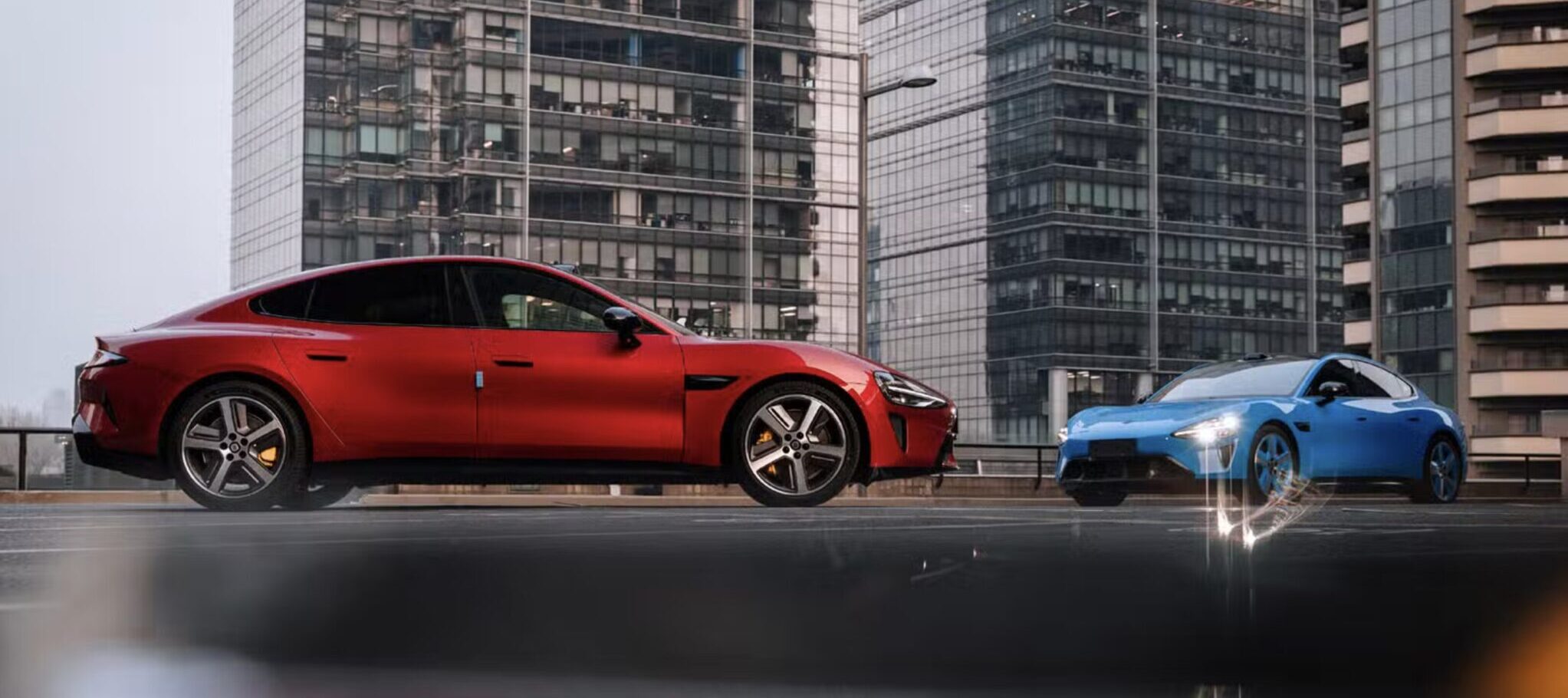
To be sure, the timing also reflects sales pressure on the SU7. Xiaomi’s debut model, refreshed earlier in 2026, still saw its deliveries fall 19.55% year-over-year to 15,751 in September. When the model update was launched in March, it saw 26,826 deliveries the following month. This means that, within six months, the lift from that refresh has faded already—a trend common in the Chinese industry. Local automotive executives, including BYD, have bemoaned the rapid new model launch glut that feeds this pattern.
To date the SU7 has surpassed 500,000 cumulative deliveries, which it achieved in August after 28 months on the market. New models are increasingly driving Xiaomi’s growth. The company delivered 40,015 vehicles in September, its best month of 2026 but still 4.61% below a year earlier. The Sky Nomad extended-range electric vehicle series contributed 12,444 in its first month, which would imply around 11,800 for the YU7. Even so, the automaker’s 550,000-unit annual target appears well beyond reach at this point.
The risk for Xiaomi is that the SU9 Lux draws buyers from the SU7 rather than from German executive sedans or domestic rivals such as the Huawei-backed Maextro S800, since buyers in that segment place considerable weight on brand heritage. The ‘SU9’ name itself suggests Xiaomi wants the car to be seen as a new flagship tier rather than a derivative, mirroring the ‘9’ designation already used by its larger Sky Nomad N90 and the upcoming YU9 SUV.
The SU9 Lux, then, looks less like a luxury halo than a lifecycle extension for a sedan whose volumes have fallen by a fifth year-on-year. Stretching the SU7 is the quickest and cheapest way to keep the platform competitive while targeting a more lucrative segment. Its pricing relative to the top SU7 trims will reveal whether Xiaomi is genuinely moving upmarket or simply giving its first car a longer life.