There are already several carmakers actively testing ways to incorporate humanoid robots into their assembly processes. From German BMW to South Korean Hyundai, each of them has gotten in bed with various robotics startups for this task, and they are in various stages of implementing such solutions. Much later than its competitors, German Audi announced this week it is doing the same.
The brand with four rings said during the NVIDIA GTC Berlin event that a project meant to determine the merits and usefulness of humanoid robots in automotive manufacturing is already underway, with assistance from Dassault Systèmes and NVIDIA.
The carmaker chose machines made by German startup Agile Robots for the task at hand, without actually naming the solution it uses. For the record, though, Agile offers at the moment only a single humanoid robot, called ONE, in a number of configurations.
The machine stands 68.5 inches (174 cm) tall, making it ideal for use in places designed around the average human height, like Audi’s assembly facilities, and tips the scales at 152 pounds (69 kg).
Equipped with two legs (or a mobile platform, depending on needs) and two arms, the robot uses cameras and LiDAR to get a sense of its surroundings, moving around at about the same speed as an average human. When it needs to lift something, it can easily do so, as long as the thing it lifts doesn’t weigh more than 44 pounds (20 kg).
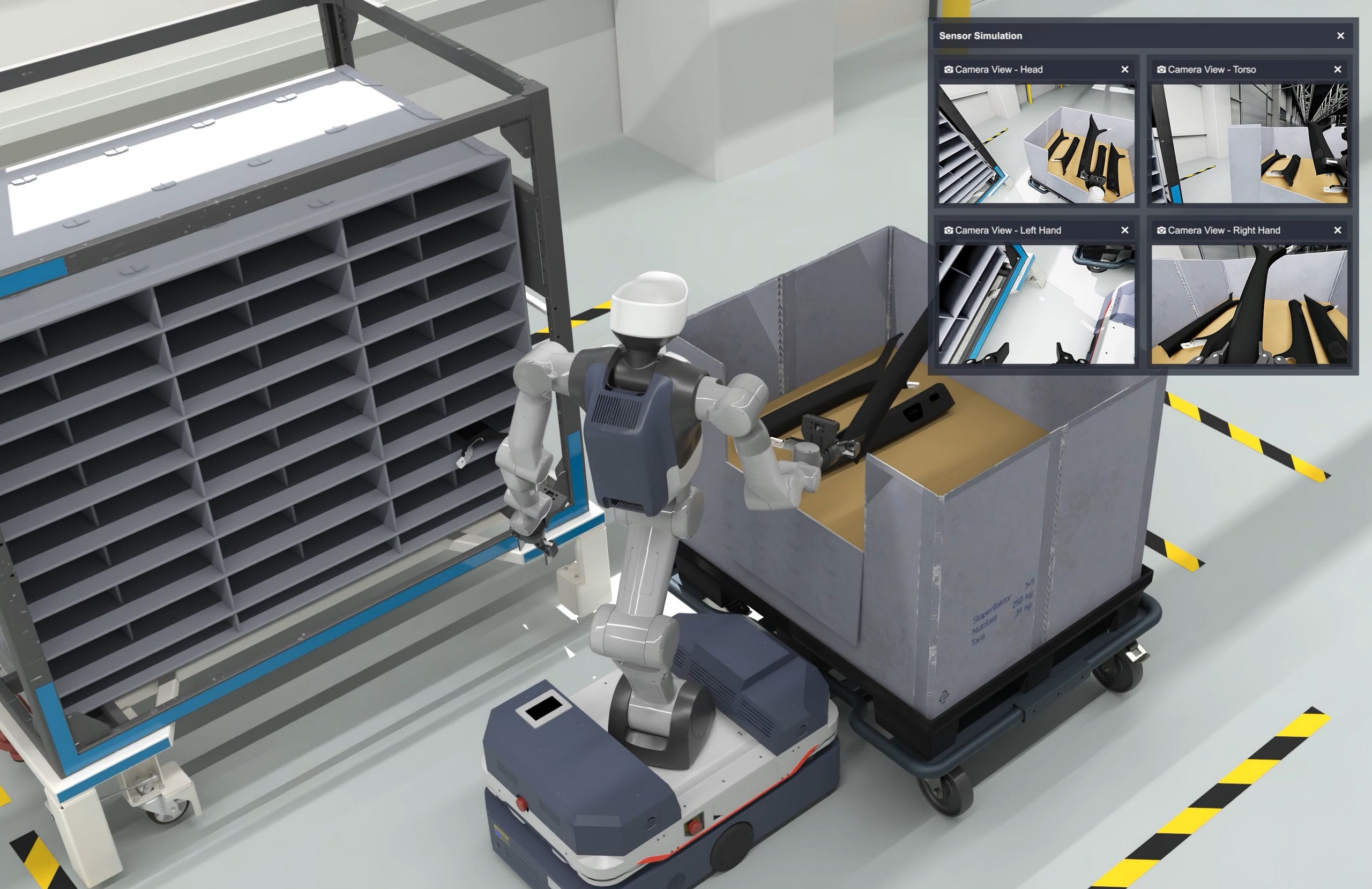
Audi is looking at ways of deploying the Agile robot in parts sequencing at its main Ingolstadt facility. In a nutshell, it would have it pick the right parts, in the right order, and have them delivered to the right workstation.
It doesn’t sound all that complicated, but it kind of is, really. Audi itself says that sequencing operations at Ingolstadt require around one million picks every single day. Not only that, but the robots must make sense of parts of various shapes and sizes, packaged or not, and many times mixed together in the same containers.
The robot uses its vision system to see the parts and an undisclosed AI system to determine what it sees. When the correct part is identified, it picks it up with help from its arms, which are equipped with tactile sensors.
Agile’s robot performs the task assigned to it both in the virtual world, using an application developed by Dassault Systèmes and the NVIDIA Omniverse libraries, and in the real world. We’re not told exactly how far along testing is.
If the trials deliver the expected results, Audi plans to integrate Agile bipedal robots in assembly and production alongside human workers. On a corporate level, that means reduced manual workload and better efficiency. For the human workforce, though, this new level of automation likely means something else entirely.