Relief on EU imports is likely to arrive years before Georgia even produces any vehicles, giving the plant the dimensions of a trade deal. By Stewart Burnett
Volkswagen’s planned US$4bn Audi plant in Georgia is reportedly tied to a halving of the duties it pays on cars imported into the US, with the automaker pressing for 15% tariffs on its EU-built vehicles to be cut to 7.5%. The US Commerce Department is also said to be preparing a compromise closer to 10% for automakers making large domestic investments; this relief would arrive years ahead of the Georgia plant building its first car.
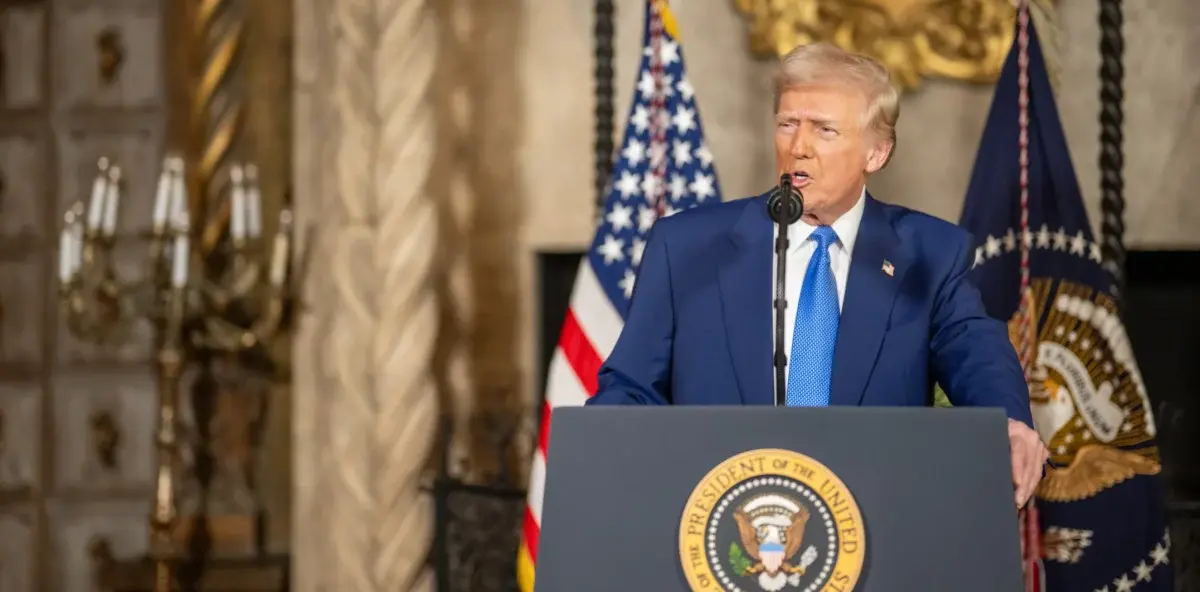
The plant will have a reported annual capacity of around 200,000 units per year, hire roughly 4,500 people and focus on the Q7, Q8 and Q9 SUVs. When it was announced at a Trump campaign rally in late October, at which Audi Chief Executive Gernot Doellner was a special guest, it drew immediate backlash for its political timing near the US midterm elections. Doellner has declined to say whether the deal included tariff concessions, but the negotiations, as per reporting from both Reuters and the Wall Street Journal, suggest relief was central to the decision.
Save for fellow Volkswagen Group brand Porsche, Audi is the only German premium badge without US production and therefore forced to import every car it sells there from Europe or Mexico. Tariffs on vehicles, parts, steel and aluminium cost it €1.2bn (US$1.4bn) in 2025, although this was largely under the 25% rate set by the Trump administration at the time. With price increases no longer covering the duties, Audi’s US business had become unprofitable, even under the now-revised 15% rate.
The reported mechanism would reward domestic investment with lower duties on imports, a model already used in other sectors to encourage reshoring. Automakers assembling vehicles in the US already receive an offset against tariffs on imported parts. A cut to 10% would reduce Audi’s duty on EU-built vehicles by a third throughout the years it will take to build and ramp up the Georgia plant.
Fellow group brand Porsche has taken the opposite path: Chief Financial Officer Jochen Breckner has ruled out a US factory, saying the company will absorb the 15% tariff and keep production in Europe, since its lower volumes cannot justify a dedicated plant and its sports cars rely on a dense European supplier network.
Unlike Audi, Porsche’s brand language heavily draws upon its heritage and status as an exclusively ‘Made in Germany’ brand. Meanwhile, Audi’s large SUVs are built in enough volume to make a US production footprint viable, provided that tariff relief covers the gap until the plant opens.
Of course, that relief carries significant political risk. The plant will open after President Trump leaves office in 2029, and a prospective reduction to 7.5% could be easily reversed by his successor. By contrast, Audi’s investment will be permanent, and the relief is being negotiated in the run-up to the 3 November midterms, when the administration is eager to show manufacturing commitments.
The investment still needs approval from Volkswagen’s supervisory board, where labour holds half the seats and IG Metall leader Christiane Benner has demanded firm guarantees for German sites in return. Talks are scheduled to begin on 24 November. Volkswagen is meanwhile cutting at least 100,000 jobs, and Audi’s Neckarsulm plant has no secure future beyond the early 2030s, putting it at risk of closure alongside Emden, Zwickau and Hanover. This would make a US expansion difficult to sell at home.
Tariff relief may ultimately change that calculation. If either a 7.5% or 10% rate is confirmed, the deal’s first beneficiaries would be the German plants still exporting Q7s, Q8s and other models to the US, with the Georgia plant in effect buying lower duties for German-built cars until the early 2030s. That buys a few more years for German production, and gives Doellner a stronger case to the supervisory board than his rally appearance suggested, but only if Washington formalises the relief before the board votes.