Support CleanTechnica’s work through a Substack subscription, on Patreon, or on Stripe. Help us produce all of the high-quality, original content we publish week after week despite the challenges of content-scraping AI, antisocial media, inflation, and other hurdles.
Jaws dropped to the floor last year when the US Department of Energy handed US automaker Rivian a $4.5 billion loan guarantee to build an EV factory Georgia. So much for the President’s heroic efforts to stop the vehicle electrification movement in its tracks. To ice the decarbonization cake, federal laboratories have just brewed up a vast, scientific conspiracy to help private sector partners develop next-gen batteries that will help make EVs more affordable for the masses. Hold on to your hats…
A New EV Factory Rises In Georgia…
If Georgia seems an unlikely spot for an EV ecosystem to arise, guess again. Despite his red-state status, Georgia Governor Brian Kemp has embraced the vehicle electrification movement as a critical economic development strategy for his state.
“Georgia leads the nation in EV battery and vehicle manufacturing investments, totaling over $31 billion and creating over 38,000 jobs since 2015 — outpacing even Michigan by over $10 billion in investments over the same decade,” noted the Georgia Network for Electric Mobility at the University of Georgia in a report last year.
Georgia’s electrification ambitions earned a fresh wave of publicity during the last months of the Biden administration, when Rivian nailed down plans to build a new factory in the state with a $6.57 conditional loan guarantee in its pocket from the Loan Programs Office of the US Department of Energy.
After Trump took office he promptly shut down the LPO, allowing all but a scarce few decarbonization projects to move ahead (here’s one example). Somehow the Rivian factory loan also survived the Trump chopper, though at the lesser amount of $4.5 billion, and a groundbreaking ceremony took place last year.
Will Audi Manufacture EVs In The US?
If all goes according to plan, Rivian will soon join electric bus maker Bluebird on Georgia’s roster of EV makers. Another potential opportunity surfaced last Saturday, when Audi CEO Gernot Döllner took to the campaign trail with US President Donald Trump.
That was not a typo. Last Saturday, Döllner appeared on stage at a campaign rally in Georgia with US President Donald Trump, during which the two of them announced the culmination of a years-long plan to build Audi’s first ever factory in the US, a $4 billion facility to be constructed in Peach County, Georgia.
The new factory announcement was somewhat premature, to put it kindly. The supervisory board of parent company Volkswagen has yet to sign off on the deal, and the news blew up in Audi’s hometown, Germany, where Volkswagen is laying off workers.
BattMan Is Coming For Your Fossil Fuels
Audi has yet to release details about its model plans for the new factory, but over the summer company Döllner articulated a plug-in hybrid strategy for the US market. So, there is Trump on the campaign trail, making the case for an automaker that aims to help electrify the US mobility business, if not in full then in part. Go figure.
In the meantime, a fresh wave of next-generation EV batteries is also moving ahead under Trump’s watch, in the form of BattMan,* which is catchy shorthand for the newly hatched Battery Manufacturing Accelerator under the umbrella of the Energy Department.
“DOE’s Strategy for American Leadership in Batteries establishes the Department’s priorities to build a fully integrated domestic battery supply chain by 2030, achieve U.S. leadership in battery technology and manufacturing by 2035,” the Energy Department explained in a press statement on October 29.
BattMan is a technology accelerator that builds on a long list of previous DOE efforts to push the envelope on next generation energy systems, going back to its roots in the birth of the nuclear era. “The accelerator will focus on lowering manufacturing costs, speeding the transition of novel battery technologies from laboratory discovery to manufacturing deployment, and boosting U.S. leadership in energy storage manufacturing,” DOE explains.
That’s…interesting! Ford and General Motors are among the EV stakeholders that pivoted into stationary energy storage after the market for EVs took a swan dive in the US last year, but DOE has more than stationary applications on its mind. Mobile applications also make an appearance.
“From transportation and power grids to medical devices and consumer electronics, batteries are essential to modern life,” notes Assistant Secretary of Energy Audrey Robertson.
“U.S. battery demand across transportation and energy-storage applications is projected to nearly quadruple, increasing from 179 gigawatt-hours (GWh) in 2025 to 707 GWh in 2035,” DOE emphasizes.
Better EV Batteries For More EVs
The BattMan consortium launched with support from the DOE Office of Critical Minerals and Energy Innovation under the leadership of DOE’s Pacific Northwest National Laboratory. Coincidentally or not, PNNL also launched the DOE “Innovation Center for Battery500 Consortium” in 2016, an effort that specialized specifically in advanced batteries for EVs.
Other founding members in the new BattMan effort also claim experience in the EV battery field. In all, the list includes Argonne National Laboratory, Oak Ridge National Laboratory, the University of Washington, Binghamton University, University of Alabama, Arizona State University, and University of Michigan-Dearborn.
The National Laboratory of the Rockies (formerly the National Renewable Energy Laboratory) is another partner in the BattMan effort. NRL expects to contribute its extensive experience in materials assessment and characterization to bear, along with its track record in electrode design.
That’s no small potatoes. Validating battery materials for durability and performance is a time consuming, expensive, and somewhat nerveracking process, with innovators having to re-invent the wheel with each new development. NRL has the know-how and the equipment to speed up the process.
“NLR researchers will establish physics-based machine learning models to analyze how specific defects and heterogeneities might impact cell performance years into the future, generating reliable data earlier in the development cycle,” the lab explains.
“The consortium will also work closely with domestic companies across the battery and materials sector to test and validate manufacturing processes for commercially viable production,” NRL elaborated, calling attention to the technology accelerator part of the program.
“Ultimately, the consortium aims to develop self-optimizing manufacturing systems using real-time data, automated feedback, and digital twin models that link virtual and real systems to identify opportunities to improve performance,” NRL added.
If all goes according to plan, NRL will produce statistically accurate models based on microscopic measurements, making it possible for battery manufacturers to move forward without investing in specialized equipment.
AI will play a prominent role in NRL’s contribution to BattMan, though the lab uses Trump’s preferred “SI” terminology. Either way, Trump himself all but guaranteed an EV sales recovery in the US when he decided to bomb Iran last February. When that comes around, the next generation of EV batteries will be queued up and ready to roll.
*Not to be confused with the Danish stationary energy storage specialist BattMan Energy.
PSA: Election Day is November 3, which is right around the corner. If you need voter information, connect with your local elections office or use a legitimate portal like vote.gov or vote411.org, a project of the League of Women Voters. Whatever you do, avoid “VoteSafe.org,” a partisan voter data collection hub funded by Elon Musk’s America PAC.
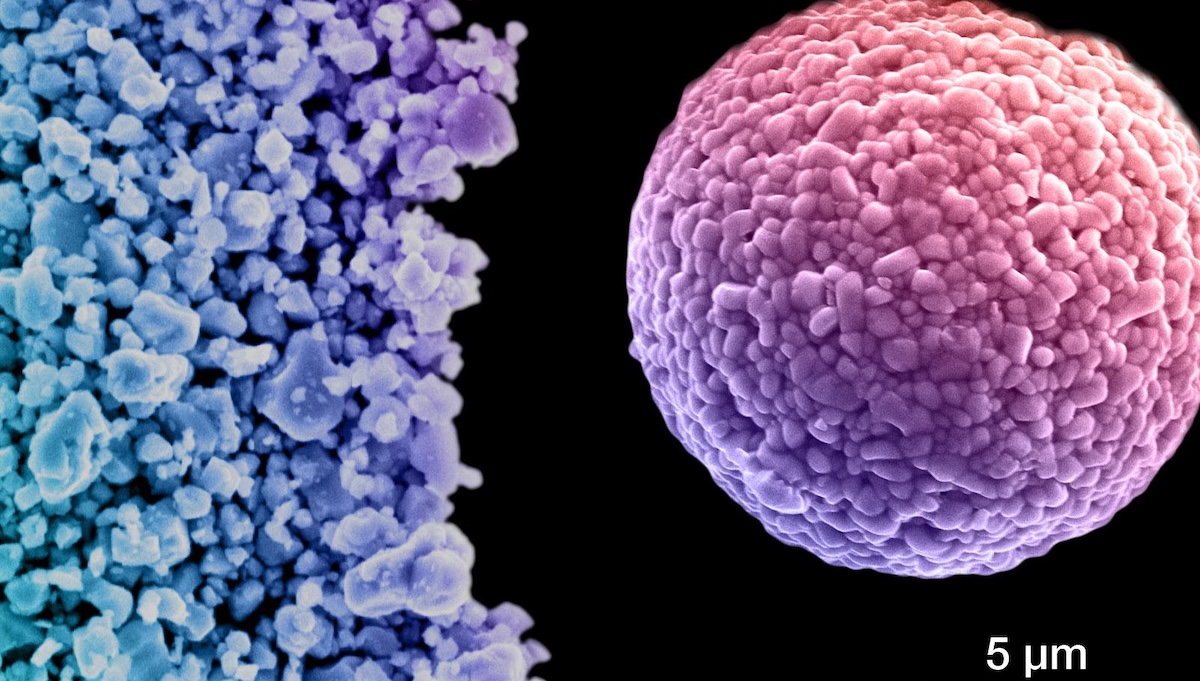
Photo: Despite Trump’s war on EVs, the US Department of Energy has launched the new “BattMan” battery innovation accelerator led by experts at the Pacific Northwest National Laboratory (cropped, courtesy of PNNL).
Sign up for CleanTechnica’s Weekly Substack for Zach and Scott’s in-depth analyses and high level summaries, sign up for our daily newsletter, and follow us on Google News!
Have a tip for CleanTechnica? Want to advertise? Want to suggest a guest for our CleanTech Talk podcast? Contact us here.
Sign up for our daily newsletter for 10–15 new cleantech stories a day. Or sign up for our weekly one on top stories of the week if daily is too frequent.
CleanTechnica uses affiliate links. See our policy here.
CleanTechnica’s Comment Policy