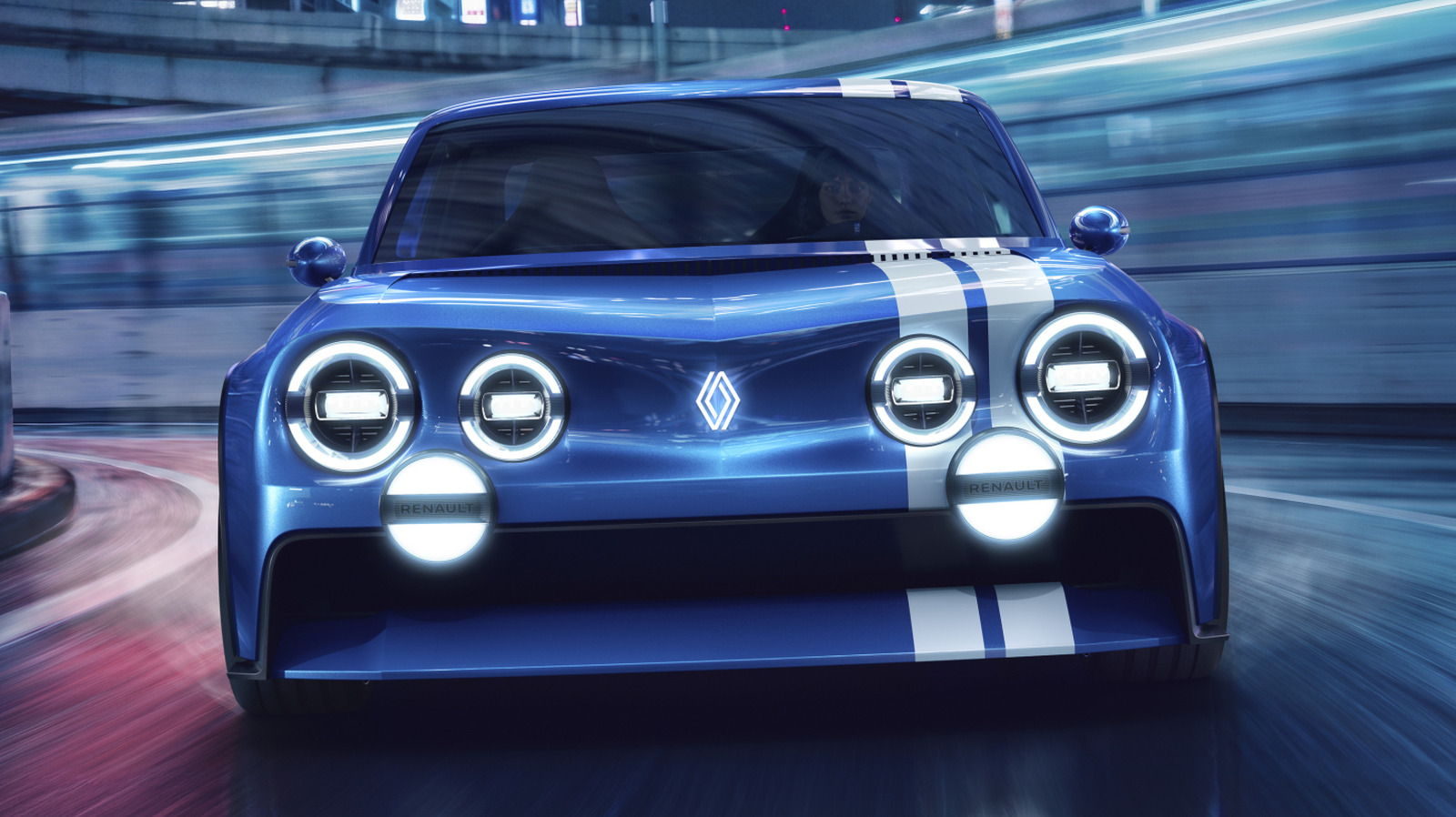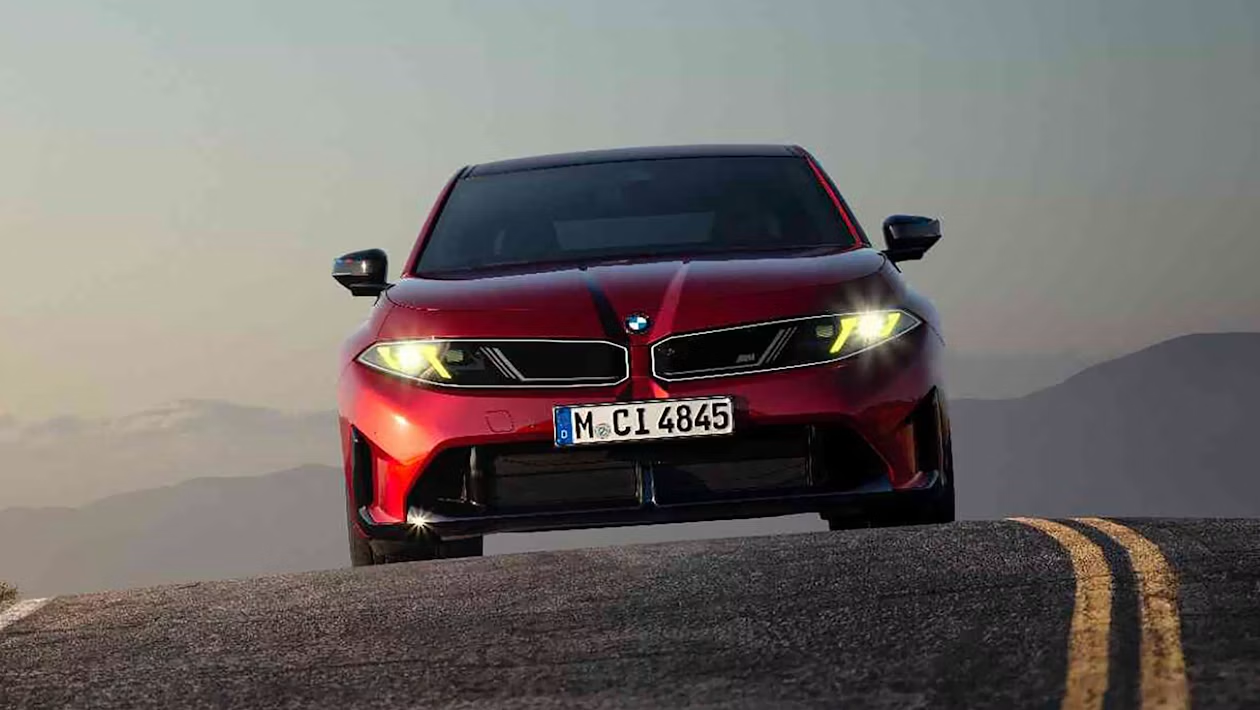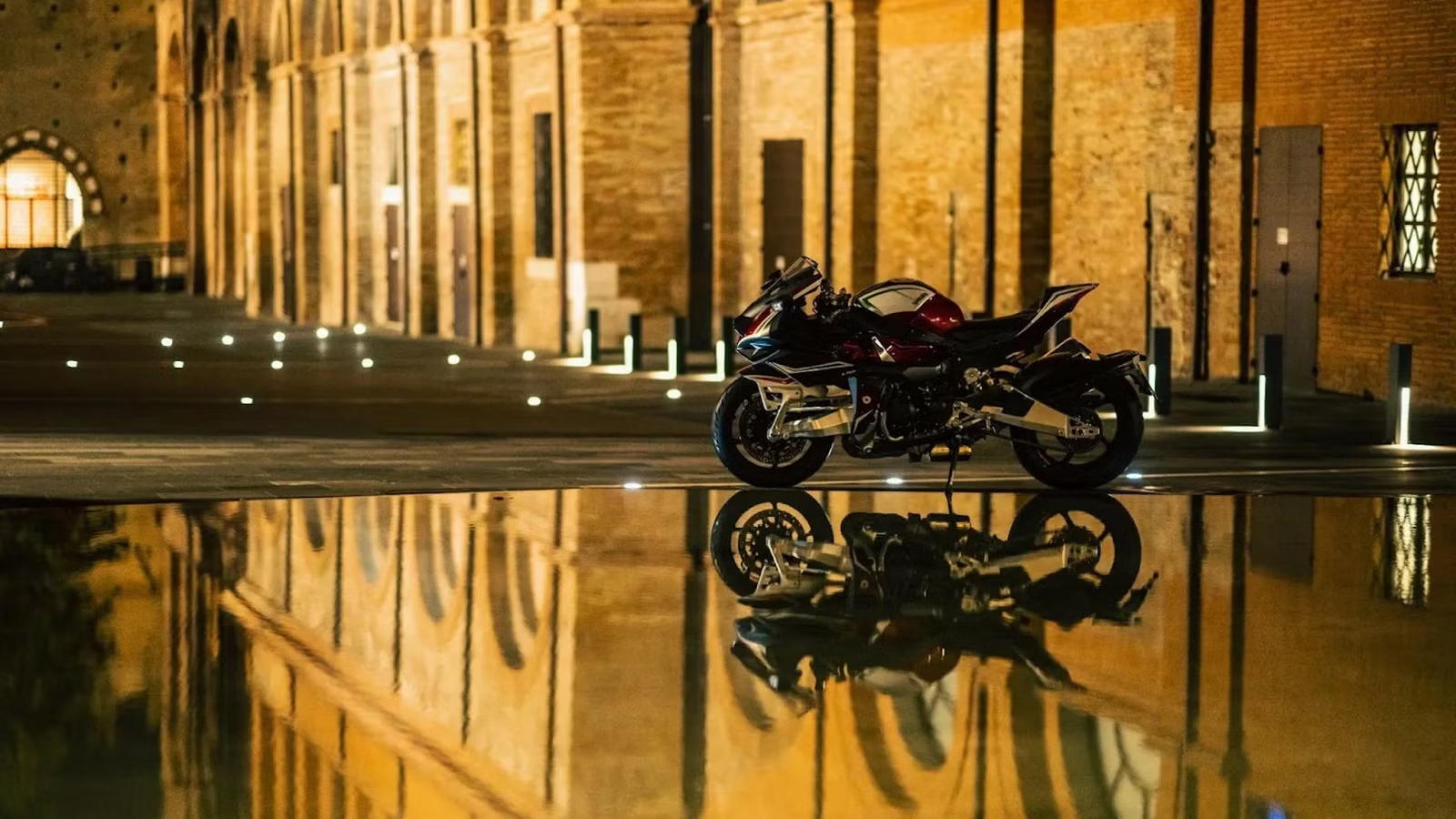
Most motorcycles are judged before they’re ridden, and a bike that looks right almost always wins that first round over an odd-looking one. What we call “right,” though, is mostly what we’ve seen a thousand times before: a decades-old design language so familiar that it has gone largely unchallenged. Bikes that break from it rarely make sense to the eye at first, but some prove to be better engineered than they appear, and one Italian superbike has built its entire identity on that idea.
The Familiar Motorcycle Layout Isn’t Always The Smartest One
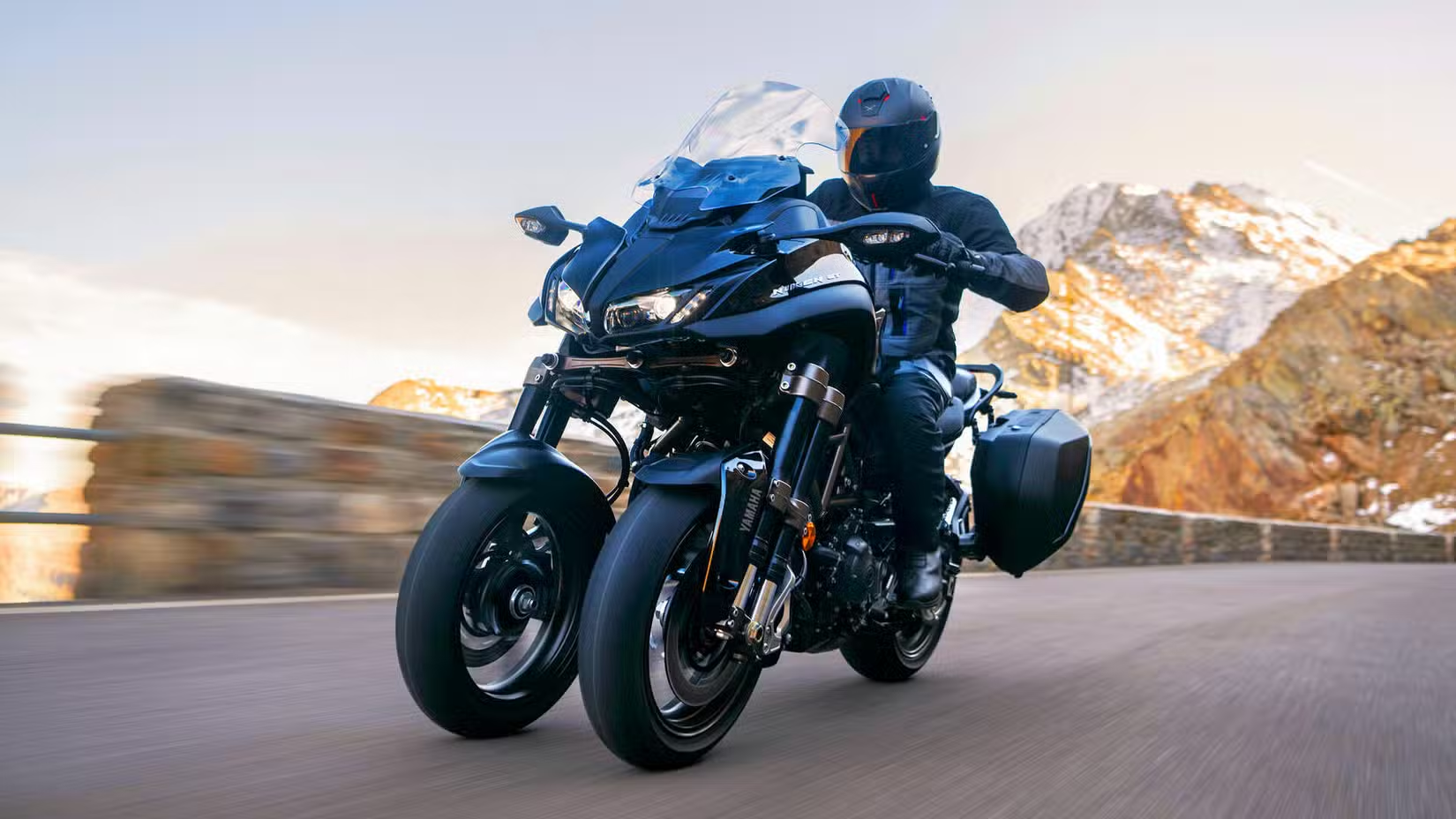
Picture almost any motorcycle, from a humble commuter to a Kawasaki Ninja ZX-10R, and the template barely changes: a frame wrapped around the engine, a fuel tank ahead of the rider, and a pair of forks holding the front wheel. It has worked for decades, which is exactly why so few riders question it. Familiarity isn’t the same as flawless, though.
A tank perched up top keeps weight high, and the fork has to steer, absorb bumps, and take braking loads all at once, so the front dives under hard braking just when the rider needs it most. From the Honda Goldwing to the Yamaha Niken, manufacturers have quietly broken that template. Each looked odd at first, and each had a reason.
The Bimota Tesi H2 Proves Unconventional Can Be The Logical Choice

None of those bikes, however, took the idea as far as the Bimota Tesi H2. If any company was going to tear up the superbike rulebook, it was always going to be Bimota. For decades, the Rimini outfit has bought engines from the likes of Kawasaki, Yamaha, Suzuki, and Ducati, then wrapped them in chassis of its own that the original makers would never have dared to build.
The Tesi H2 is that philosophy at its most extreme. Kawasaki provides the muscle in the form of its supercharged H2 engine, complete with fueling, exhaust, and rider aids, and Bimota takes care of everything that holds it together and points it down the road. The result is a supercharged superbike without a conventional frame or fork.
At Roughly $75,000, It Doesn’t Look Like Modern-Day Superbikes
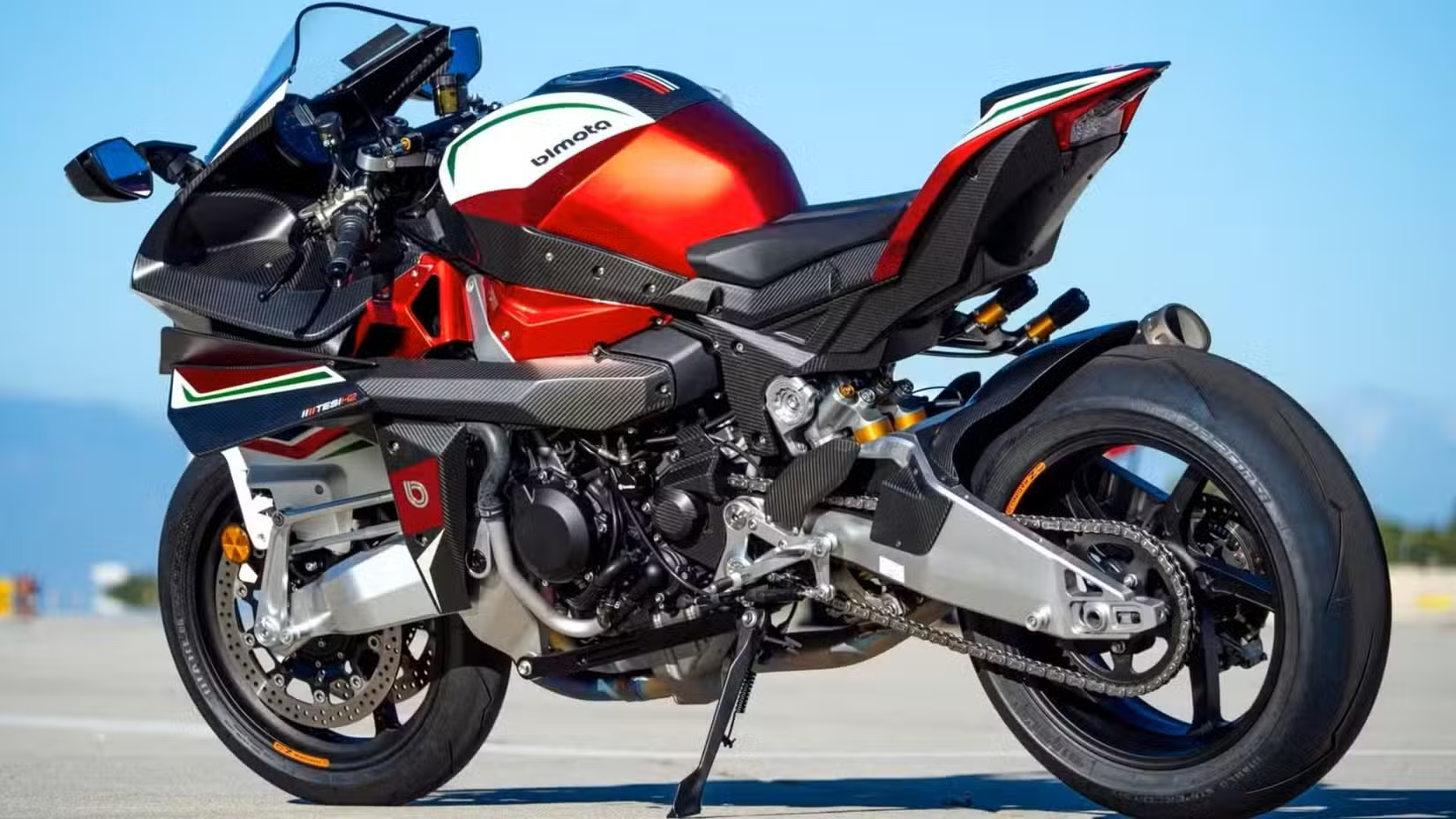
Exclusivity like this doesn’t come cheap. The Tesi H2 launched at €64,000 (approximately $75,000), placing it firmly among the most exotic bikes on sale, and only 250 were ever built. The 2025 Kawasaki Ninja H2 shares its engine and electronics with the Bimota and costs $32,700, less than half as much.
But that money doesn’t buy another conventional superbike. It buys one draped in carbon fiber, from the bodywork to the fuel tank cover, with billet aluminum swingarm arms bonded to a carbon fiber center bridge. It looks nothing like a mass-produced track weapon because it isn’t built like one.
The Tesi H2’s Engineering Choices Are All For Improving The Ride
The Unusual No Fork Layout That Lets The Bike Things Differently
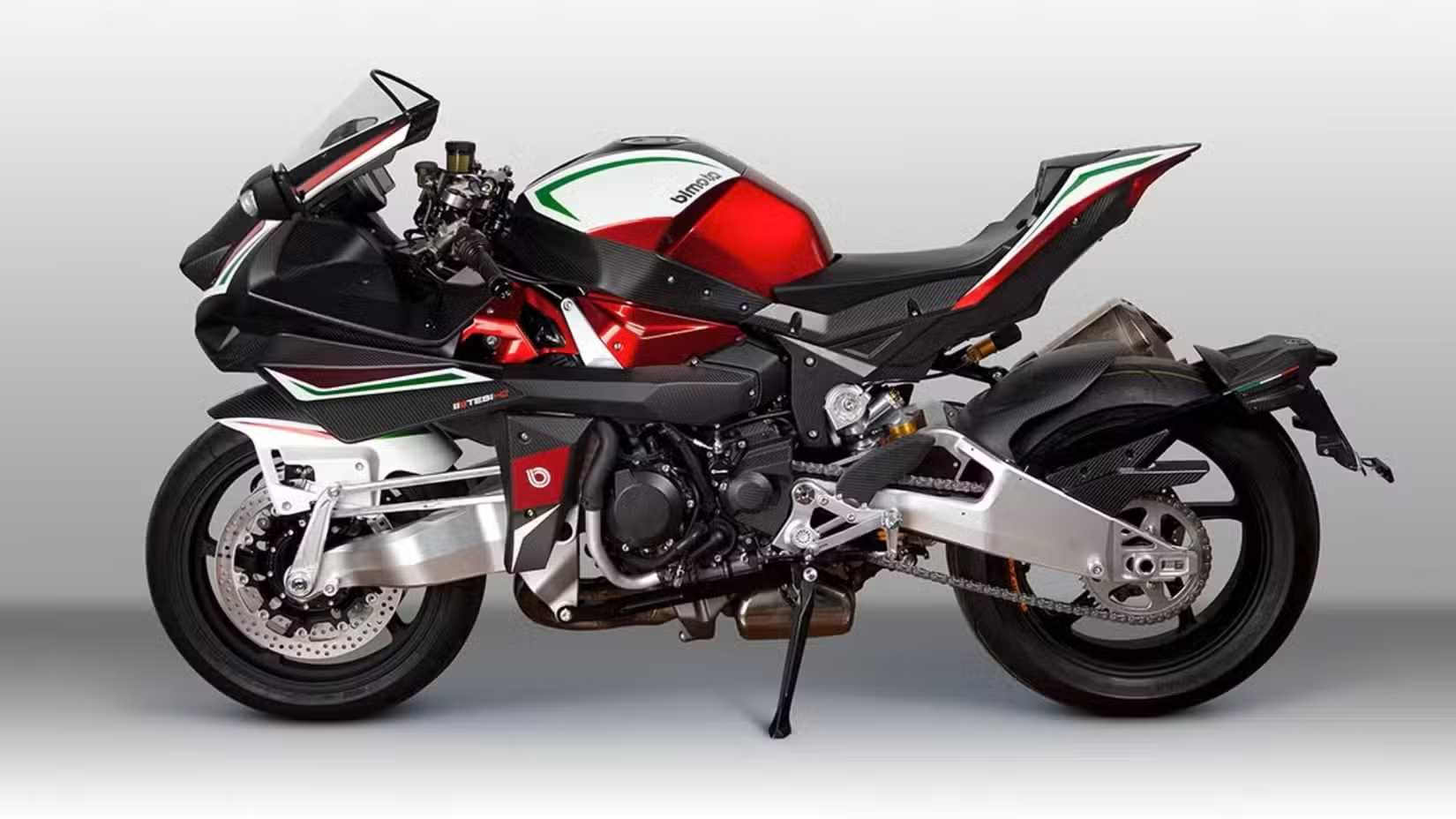
Bimota threw out the forks for a simple reason. A fork has to steer, absorb bumps, and handle braking all at once, and those jobs constantly get in each other’s way. The Tesi H2 splits those jobs apart. In place of forks, there’s a swingarm at each end, both bolted directly to the engine, which also does the work of a frame. The front wheel steers around a pivot inside its own hub, guided by linkages that run back to the handlebars, while separate shocks take care of the bumps.
The craftsmanship makes it even more special. Billet-machined aluminum shows up all over the chassis, with the kind of hand-finished detail and carbon fiber treatment you’d expect from a small Italian workshop rather than a mass-production line. And for all that hardware, it still weighs nearly 70 pounds less than the Kawasaki Ninja H2 it’s based on.
Steering That Stays Calm Under Hard Braking, And Why That Changes The Ride

Grab a big handful of front brakes on most superbikes, and you’ll feel the front end change. The forks dive, the geometry shifts, and the bike feels different just as you turn in. That happens because braking loads run straight through the parts that steer.
The Tesi H2’s hub-center front end keeps those forces apart. Under hard braking, they travel back through the front swingarm into the chassis instead of compressing the suspension. Because the front barely dives, the steering geometry stays constant, and the bars feel the same whether you’re cruising or hauling it down from big speed. It uses Brembo Stylema calipers clamping 330 mm discs, the same calipers as on the Kawasaki H2, yet Bimota claims the Tesi stops shorter.
A Design That Divides Opinion At First Sight
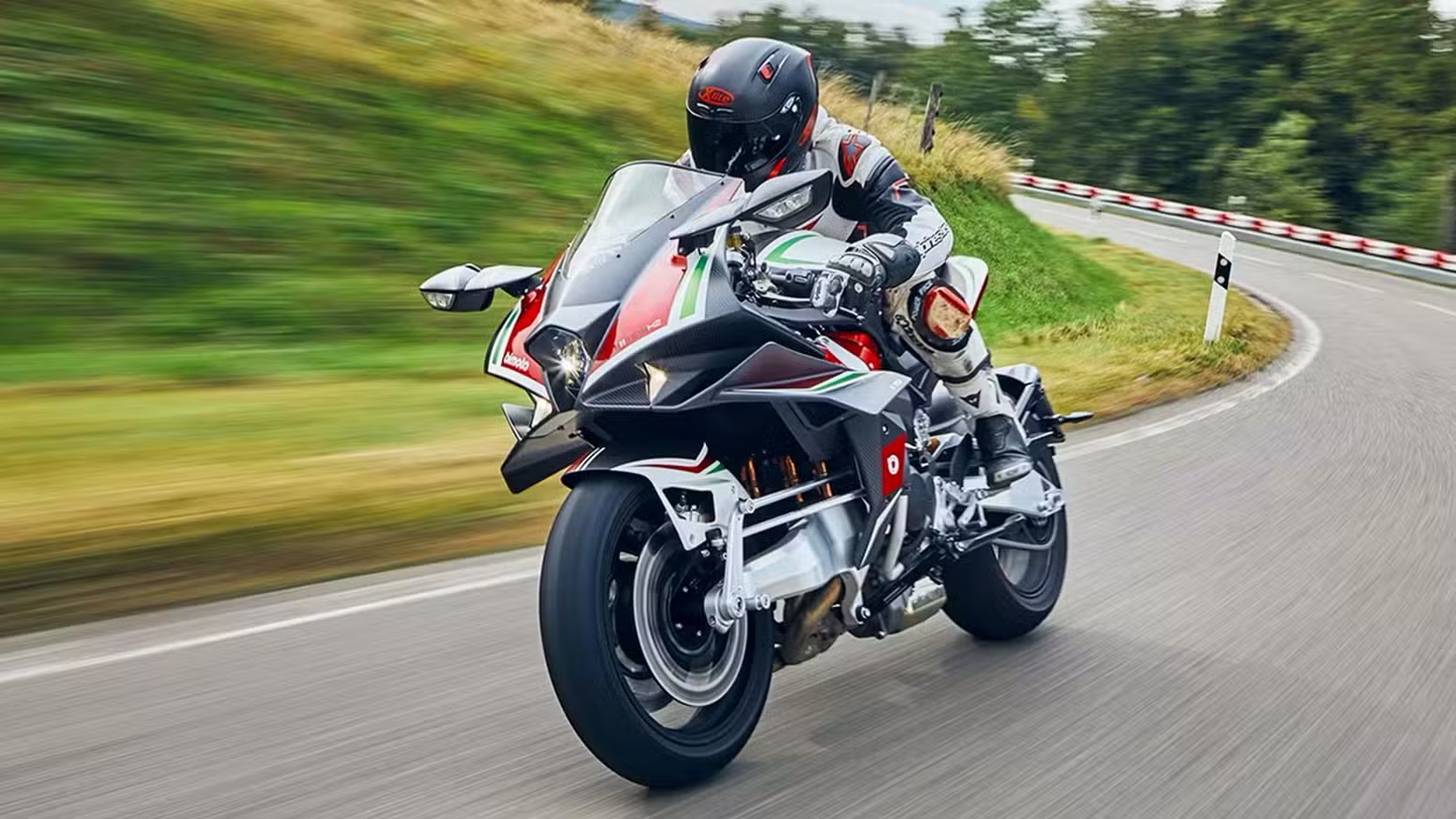
There’s no escaping the fact that Tesi H2 is polarizing. The front swingarm gives it a visually heavy, almost insectoid stance, and the bodywork is busy with sharp creases, sprawling carbon fiber winglets, and a prominent air intake. Much of that styling has a job to do, though.
The winglets generate real downforce at speed, helping keep the front wheel planted, while the shape of the front end is dictated largely by the hub-center chassis beneath it. It may not have the flowing, delicate beauty of a traditional Italian bike, but its brutalist look is a direct reflection of its engineering.
A Supercharged Kawasaki Heart Gives The Unconventional Chassis Something To Prove

The Ninja H2’s engine needs no introduction. The Tesi H2 uses the same supercharged 998cc inline-four, and here it makes 231 horsepower, kept in check by Kawasaki’s traction control, cornering ABS, and launch control. It also does more work than it does in the Ninja. With both swingarms bolted directly to it, the engine carries the loads a frame normally would, which makes the Tesi H2 a real test of whether Bimota’s unconventional chassis can handle that much power.
For most riders, a conventional Kawasaki H2 will likely be just as quick, and it costs far less. What the Bimota proves is something else: that the familiar way of building a superbike is a choice, and that there’s a logical, carefully engineered alternative for the few who value that thinking enough to pay for it.
Source: Bimota