Support CleanTechnica’s work through a Substack membership , on Patreon , or on Red stripe Assist us produce all of the high-quality, original material we release week after week in spite of the obstacles of content-scraping AI, antisocial media, rising cost of living, and various other hurdles.
The EU Guest Package still falls short of straightening with the EU’s environment targets and is not unified enough with the EU’s rail policy schedule.
The EU Passenger Bundle is a big leap forward to guest legal rights, and offers huge development in dragging European rail ticketing out of the stone age and assisting people change from autos to trains. Nevertheless the geographical scope of the proposals is limited essentially to adjoining nations. This risks restricting the modal shift potential from air to rail, which might impede the EU conference its climate targets. Transport stays the EU’s biggest source of greenhouse gas exhausts, and unlike various other industries, since 1990 these discharges have continued to climb in recent decades. Aeronautics is the biggest growing resource of discharges, and roadway transport still makes up the majority of transport exhausts in the EU. As a result it is critical to enable the problems for rail, Europe’s greenest mass market transportation mode to be made best use of in upstream and downstream steps such as the EU Guest Package.
Organizing responsibility: necessary but minimal in scope
Significant rail driver scheduling platforms should be called for to sell other drivers’ tickets throughout a larger geographical location.
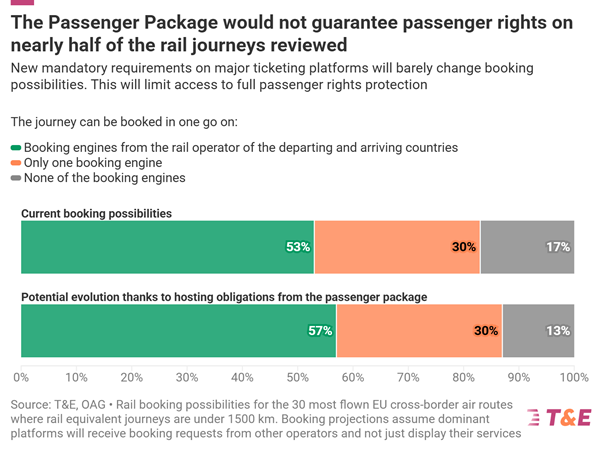
Expanding the geographical scope for the solitary ticket, the EU Passenger Package would increase passenger legal rights and the simplification of reservation, making train traveling much more appealing to guests. The Payment’s current proposition is a great primary step in the direction of this. Convenience issues in a modern digital world and the rail field should maintain. T&E commissioned ballot located that 61 % of participants were postponed taking cross country trips at least when since the reservation procedure was also complicated.
Transforming major platform practice on ticketing is necessary. The majority of guests utilize incumbent rail operators reserving websites. For example in France, 9 out 10 rail tickets are marketed by SNCF attach. Considering their market dominance, it is vital that these platforms display and offer via tickets for long-distance journeys in order to motivate more travelers to take far away rail journeys over flights.
However, the organizing responsibility’s international geographical extent is so little that the potential to encourage modal change from flight is restricted. As our research demonstrates, much of rail equivalent journeys of one of the most flown paths across the EU will certainly not be bookable with a single ticket, and therefore passengers won’t necessarily have guest legal rights shielded. This makes international rail traveling less attractive than alternate flight routes, and limits the success of various other front runner EU Rail initiatives such as the Broadband Rail Strategy.
The EU should integrate the EU Traveler Bundle and High Speed Rail Plan by prolonging the hosting commitment to capital cities under 1500 kilometres with maximum 2 changes, where there is an offered rail route. For example Brussels to Madrid would certainly count as one of these courses. SNCF, SNCB and Renfe would all be required to offer this route.
Secret suggestions:
- Expand the geographical scope of hosting commitments on significant rail drivers’ reservation systems to raise the schedule of solitary tickets in accordance with the Broadband Rail Strategy. This will prolong passenger rights and encourage modal shift between the EU’s capitals under 1500 km.
- We advise that EU institutions mandate significant operators to market tickets for trips in between EU resources in accordance with the EU High Speed Rail Strategy. This will certainly count for trips with as much as 2 modifications, where there is an alternative rail course under 1500 km.
- The holding responsibility should also include trips leaving the EU or showing up in the EU when asked for. We likewise advise, just like the sharing responsibility and straightened with the High Speed Rail Strategy, that this includes journeys leaving the EU and getting here in the EU from various other capitals.
Single tickets must be buyable on a single system, not simply in a single purchase
Passengers need to have the ability to include in their existing journey in the future the very same system and still maintain a single ticket and associated guest rights.
In the context of limited reservation horizons, and the reality that operators offer their tickets at various times: some beforehand, some with restricted notification, this proposition is a sure-fast way of guaranteeing that multi-operator tickets are truly secured as the regulation is intended for.
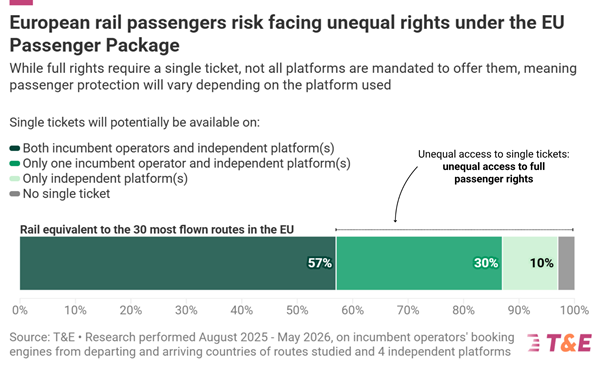
For this new policy to completely deliver, its scope requires to be modified to cover guests that have gotten their ticket on one system, not simply those who have acquired their tickets in a single deal. Otherwise, there is a threat that this brand-new law will produce various, unequal rights for passengers, relying on where and when they schedule their tickets.
As an example, if someone is travelling from Paris to Madrid, my SNCF ticket may be available 6 months in advance, yet the Renfe ticket for the Barcelona to Madrid ticket might not prepare up until 5 months before the trip (presuming the reserving perspective changes are authorized). Passengers need to be able to book the whole journey on Trainline, and simply upgrade the ticket when travelling on the exact same continual trip over the course of a day or evening and maintain their passenger rights, in addition to keeping the journey as a solitary ticket for benefit.
There is a risk that this brand-new regulation will produce different, unequal civil liberties for passengers, relying on where they book their tickets.
Key suggestion:
- Travelers must have the ability to acquire a solitary ticket on one platform, not just in one transaction
Passengers need to have the ability to get on whichever train to complete their journey
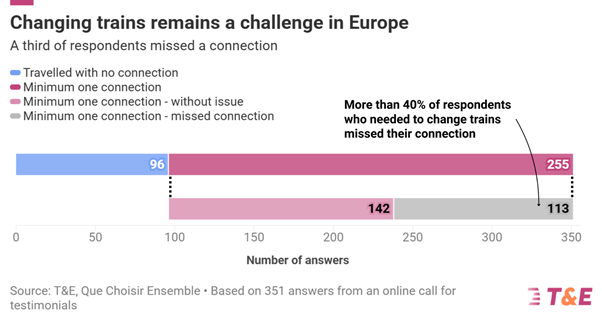
If a traveler misses a connection, they must have the ability to make use of whichever appropriate next train regardless of the train endeavor.
What is being presently suggested is extremely similar to the Contract on Journey Continuation (AJC), although it covers all drivers covered in the solitary ticket acquisition. However the following readily available trip is most likely to be operated by a railway task not covered by the solitary ticket. For instance, if the guest is taking a trip from Brussels to Milan, and theBrussels to Paris train is late, the passenger should be able to jump on the Trenitalia France train to Milan as opposed to waiting another however several hours for the next SNCF to Milan. This would make the trip a lot easier for passengers, and might well conserve money for the operators who would certainly go to threat of needing to spend for passengers accommodation need to they miss the last train for example.
Secret referral:
- When guests miss a connection, permit guests to hop on whichever next offered train link to finish their trip without a seat booking
Read the manifesto Write-up from T&E
Register for CleanTechnica’s Weekly Substack for Zach and Scott’s extensive evaluations and high degree recaps , sign up for our everyday newsletter , and follow us on Google Information
Have a pointer for CleanTechnica? Want to promote? Want to suggest a visitor for our CleanTech Talk podcast? Call us right here
Register for our daily e-newsletter for 10– 15 brand-new cleantech stories a day Or enroll in our regular one ahead tales of the week if day-to-day is also constant.


CleanTechnica uses associate links. See our policy here